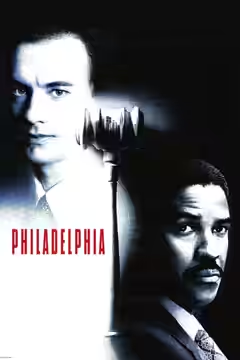
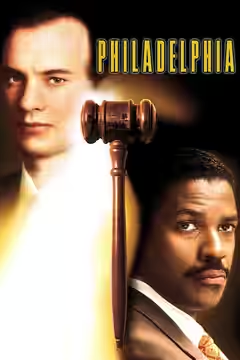
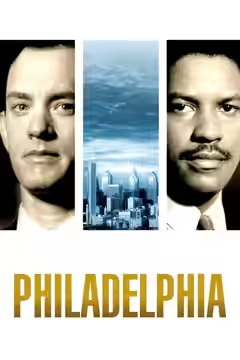
Tom Hanks and Denzel Washington make Jonathan Demme’s AIDS drama worth the occasional lecture. It is moving and humane, though a cautious screenplay leaves too little room for the lives beyond the case.
Philadelphia is a moving legal drama that makes its case too neatly, worth an evening for performances that complicate its careful lessons. Jonathan Demme directs Ron Nyswaner’s screenplay towards an audience that may need persuading about AIDS, sexuality and discrimination before it can attend to the people involved. That is a reasonable ambition, though it produces a film in which sympathy sometimes seems to require an explanation. The repeated explanations can be tiring, particularly when the actors have already done the necessary work.
The opening montage of Philadelphia street life makes a persuasive start. Demme gives us a city full of people before concentrating on one case, and Tak Fujimoto’s cinematography keeps that interest in faces as the story narrows. The close-ups are direct and searching, with expressions carrying more uncertainty than the dialogue usually permits. This matters in a film so eager to establish where our sympathies should lie: we have time to look at the people doing the talking.
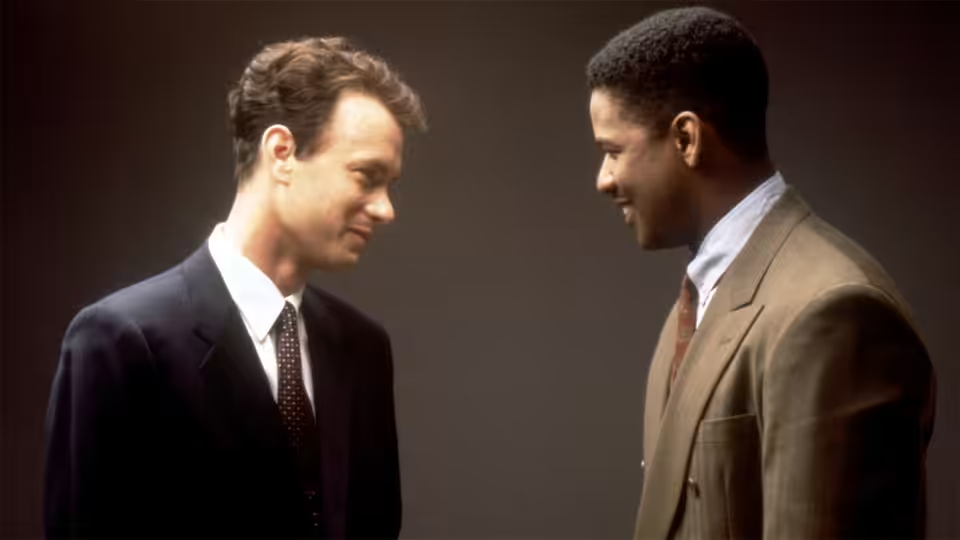
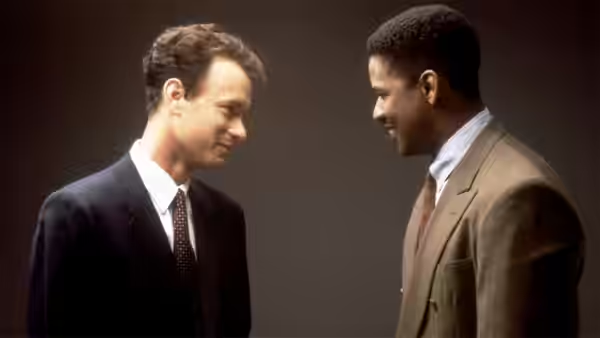
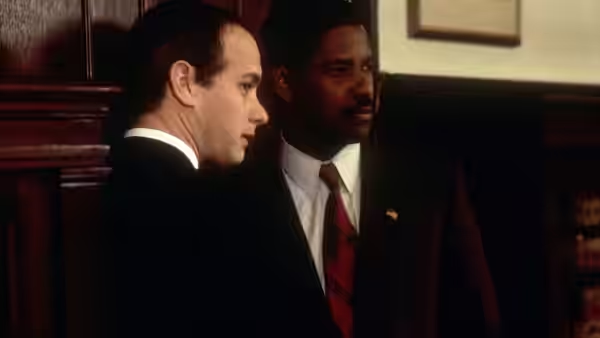
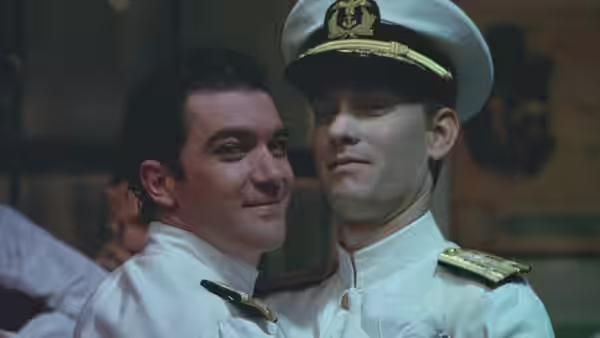
Tom Hanks plays Andrew Beckett with the control this approach needs, resisting the temptation to make every moment an appeal for sympathy. We were moved by Beckett dancing to Maria Callas, because Hanks makes his pleasure in the music matter as much as his suffering. Denzel Washington, as Joe Miller, provides a necessary resistance to the film’s earnestness, and the two actors keep the legal exchanges from becoming entirely instructional. We want to spend time with these people even when we can see how carefully their encounters have been arranged.
Nyswaner’s script is where the caution becomes a problem. It is so concerned to establish the correct response to prejudice that it reduces the space for uncertainty, especially for an audience already persuaded that discrimination is wrong. We wanted more of the lives around the case and fewer occasions on which the film appeared to be checking that its lesson had reached us. This is a familiar weakness of the courtroom drama, and Demme’s interest in people does not entirely overcome it.
Craig McKay’s editing is patient with the performances, allowing a response to matter alongside the words that prompt it. That patience helps, although the orderly progress of the case can feel too comfortable for the suffering it concerns. Howard Shore’s score supports the emotion without giving us much that the actors have not already supplied. The most affecting passages give us time to watch someone listen, and the cutting is sensitive to how much those reactions can carry.
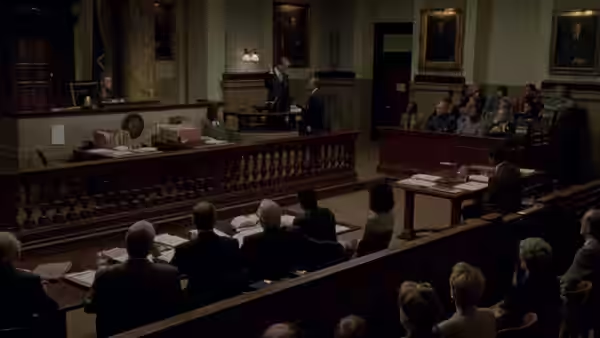
Kristi Zea’s production design gives the legal proceedings surroundings that never compete with the actors for attention. That restraint works, although the opening street montage supplies a stronger sense of place than the spaces where the case is argued. Jason Robards as Charles Wheeler and Mary Steenburgen as Belinda Conine keep the supporting exchanges watchable. Still, Nyswaner distributes attitudes a little too neatly among his characters, leaving the cast to make them seem less predictable.
We are warmer on Philadelphia than the consensus, because the charge of pandering gives too little weight to Demme’s attention to his actors. His care makes the film moving even when the writing seems determined to make it respectable. At 126 minutes, it asks for some patience with explanations that many viewers will not need. See it for Hanks and Washington, with a little tolerance for the speeches.