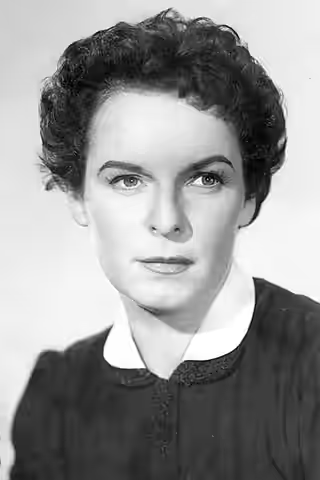
Mercedes McCambridge played women who wanted things they would not get and said so out loud, in a voice trained in radio and built for the back of a hall. Given a real part, she was the reason to watch.
Fi1m perspective
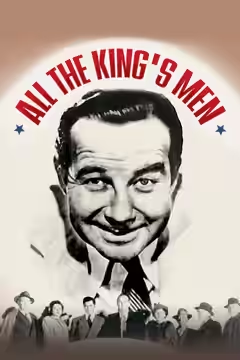
Sadie Burke is sitting across a table from a man who has just lost, with a bottle between them, and she tells him what the people who put him on the platform really think of him. She does not soften it. Mercedes McCambridge plays the scene in All the King's Men (1949) with a lift of the chin and a cigarette, and it is the moment the film turns: the next morning Willie Stark throws his prepared speech away. It was her first film. She had spent eleven years in radio before it, and you can hear that. The voice does the work a close-up would do for someone else, and she never seems to need the close-up.
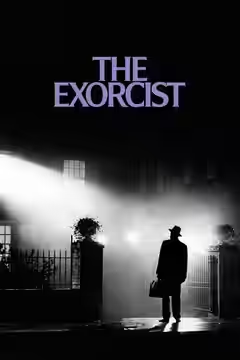
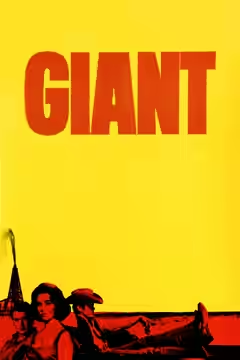
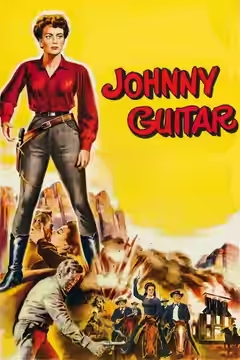
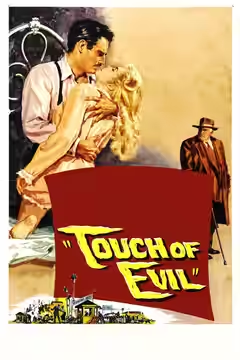
Hollywood took the debut and then did not know what to do with her. The parts came slowly and ran to a type: the woman who wants what she cannot have and refuses to be quiet about it. Emma Small in Johnny Guitar (1954), a jealous, vengeful rancher opposite Joan Crawford. Luz Benedict in Giant (1956), Rock Hudson's fiercely jealous older sister. A leather-jacketed gang leader, uncredited, in Orson Welles's Touch of Evil (1958). Then, for a long stretch, mostly television and the stage, and in 1973 a job that used only the voice: the demon in The Exorcist, uncredited at first, credited later, and now the thing many people know her for without knowing her face.
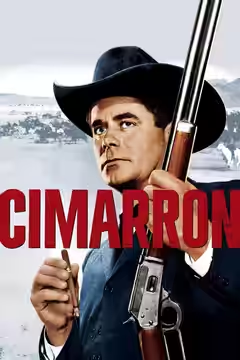
What works is the refusal to ask for sympathy. Sadie loves Willie without any hope of it doing her good, and McCambridge never plays for our pity; she plays the wanting and lets us decide what to make of it. We found we watched her more closely than we watched Broderick Crawford, who is filling his part to the edges, because she was the one person on screen telling the truth and getting nothing for it. What does not work is what the industry did with that. A face and a voice that size cannot be tucked into a corner, and directors who tried got a supporting player who tilted the scene towards her. In Cimarron (1960), Anthony Mann gives her a farmer's wife who wants everything, opposite Arthur O'Connell's husband who wants nothing, and their arguments are the only marriage in the film we looked forward to, in a film that is supposed to be about another one.
In 1981 she said: "I don't think the Hollywood community is interested in what I can do. That's all right. I've never looked for a job in my life, and I'm not going to start now." That is the film career in a sentence: a handful of parts, most of them supporting, several of them the best thing in the picture. Start with All the King's Men, where she is given room. Then Cimarron, for the arguments. The rest you will find by the voice, usually before the credits tell you it is her.
Biography
Mercedes McCambridge (1916–2004) was an American actress of radio, stage, film and television. Born Carlotta Mercedes Agnes McCambridge in Joliet, Illinois, she studied at Mundelein College and began her career in radio in the late 1930s. Orson Welles described her as the world's greatest living radio actress.
She made her film debut in All the King's Men (1949), winning the Academy Award for Best Supporting Actress. She received a second nomination in the same category for Giant (1956). Other film roles include Johnny Guitar (1954), Touch of Evil (1958) and Suddenly, Last Summer (1959). She voiced the demon in The Exorcist (1973).
McCambridge appeared as Mrs. Sarah Wyatt in Cimarron (1960) and had guest roles in television series including Bewitched (1964) and Bonanza (1959 and 1962).