Michael Schur builds sitcoms in which people who are stuck with one another decide, slowly, to become better, and he will put a lecture on Kant where the punchline goes. The Good Place is the proof; the relentless decency is both his method and his risk.
Fi1m perspective
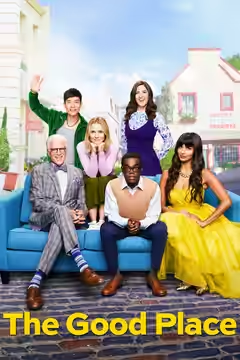
The scene that tells you most about Michael Schur is a chalkboard. In The Good Place (2016), William Jackson Harper's Chidi, an ethics professor whose stomach hurts whenever he has to choose, stands at one and takes a bad person through Aristotle, Kant and the trolley problem so that she can learn to be good, mostly to save her own skin. The lines are written by people who have read the books and still want the joke. Most sitcoms would not go near the question. Schur built four seasons on it.
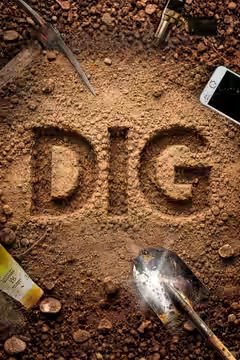
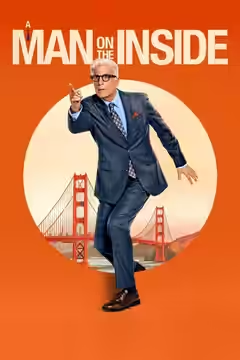
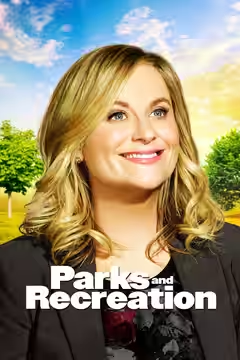
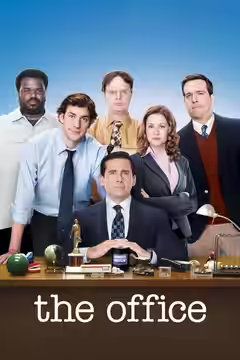
He wrote for Saturday Night Live from 1998 to 2004, joined The Office (2005) as a writer and producer, and then spent a decade making variations on one programme. He co-created Parks and Recreation with Greg Daniels (2009–2015) and Brooklyn Nine-Nine with Dan Goor (2013–2021), and made The Good Place on his own (2016–2020). A parks department, a police precinct, the afterlife: each is a workplace, each has a large cast with the best jokes in the supporting seats, and each is about people who did not choose one another deciding to get on. He has said that "Optimism beats pessimism." Since then there have been Rutherford Falls (2021), A Man on the Inside (2024) and Dig (2026).
What works is the ensemble. The Good Place has no weak seat: Jameela Jamil's Tahani drops names the way other people drop crumbs, D'Arcy Carden's Janet delivers appalling news in the voice of a helpline, and we laughed out loud, repeatedly and against our better judgement, at Manny Jacinto's Jason Mendoza, who says the stupidest thing in every scene with the serenity of a man who has never had a doubt. He staffs his rooms well, too. Megan Amram, Joe Mande, Jen Statsky and Cord Jefferson wrote that programme with him.
What does not work is his appetite for the next idea. The third season of The Good Place likes its concepts more than its people, and his willingness to tear up what he has built, a virtue in year one, is closer to a tic by year three. Sometimes the philosophy stops being dramatised and simply gets taught. Some critics find the whole enterprise cloying, all niceness and no anger at its institutions. There is something in that; a Schur precinct is a happier place than any real one. But the programmes are about whether a person can change, not whether a system can, and on that question they are harder than their manners suggest.
His one visible excursion elsewhere is a teleplay for Black Mirror, a programme with no interest in anyone improving, the exception that shows how settled his habits are. Start with The Good Place. When the third season starts fussing over its ideas, keep going; the fourth remembers who it was for.
Biography
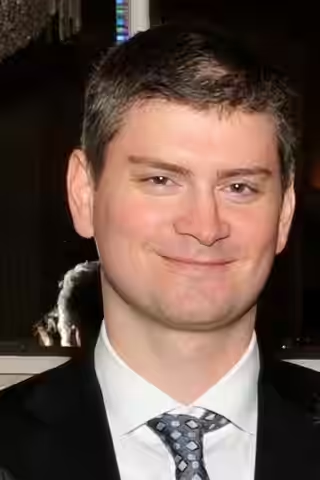
Michael Schur is an American television writer, producer and director, also credited as Mike Schur. He began his career as a writer for Saturday Night Live (1998–2004).
Schur wrote episodes of The Office (2005–2013), where he also appeared as Mose Schrute, and co-created Parks and Recreation (2009–2015) with Greg Daniels. He co-created Brooklyn Nine-Nine (2013–2021) with Dan Goor and created The Good Place (2016–2020). In 2016 he co-wrote the teleplay for the Black Mirror episode 'Nosedive' with Rashida Jones.
Schur graduated from Harvard University in 1997. He is married to writer and producer J.J. Philbin.