Nicholas Meyer writes science fiction as naval drama: rank, grudges and men who have noticed the grey. Given the whole script, as on The Wrath of Khan, it holds; sharing one, as on The Prince of Egypt, the structure he prizes goes first.
Fi1m perspective
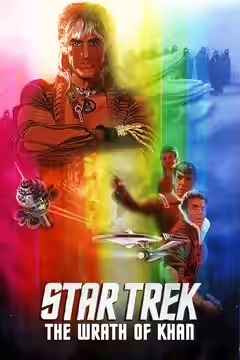
Early in Star Trek II: The Wrath of Khan (1982), McCoy gives Kirk a pair of reading glasses for his birthday and Kirk looks at them as though they were a diagnosis. It is a man being told, kindly, that his eyes have gone, and it is the sort of thing Nicholas Meyer writes while everyone else is arguing about the ship. It moved us more than a birthday on a spaceship should, because Meyer wrote it as a birthday and not as a battle. He came to the job never having seen the television series, rewrote the screenplay in twelve days, and made the one Star Trek film we would recommend to people who have never watched a minute of the programme.
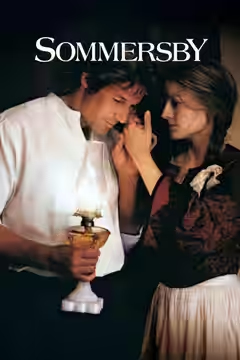
He began as a novelist, with The Seven-Per-Cent Solution in 1974, and Holmes never left him: he has said he modelled Spock on Sherlock Holmes. He directed Time After Time (1979), which sets H.G. Wells after Jack the Ripper, then The Wrath of Khan, then The Day After (1983), a television film about nuclear war that a great many people watched. He wrote on Star Trek IV: The Voyage Home (1986) and wrote and directed Star Trek VI: The Undiscovered Country (1991), the last with the original cast. After that the work went into other people's films: Sommersby (1993), The Prince of Egypt (1998), The Human Stain (2003) and Elegy (2008).
What he brings is structure, which he has said matters more to him than anything else in a drama, and a naval cast of mind. His Star Trek is Hornblower. The Enterprise is a warship, Kirk is a man promoted past the work he was good at, and William Paul Dornisch cuts the battles like a submarine film: the enemy, the bridge, a man waiting to be told he is dead. Meyer also trusts an audience with a book. Khan quotes Melville, and The Undiscovered Country borrows from Shakespeare and the Cold War. Keeping Kirk and Khan apart, so that Ricardo Montalban plays most of his part to a viewscreen, is the kind of decision only someone with the whole script in his head makes. Harve Bennett produced three films with him.
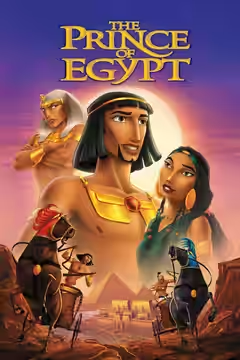
The weakness comes with the strength. Meyer needs the whole shape of a thing, and on The Prince of Egypt he shared it with Philip LaZebnik and a 99-minute running time, so the desert, the marriage and the return to Egypt happen in the middle twenty and Michelle Pfeiffer's Tzipporah gets one spiky scene before she is a wife. Two comic priests keep wandering in from a lighter film. The brothers still hurt, and that is the writers' doing as much as the animators', but it is a film where the shape was plainly settled by somebody else.
He has been left off the credits for a good deal of what he wrote, and he is still writing Holmes novels. Start with The Wrath of Khan, then The Undiscovered Country. The rest of the career is other people's films, and you can usually tell which scenes are his.
Biography
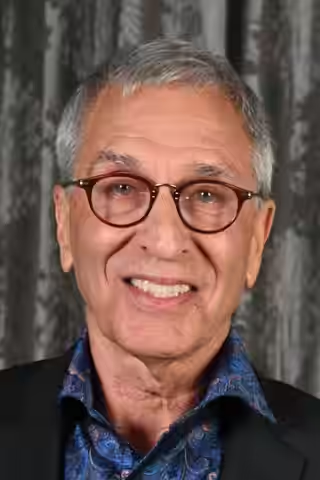
Nicholas Meyer is an American screenwriter, director and novelist. Born on 24 December 1945 in New York City, he graduated from the University of Iowa with a degree in theatre and filmmaking.
He is best known for his novel The Seven-Per-Cent Solution (1974), which he adapted into an Academy Award-nominated screenplay, and for directing Time After Time (1979), Star Trek II: The Wrath of Khan (1982), The Day After (1983) and Star Trek VI: The Undiscovered Country (1991). His other screenwriting credits include Sommersby (1993), The Human Stain (2003) and additional material for The Prince of Egypt (1998). He co-created the series Medici: Masters of Florence (2016).