William Shatner makes an impatient captain unusually good company. We recommend his Kirk warmly, especially alongside Leonard Nimoy and DeForest Kelley, whose restrained replies and affectionate irritation give his theatrical delivery something useful to work against.
Fi1m perspective
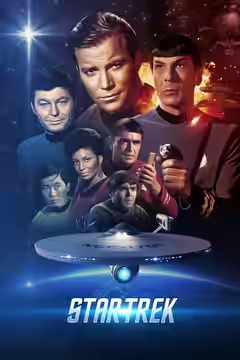
William Shatner's Kirk sounds impatient even when he has stopped to talk. In Star Trek (1966), his pauses and emphases help keep the discussion from settling into a lecture. He gives the captain enough lightness to make us want to stay in his company, rather than merely wait for him to issue the next instruction. We recommend the performance warmly, particularly when the other actors are given time to answer back.
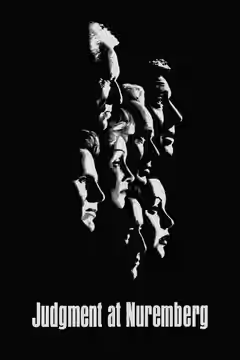
Shatner's early Shakespearean work helps explain the theatrical delivery, though its usefulness depends on the part. He appears as Harrison Byers in Stanley Kramer's Judgment at Nuremberg (1961), before Kirk came to define his public image. We recommend Kramer's film for its difficult questions about responsibility; Spencer Tracy and Montgomery Clift provide its strongest reasons to keep watching.
Nimoy's restrained replies as Spock give Kirk someone who will not be hurried, while DeForest Kelley's Dr. McCoy lets his irritation show. Neither actor has to match Shatner's emphasis to make a disagreement worth watching. We laughed at their exchanges because Kelley's annoyance sounds affectionate, even while Nimoy declines to soften his response. These are convincing companions, and Shatner's impatience helps keep their arguments lively when the writing threatens to become a lesson.
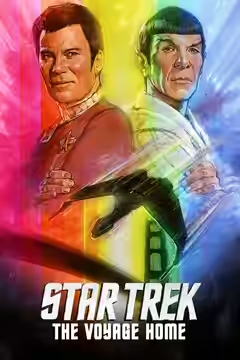
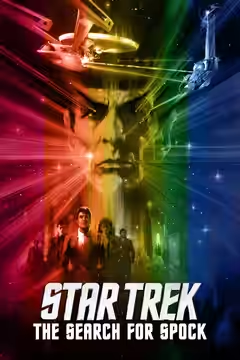
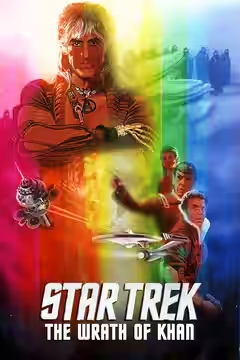
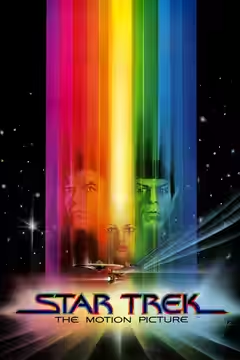
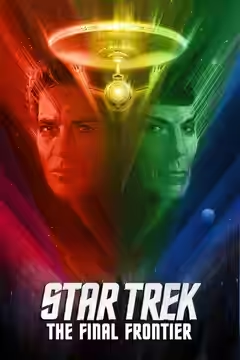
Kirk continued through seven films from 1979 to 1994, including Star Trek II: The Wrath of Khan (1982) and Star Trek: Generations (1994). The later turn towards self-aware comedy, with Denny Crane in Boston Legal (2004), makes sense for an actor whose delivery had become so recognisable. There is pleasure in an actor knowing his own habits, although self-parody is no guarantee that those habits will stay funny.
The reservation is the mannered delivery: a pause can draw attention away from what is being said. In Star Trek, there is usually another actor ready with a response, and a question worth arguing over, to keep us listening. We would begin there, an episode at a time, and give the conversations as much attention as the danger. A long sitting makes the repeated moves harder to forgive.
Biography
William Shatner is a Canadian actor born on 22 March 1931 in Montreal, Quebec. He began his screen career in Canadian films and television before taking guest roles in American series and appearing as Harrison Byers in the 1961 film Judgment at Nuremberg.
Shatner is best known for portraying Captain James T. Kirk in the original Star Trek television series (1966–1969) and the first seven Star Trek feature films, concluding with Star Trek Generations (1994). Other notable television work includes the series T. J. Hooker (1982–1986) and Rescue 911 (1989–1996). He has also appeared in films such as Miss Congeniality (2000) and its sequel.