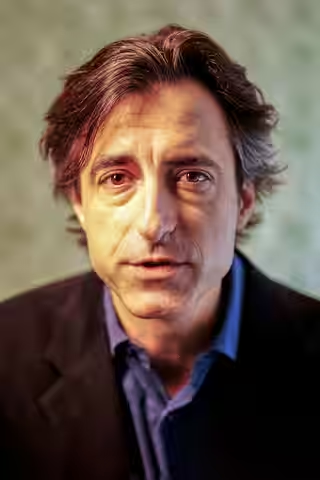
Noah Baumbach writes people who talk well and listen badly, and his best scripts let them stay in the wrong for a long time. The recent ones forgive too quickly, and they are weaker for it.
Fi1m perspective
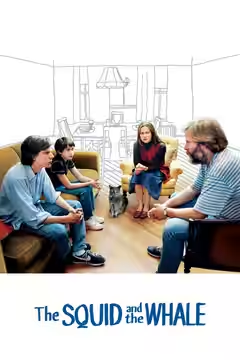
Partway through The Squid and the Whale (2005) the Berkman family plays tennis, and Bernard, the father, treats the match as one more chance to be right. That is the Baumbach scene: an articulate adult making a reasonable case, and a child somewhere in the frame who has to hear it. We laughed at that tennis match and then felt uneasy about how readily the parents had made their sons part of the competition, which is what he is after. Baumbach writes talkers, and he is good at the gap between what they say and what they mean.
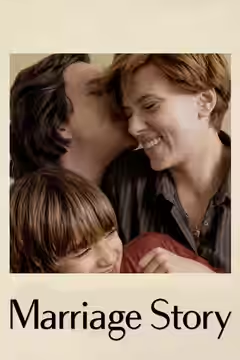
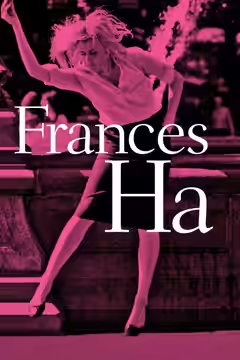
The career divides fairly cleanly. He began writing and directing with Kicking and Screaming (1995), and The Squid and the Whale, drawn in part from his own family, was the film that made his name; Margot at the Wedding (2007) shares its caustic streak. Then came Greta Gerwig, co-writer and actor across four films. Frances Ha (2013), which they wrote together, is a comedy about a woman explaining herself badly, and it is funny because she never gets it right. Marriage Story (2019), with Adam Driver, is the divorce script done at full length: two people who both make a reasonable case and cannot dismiss each other as a mistake. Those two are where we would send a newcomer.
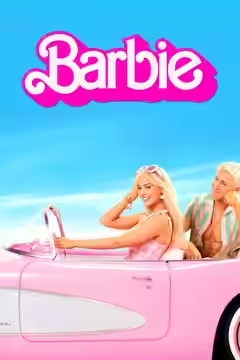
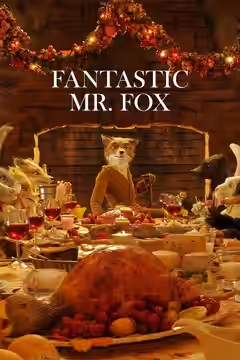
He also writes for other directors, and it changes him less than you might expect. Fantastic Mr. Fox (2009), written with Wes Anderson from Roald Dahl, is warm and funny about animals with domestic responsibilities, and its knowing dialogue sometimes sounds too pleased with itself, which is a Baumbach fault as much as an Anderson one. Barbie (2023), written with Gerwig, is a proper comedy in Barbieland and a duller film in Los Angeles, where the characters begin explaining themselves well, at length and to general agreement. One of its speeches seemed to us written to be quoted rather than said. A writer this fond of a good line will sometimes stop a scene so that one can be delivered.
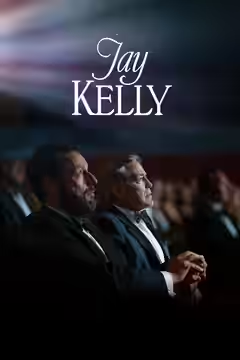
The softening matters most in Jay Kelly (2025), which he wrote with Emily Mortimer and directed. It is warm and often funny about a film star and his entourage, and every time a scene threatens to leave Jay exposed, someone smiles at him and the script lets him off. Nobody stays in the wrong for longer than a scene. Bernard Berkman is allowed to be appalling for all of his film's 81 minutes and is still recognisably needy at the end. That is harder to write than it looks, and Baumbach used to do it as a matter of course.
He has never been short of a good insult, and Tim Streeto's cutting on The Squid and the Whale showed how much better they land when a film declines to repeat one. What we miss in the recent work is the patience to leave a character unforgiven for a while. If the next script has somebody in it he cannot quite bring himself to like, we will be first in the queue.
Biography
Noah Baumbach is an American filmmaker. He was born on 3 September 1969 in Brooklyn, New York City.
Baumbach wrote and directed Jay Kelly (2025). He wrote the screenplay for Barbie (2023). His other films include The Squid and the Whale (2005), Frances Ha (2013), The Meyerowitz Stories (New and Selected) (2017), Marriage Story (2019), and White Noise (2022). He has collaborated with Greta Gerwig on several projects and co-wrote The Life Aquatic with Steve Zissou (2004) and Fantastic Mr. Fox (2009) with Wes Anderson.
He received Academy Award nominations for writing The Squid and the Whale and Marriage Story.