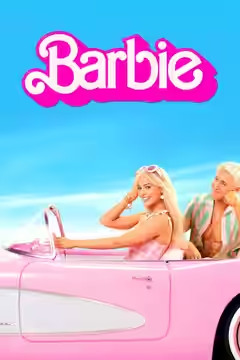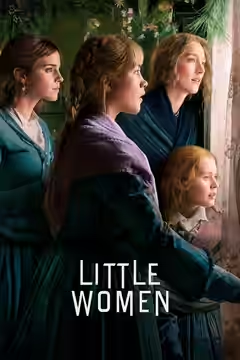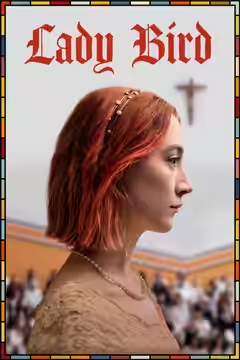
Greta Gerwig writes people who interrupt one another, and her scripts are best when nobody gets to finish. Frances Ha, Lady Bird and Little Women let the arguments run; Barbie keeps stopping so that someone can make a speech.
Fi1m perspective
The March sisters in Little Women (2019) talk over one another. Four girls in one room, their father away, and none of them waits for the end of a line before starting her own. That is what a Greta Gerwig script sounds like, whether she directs it or hands it to someone else: naturalism with the interruptions left in. Her people are not articulate. They are trying to be, in front of someone else who is also trying, and both the comedy and the hurt come from that.
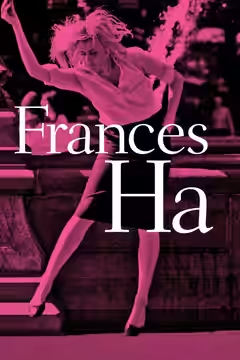
She started in the mid-2000s in low-budget mumblecore films, acting and co-writing, some of them with Joe Swanberg, and the results were loose enough to be held against her. The partnership with Noah Baumbach began with Greenberg (2010) and produced Frances Ha (2013), which she co-wrote and carried as Frances Halladay, a New York dancer whose enthusiasm runs ahead of her prospects. Then she began directing her own scripts: Lady Bird (2017), set in Sacramento, where she was born, Little Women (2019), and Barbie (2023), her first studio film, written again with Baumbach.
What works is the fairness. Lady Bird lets the mother be difficult without turning her into an obstacle, and lets the daughter be tiresome without losing our affection; Saoirse Ronan and Laurie Metcalf get the arguments, and the film is built around them. Little Women is the first version of Alcott we have seen that keeps asking who is paying for what, and the first in which Amy gets a fair hearing. Frances Ha makes neediness funny without making it harmless. We laughed at Frances falling over in the street and then spent the rest of the film worried about her, because Sam Lisenco's rooms kept the rent in view and Gerwig's script never pretended it was not due.
The weakness is the speech. Frances Ha was a comedy about a woman explaining herself badly, and it was funny because she never got it right. Barbie is a comedy about people explaining themselves well, at length, and to general agreement, and it is a duller film for as long as it is talking. America Ferrera's Gloria is handed lines that sound written to be quoted rather than said, and Nick Houy's quick editing keeps stopping so that someone can finish a paragraph. Gerwig can still do the work in pictures when she chooses: the girl putting a toy away for the last time needs no help from anyone. She is also, more than once, too ready to forgive her heroine, and the differences in money that her sets notice tend to be charmed past before the script presses on them.
A Narnia adaptation is next. Those books contain a great deal of explaining. We would settle for one scene in which nobody is allowed to reach the end of a sentence.
Biography
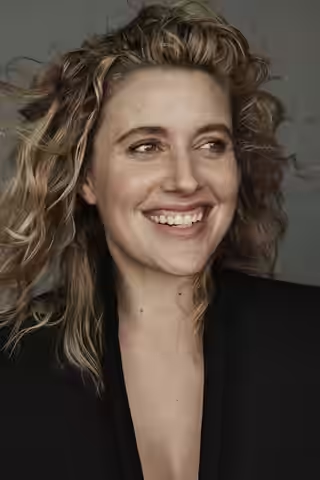
Greta Gerwig is an American actress, writer and director. Born on 4 August 1983 in Sacramento, California, she graduated from Barnard College in New York, where she studied English and philosophy.
She began her career in independent films associated with the mumblecore movement and later collaborated frequently with Noah Baumbach. Gerwig made her solo directorial debut with Lady Bird (2017), which she also wrote, and went on to write and direct Little Women (2019) and Barbie (2023), the latter co-written with Baumbach. She has acted in films including Frances Ha (2013), Jackie (2016) and 20th Century Women (2016), and appears as Lois Sukenick in Jay Kelly (2025).