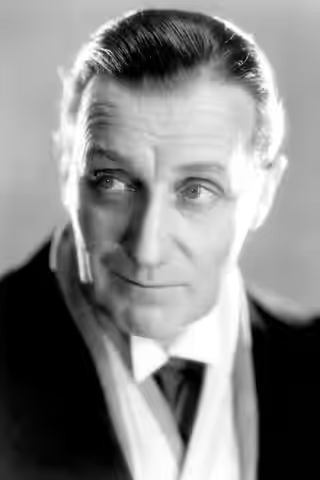
A stage veteran who came to Hollywood already playing old, O. P. Heggie spent eight years as the kind man at the edge of other people's films. A small trade, done well; once, as a blind hermit, he did more.
Fi1m perspective
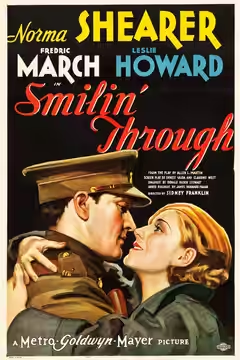
In Smilin' Through (1932) he is Dr. Owen, the old friend who calls at the house, says the sensible thing and leaves. We noted at the time that he says what the audience is thinking, and says it more often than it needs saying. That is the Heggie part in one sentence. Across some twenty-seven films he was the doctor, the father, the hermit: the decent man standing near the people the story is about, there to remind them, and us, of what decency sounds like.
He came to it late and from a long way off. He began in amateur companies in Adelaide, turned professional in 1900, and spent the years from 1906 on the London stage and from 1907 on Broadway, in Shaw, Galsworthy and the classics. In 1927 Norma Shearer and Irving Thalberg saw him in a Players Club revival of Trelawny of the Wells and talked him into Hollywood, where his first film was The Actress (1928). He was past fifty by then. On the stage he had been known for the trick of playing much older than he was; by the time the cameras got him, he needed less of the trick.
The parts followed the face. East Lynne (1931) gave him Lord Mount Severn, The Count of Monte Cristo (1934) the Abbé Faria, Anne of Green Gables (1934) Matthew Cuthbert, the adoptive father. He was best when the job was warmth held steady, and least useful when a script mistook steadiness for a lever to be pulled every few minutes, which is the trouble with Dr. Owen.
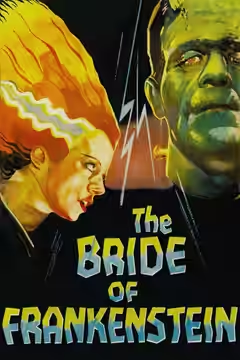
Then, in Bride of Frankenstein (1935), the blind hermit who befriends the Monster. It is the role he is remembered for, and it should be. We will admit it moves us every time, and the reason is plain: the hermit cannot see what everyone else runs from, so he does what nobody else in the film has thought to do and treats the creature as a guest. Heggie plays it simply, an old man glad of company. Whatever else the film is doing, and it is doing a great deal, that cottage is the quietest thing in it.
The one reservation anyone has raised about him is that he stayed a supporting player, and that is not really a reservation; it is a description. His last film was John Ford's The Prisoner of Shark Island (1936), as Dr. MacIntyre, another doctor, and he died in February of that year, aged fifty-eight, having been old on screen for the whole of his time there. Start with the hermit. Then go back to Smilin' Through and watch how a man with almost nothing to do makes a scene a little steadier just by standing in it.
Biography
O. P. Heggie (born Oliver Peters Heggie, also credited as Oliver Peters Heggie) was an Australian stage and screen actor. Born in Angaston, South Australia, he was educated at Whinham College and the Adelaide Conservatoire of Music. He began his career on the Australian stage in 1899 before moving to Britain and then the United States, where he appeared on Broadway from 1907.
Heggie entered films in 1928 and appeared in at least 27 productions before his death. He is best known for his role as the blind hermit in Bride of Frankenstein (1935). Other notable film credits include Abbe Faria in The Count of Monte Cristo (1934) and Dr. MacIntyre in The Prisoner of Shark Island (1936). He died in Los Angeles in 1936.