Oliver Stone the director trusts an audience to keep up with a crowded frame; Oliver Stone the writer keeps stopping to explain it. His best films, Platoon and JFK, survive the lectures. The weaker ones repeat themselves.
Fi1m perspective
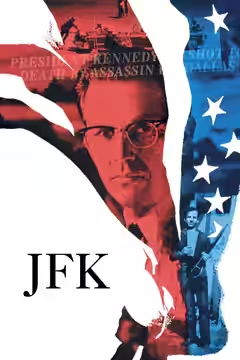
Somewhere in the third hour of JFK (1991), Jim Garrison is still adding names to his list and we are still keeping up. That is the Oliver Stone we like: a director who assumes we can hold a dozen faces and half as many theories in our heads, and cuts fast enough to make the effort a pleasure. Then someone pauses to say what it all means, and we remember the other Stone, the one who wrote the script. For more than forty years he has made films in which the direction trusts us and the writing does not.
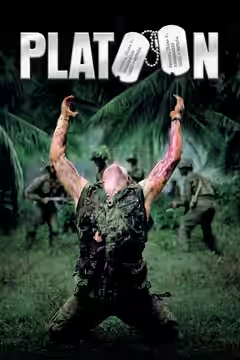
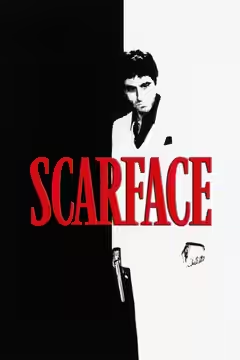
The writing came first. His screenplay for Brian De Palma's Scarface (1983) is viciously funny about a man who wants more of everything, and it goes on wanting for 170 minutes, with some exchanges outlasting their use. Platoon (1986), which he wrote and directed from his own time in Vietnam, is the film in which the two halves of him work best together, and our favourite of his: the heat, the muck and the fear are shown rather than described, and Charlie Sheen's Chris Taylor has to survive before he can choose what sort of man to become. Only the contest between Dafoe's and Berenger's sergeants is tidied into positions, and that is the writer's doing. Wall Street (1987), JFK and Natural Born Killers (1994) followed within eight years; Alexander (2004), Savages (2012) and Snowden (2016) came later, and he has since turned mostly to documentaries.
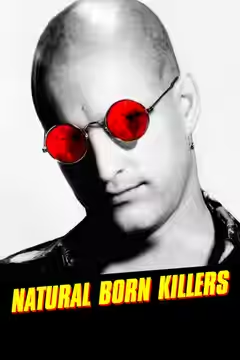
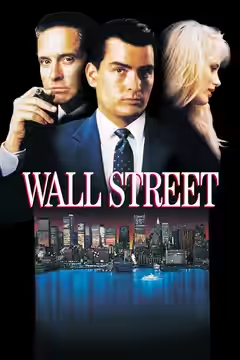
Set the films side by side and the same fault appears in each. In Wall Street, written with Stanley Weiser, Michael Douglas makes Gordon Gekko's invitation so inviting that the film has to keep stopping to tell us why it is wrong, while Sheen's Bud Fox waits for his next instruction from the screenplay. In JFK, written with Zachary Sklar, suspicion spreads so widely that doubt never gets a fair hearing. In Natural Born Killers we felt a grubby thrill at how much attention Robert Richardson's camera and Hank Corwin and Brian Berdan's cutting lavished on Mickey and Mallory, and disliked ourselves for it, which is exactly what Stone intended; the screenplay he wrote with Richard Rutowski and David Veloz then spends the rest of the film making sure we noticed. Stone has never trusted a point to land the first time.
He has said he considers himself "a dramatist before I am a political filmmaker", and on the evidence of his best scenes we agree with him. When he lets an image or an actor carry the point, he is hard to shake; the combat in Platoon stays with us, and so does Douglas. When he picks up the pen to underline it, the films lose some of the tension he has just built. Start with Platoon, go on to JFK, and allow for both of them telling you what you have just seen.
Biography
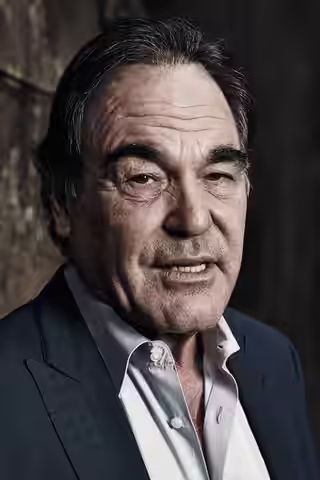
Oliver Stone is an American film director, screenwriter and producer. He was born William Oliver Stone on 15 September 1946 in New York City and studied at New York University.
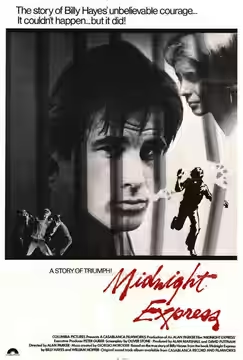
Stone served in the US Army in Vietnam. He began his screenwriting career in the 1970s and made his directorial debut with Seizure (1974). His early screenplays include Midnight Express (1978), Conan the Barbarian (1982) and Scarface (1983).
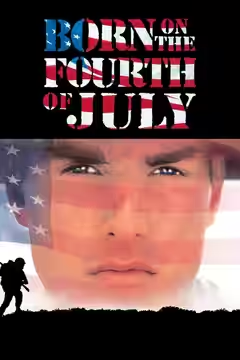
He is known for directing Platoon (1986), Wall Street (1987), Born on the Fourth of July (1989), JFK (1991), Natural Born Killers (1994) and Snowden (2016). Stone has received three Academy Awards: Best Adapted Screenplay for Midnight Express and Best Director for Platoon and Born on the Fourth of July.