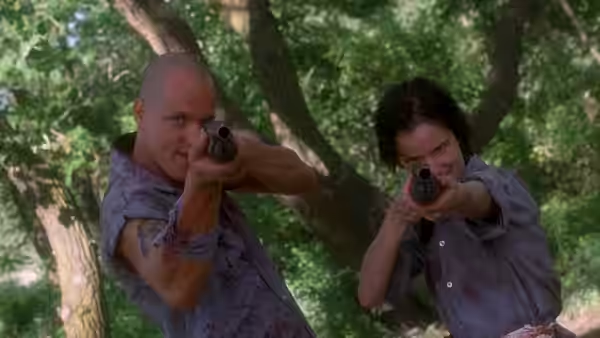
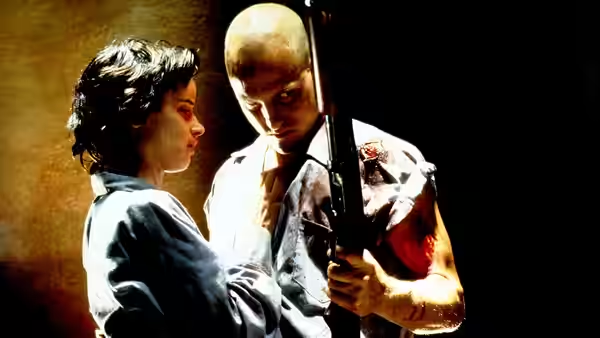
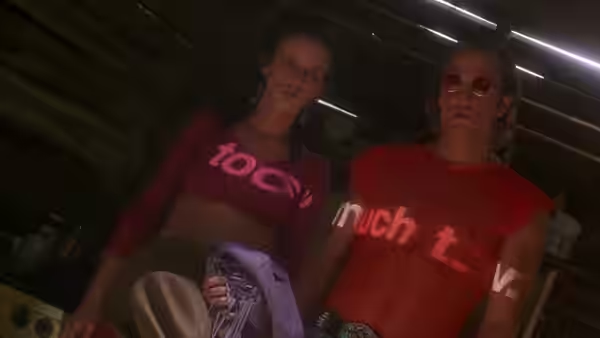
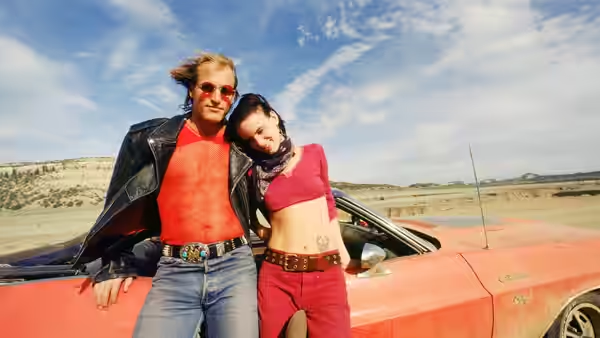
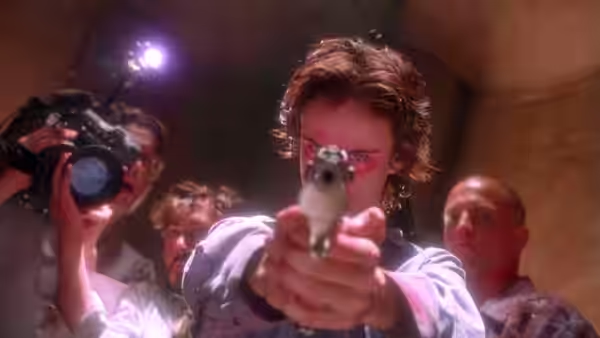
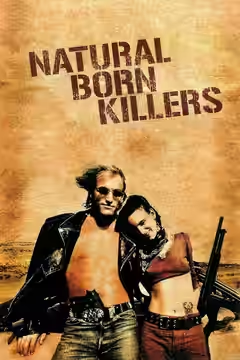
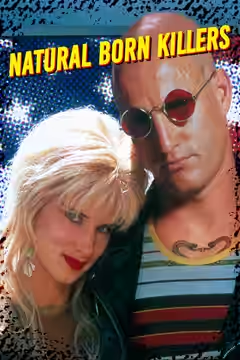
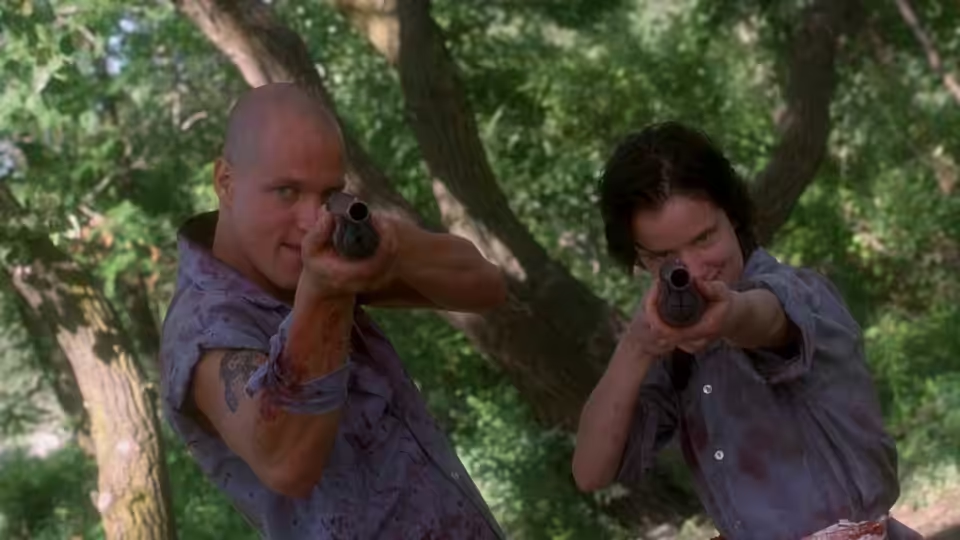
Mickey Knox (Woody Harrelson) and Mallory Knox (Juliette Lewis) aiming pistols in woods
Film review

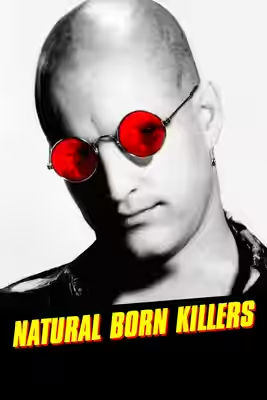
Natural Born Killers

1994 · Directed by Oliver Stone · 1h 59m · MPA R

In a sentenceTwo killers become celebrities while the camera competes for attention

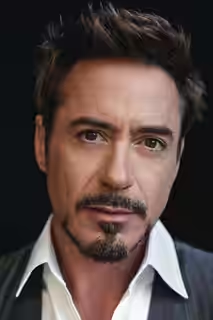
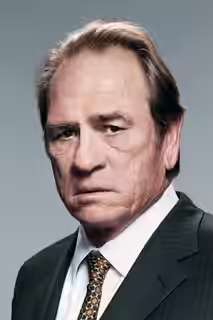
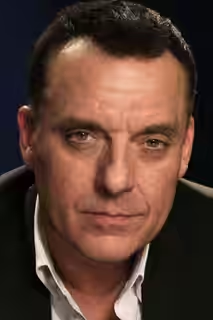
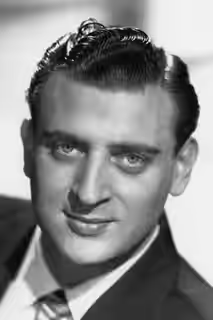
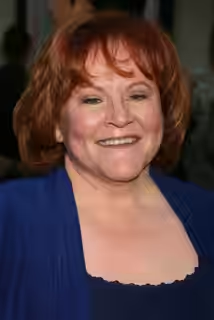
Mickey Knox (Woody Harrelson) and Mallory Knox (Juliette Lewis) are killers whose notoriety turns them into celebrities. Their violence becomes a media attraction, feeding a public appetite for the people responsible as well as their crimes. Oliver Stone’s crime thriller follows the couple and the society that makes them famous, with Robert Downey Jr. as Wayne Gale, Tom Sizemore as Detective Jack Scagnetti and Tommy Lee Jones as Warden Dwight McClusky. Rodney Dangerfield and Edie McClurg play Mallory’s parents. The story brings murder, publicity and the treatment of criminals as entertainment into the same frame.

Plays from YouTube when you press play; nothing loads from them until then.

Fi1m review

Oliver Stone’s crime film is worth seeing for its restless editing and committed performances, with a sizeable warning about its repetitive media satire. Making celebrity killers exhausting company does not, by itself, explain their appeal.

Natural Born Killers is worth seeing for the risks Oliver Stone takes with its images, though its account of media fame is crude and tiring. Mickey and Mallory Knox kill, become famous and attract a culture that seems pleased to have something so appalling to look at. Stone wants the attraction to feel ugly, including our own interest in watching these people for 119 minutes. He gives that problem plenty of force, but keeps returning to it without finding much more to say.

Woody Harrelson and Juliette Lewis make the couple difficult to dismiss as mere illustrations of a bad society. Harrelson gives Mickey a self-possession that helps explain why attention settles on him; Lewis makes Mallory feel capable of disrupting any scene she enters. Their performances have enough personality to hold us through stretches when the dialogue does not. There is an energy between them that the film needs, because the people around them are pitched so broadly. We can stay interested in these two without mistaking them for people we would like to meet.

Robert Richardson’s cinematography makes the killers commanding subjects, giving them the visual attention their notoriety demands. Hank Corwin and Brian Berdan cut the images together with little concern for allowing us to get comfortable. We felt a grubby excitement at seeing the killers receive such lavish attention, and disliked ourselves for it. The speed of the cutting makes their notoriety seductive before we have much time to consider what we are enjoying. This is where Stone’s method works: the discomfort comes from being encouraged to stare at Mickey and Mallory.

Victor Kempster’s production design helps make the America around them seem as exaggerated as their behaviour. That suits the broad satire, although it leaves little sense of an ordinary place being damaged by extraordinary cruelty. Brent Lewis’s music adds to the pressure, effectively sustaining the agitation when the images are already doing plenty. The cumulative noise becomes wearing, and a quieter passage would sometimes give the violence more weight.

The screenplay, by Stone, Richard Rutowski and David Veloz, from a story by Quentin Tarantino, is less inventive than the cutting. Dialogue too often announces attitudes the performances have already made clear. The idea that public disgust can coexist with an appetite for murder is worth exploring, but stating it repeatedly does not develop it. Stone seems reluctant to trust us to recognise the point without another shove. The film has ample time to examine that appetite and too few fresh observations about it.

Tommy Lee Jones commits to Warden Dwight McClusky’s excesses with enough vigour to make the broadness entertaining. His performance helps keep the characterisation watchable, even when nuance would have been welcome. Yet Stone gradually makes everyone seem equally outrageous, which limits how much the supporting performances can surprise us. Further exaggeration does little to unsettle us once we have come to expect it from everyone on screen.

An outlaw-couple thriller needs some uncertainty about why we keep following its leads, and Stone is impatient with uncertainty. He has decided what our fascination means and gives us few chances to think otherwise. Still, the actors and the cutting make this an interesting evening for anyone willing to tolerate the blunt dialogue and repeated lectures. See it for the performances and the editing; anyone hoping for a searching account of violence and fame should look elsewhere.

Critical consensus AI synthesised

56
Positive
5
Mixed
1
Negative
4

The reviews split almost down the middle, and the split runs partly along lines of time. Most critics writing in 1994 are impressed: Oliver Stone’s film is taken as an audacious and relevant satire of a culture that turns murderers into celebrities and a media that profits from them. Even its detractors concede the craft. Praise clusters on Stone’s visual assault, the editing across film stocks and Robert Richardson’s cinematography, with Woody Harrelson and Juliette Lewis singled out among the performances.

Reservations cluster on the satire itself, which several critics find obvious and heavy-handed and, with distance, dated, and on a plot they call thin and dialogue they call clichéd. The spread is wide. The New Yorker dissents from the 1994 enthusiasm, finding the film glib and oddly undisturbing for its subject, while The Guardian, revisiting it in 2024, judges it close to unwatchable. Later critics at Slant and Collider disagree, arguing the style alone keeps it fascinating.

RogerEbert.com
26 August 1994 · Roger Ebert
85*

The critic praises the film's satirical take on media obsession with violence and celebrity criminals, noting how it captures the moral emptiness of killers and the feeding frenzy it inspires. Stone's stylistic excesses and the performances, especially by Harrelson and Lewis, are highlighted as effective in delivering a slap-in-the-face indictment of society.

Read the full review →
Variety
8 August 1994 · Todd McCarthy
85*

The film is a heavy-duty acid trip and Oliver Stone’s most exciting work from a filmmaking standpoint, a scabrous and relevant look at society promoting murderers as pop icons and the media profiting from it.

Read the full review →
Los Angeles Times
26 August 1994 · KENNETH TURAN
80*

This is the movie Oliver Stone was born to make, an audacious and astonishing vision of media darlings who are serial killers, delivered with relentless visual dexterity that mocks societal fascination with violence.

Read the full review →
Slant Magazine
9 October 2023 · Jake Cole
70*

The critic finds the film a splenetic, sophomoric but captivating media satire whose visual inventiveness and hallucinogenic style make it an enduringly fascinating achievement, even if its commentary is subordinated to surface pleasures. The 4K restoration is praised for capturing the film's shifting formats and saturated colors better than ever.

Read the full review →
The New Yorker
29 August 1994 · Terrence Rafferty
40*

Stone’s flashy, hyperbolic film sells itself as shocking satire but is one of the least disturbing films about mass murder, a frivolous barrage of glib ideas that fails to make viewers think anew about violence or culture.

Read the full review →
Empire
1 January 2000 · Clark Collis
30*

Oliver Stone's film is an assault from start to finish that succeeds as a rare risk-taking audio-visual experience and constructs a frighteningly recognisable vision of America. It is difficult to describe as good entertainment in any classical sense, with a non-existent plot, absurdly clichéd dialogue and a thesis rammed home very crudely.

Read the full review →

Straight answers AI written, from our review

Is Natural Born Killers worth watching?
Natural Born Killers is worth watching for Oliver Stone's restless editing and the committed performances of Woody Harrelson and Juliette Lewis, and we scored it 64. Its satire of media fame is crude and repeats itself for much of the 119 minutes, so it suits viewers who can tolerate blunt dialogue for the sake of bold images. Anyone wanting a searching account of violence and fame should look elsewhere.
How long is Natural Born Killers, and what is it rated?
Natural Born Killers runs 1h 59m and is rated R by the MPA in the US. It is a crime and thriller film.
Where can I watch Natural Born Killers in the US?
Natural Born Killers is available to rent from Amazon Prime Video from $3.99. Availability is checked daily; the links above go straight to each service.
How violent or frightening is Natural Born Killers, and is it suitable for children?
Natural Born Killers is an 18 certificate in the UK and rated R in the US, and it is not suitable for children. It follows two killers whose murders are treated as entertainment, and the cutting is fast and relentless, designed to make watching them uncomfortable. The squeamish, and anyone worn down by sustained noise and cruelty on screen, should give it a wide berth.
How does Natural Born Killers compare to Bonnie and Clyde?
Natural Born Killers is the louder and more exhausting of the two outlaw-couple films, and Bonnie and Clyde is the better one. Arthur Penn's film gives its killers room for affection, fear and consequences, while Stone keeps lecturing us about our appetite for watching his. Choose Penn for a story with characters you can follow; choose Stone for the editing and the performances.
What should I watch after Natural Born Killers?
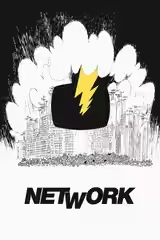
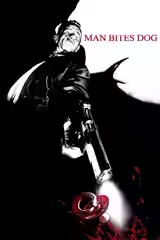
After Natural Born Killers, try Bonnie and Clyde (1967, Fi1m 88): Another outlaw couple, with more room for affection, fear and consequences. Then Network (1976, Fi1m 86): Television’s appetite for spectacle gets a sharper script and equally furious performances; and Man Bites Dog (1992, Fi1m 78): A film crew follows a killer, making complicity horribly difficult to ignore.

Cast

Awards

MTV Movie Award for Best Kiss, 1995

Nominated
MTV Movie Award for Best Kiss

Grand Jury Prize of the Venice Film Festival, 1994

Won
Grand Jury Prize of the Venice Film Festival

If you liked this, try…

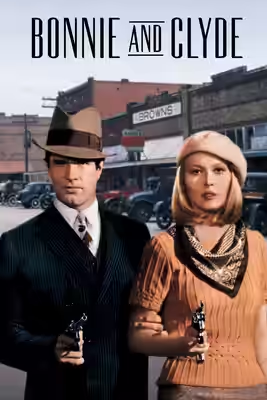
  1. Bonnie and Clyde (1967, Fi1m 88)Another outlaw couple, with more room for affection, fear and consequences.

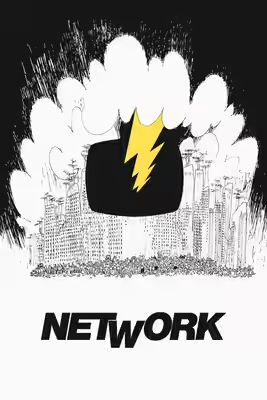
  2. Network (1976, Fi1m 86)Television’s appetite for spectacle gets a sharper script and equally furious performances.

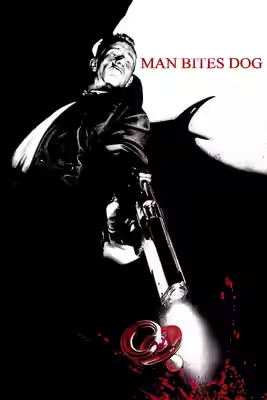
  3. Man Bites Dog (1992, Fi1m 78)A film crew follows a killer, making complicity horribly difficult to ignore.

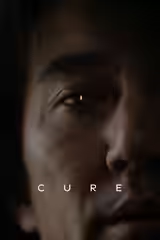
  4. Cure (1997, Fi1m 85)A quieter, more troubling approach to murder, suggestion and moral responsibility.

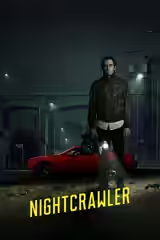
  5. Nightcrawler (2014, Fi1m 85)A crime photographer turns other people’s suffering into a business opportunity.

Free account

Know what to watch tonight

Two lists that know where things are streaming, collections you can share, your own score beside ours, and Discover that remembers what you have seen.

  • Want to see, sorted by what is streaming now
  • Seen, with your score out of ten
  • No adverts, ever