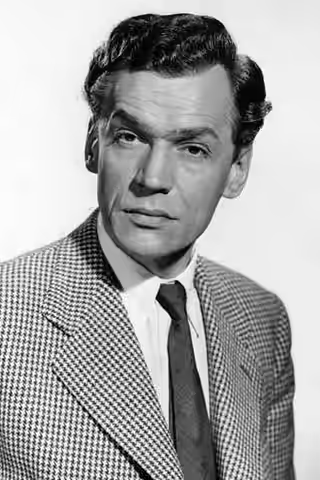
Paul Scofield answered a beat later than anyone expected and a good deal more quietly, so that a room full of louder men ended up leaning in. He made few films, and the best of them are built around that pause.
Fi1m perspective
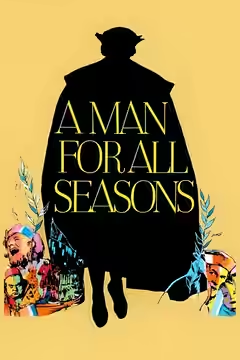
Watch what he does when asked a direct question. In A Man for All Seasons (1966), when Cromwell or Norfolk puts the oath to Thomas More, Scofield's eyes go somewhere else for a moment before he answers, as if he were checking the statute one last time, and the answer, when it comes, is quieter than the question. He never underlines. He never rushes. Other actors show you a man thinking; Scofield shows you a man who has already thought and is deciding how much to tell you.
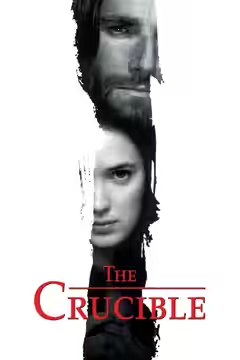
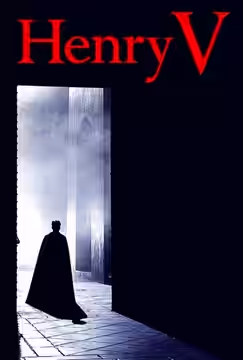
He was a stage actor first and stayed one. He began professionally in 1940, went through Birmingham Repertory, and was doing Shakespeare at Stratford from 1946. More came to him in Robert Bolt's play in London in 1960 and on Broadway the following year, and by the time Fred Zinnemann filmed it in 1966 the part had been in his mouth for six years. It shows, in the best way. Afterwards he went back to the theatre, with major roles at the National in the 1970s, and let the films come to him: Peter Brook's King Lear (1971), the French King in Kenneth Branagh's Henry V (1989), Judge Danforth in The Crucible (1996).
The voice is what everyone mentions, and rightly; it could go from a rumble to something near falsetto without visible effort. What interests us is how seldom he used the top of it. He said of More that "The way More sounded came out of my characterization of him as a lawyer. His dryness of mind, I found, led him to use a sort of dryness of speech." That is the whole method. He worked out who the man was and let the sound follow. The speech in the garden at Chelsea, explaining to Corin Redgrave's William Roper why you do not cut down the law to get at the Devil, tightened our throat, and it is a lecture on statute delivered without a raised voice.
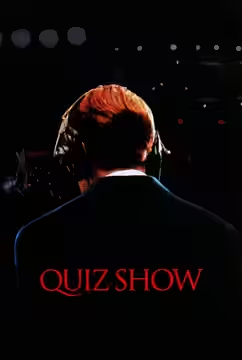
Twenty-eight years later, in Robert Redford's Quiz Show (1994), he plays Mark Van Doren and the same stillness does something different. Here it makes dignity attractive rather than self-important, and it is the reason the film finds these people harder to judge than the fraud is to condemn. It is a supporting part and he does not push it forward. We could have watched a great deal more of him.
The complaint, and it is a fair one, is that there is not enough of him on film. The stage came first and he did not pretend otherwise, and screen stardom of the ordinary sort was never on offer to a man who always looked as though he was weighing what you had just said. If you have seen the two we have reviewed, go to Brook's King Lear next. If you have seen neither, start in the garden at Chelsea.
Biography
Paul Scofield (1922–2008) was an English actor. He trained at the Croydon Repertory Theatre School and the Mask Theatre School in London. He began his career in repertory theatre, including with the Birmingham Repertory Theatre and at Stratford-upon-Avon.
Scofield received the Tony Award for Best Actor in a Play in 1962 for his performance as Sir Thomas More in the Broadway production of A Man for All Seasons. He won the Academy Award for Best Actor for reprising the role in the 1966 film adaptation. In 1969 he won a Primetime Emmy Award for Male of the Species. He was nominated for the Academy Award for Best Supporting Actor for his role as Mark Van Doren in Quiz Show (1994) and won the BAFTA Award for Best Actor in a Supporting Role for The Crucible (1996).
Scofield was appointed CBE in 1956 and Companion of Honour in 2001. He declined a knighthood.