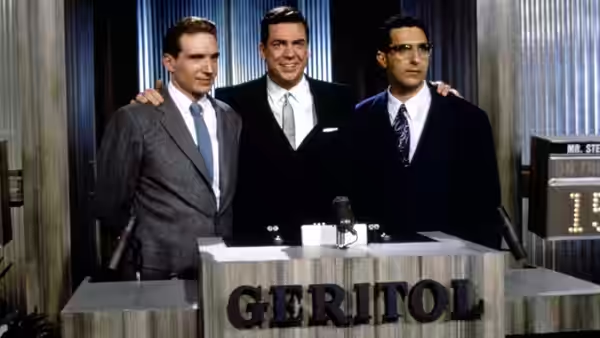
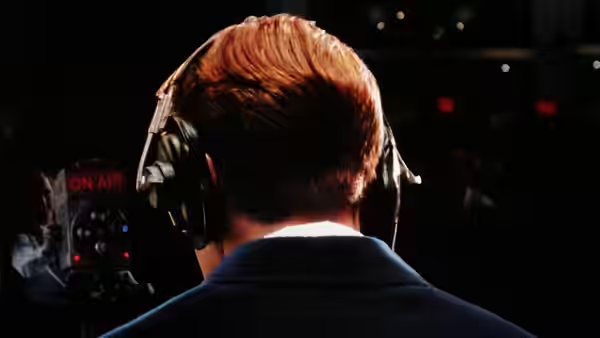
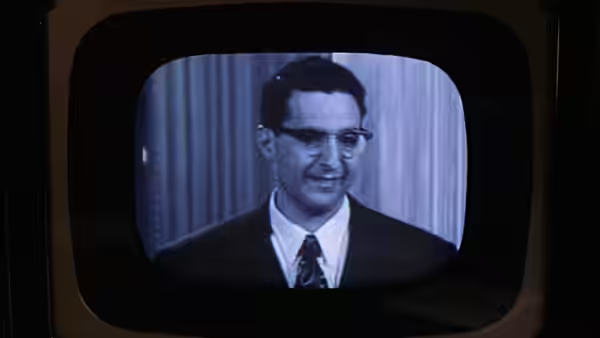
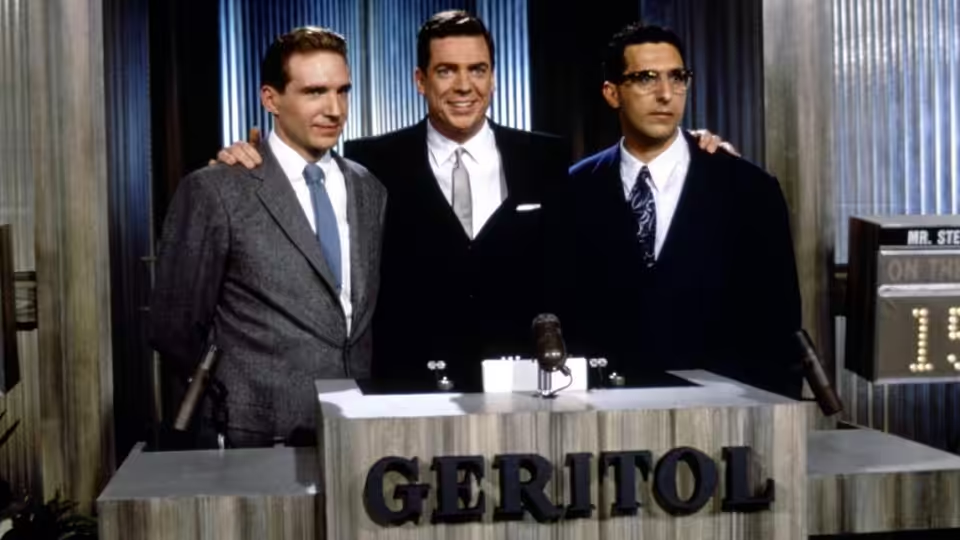
Three suited men stand behind a Geritol desk in a television studio
Film review

Quiz Show

1994 · Directed by Robert Redford · 2h 13m · MPA PG-13

In a sentenceTelevision takes a keen interest in honesty, provided it doesn’t interfere with the programme

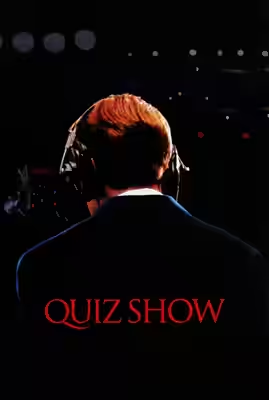
In 1950s America, the television quiz programme Twenty-One makes public figures of contestants Herb Stempel (John Turturro) and Charles Van Doren (Ralph Fiennes). Their contrasting experiences sit at the centre of a scandal over rigged results. As the programme’s honesty comes under scrutiny, the story follows the people involved in the deception and the public appetite for television celebrity. Rob Morrow plays Dick Goodwin, with Paul Scofield as Mark Van Doren and David Paymer as Dan Enright. Robert Redford directs this drama about fraud and the price of fame.

Fi1m review

Robert Redford’s Quiz Show makes television fraud absorbing through sharp writing and performances that complicate easy judgement. It runs a little long, but its attention to who gets believed gives the scandal a lasting sting.

Quiz Show is a sharp, absorbing drama about television fraud, with enough sympathy for its participants to make their conduct uncomfortable to watch. Robert Redford takes the scandal surrounding the 1950s programme Twenty-One seriously without making every conversation sound like a warning to the nation. Paul Attanasio’s screenplay allows wit, vanity and embarrassment into a story that could easily have become a lecture on public standards. We recommend it, with a reservation about how long it takes to make some of its points.

John Turturro’s Herb Stempel and Ralph Fiennes’s Charles Van Doren give the film its most revealing contrast. Turturro makes Stempel difficult company without making him negligible, while Fiennes gives Van Doren an ease that makes it tempting to excuse him. We were uncomfortable with how readily we warmed to Van Doren; Fiennes makes his composure persuasive even while the story gives us reasons to distrust it. That unequal response to the two contestants is something Redford understands well, and he lets the actors expose it without explaining every implication.

Paul Scofield, as Mark Van Doren, is especially good at making dignity seem attractive rather than merely self-important. His performance helps explain why judging these people proves more difficult than condemning the fraud. The ensemble gives Attanasio’s quick exchanges room to register, and Redford rarely lets a character become only a spokesman for a position. That matters in a drama whose subject might otherwise leave everyone divided into liars and people waiting to catch them, with little reason to care about either group.

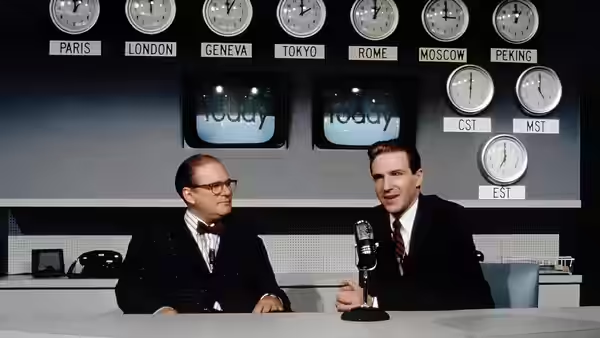
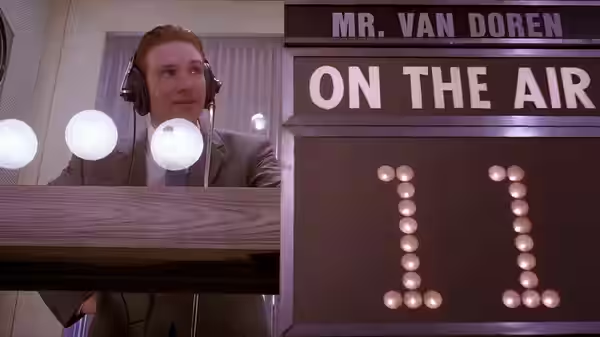
Michael Ballhaus’s cinematography feels appropriately polished for a film about television’s power to make people attractive. Jon Hutman’s production design is persuasive as a picture of the period without becoming the chief thing we look at. Both serve the actors, keeping our attention on the people whose manners and appearances influence our judgement. It matters that the film looks inviting: an ugly, forbidding version of this world would make the appeal of belonging to it much harder to understand.

Stu Linder’s editing gives the dialogue pace without making the performances feel rushed. The film is less sure when it allows a conversation to continue after the interesting disagreement has run out. At 133 minutes, there are stretches that could lose some talk without losing much meaning. Mark Isham’s music leaves less of an impression than the actors’ voices, a sensible balance for material this talkative. Redford’s confidence in the writing is largely justified, but a firmer cut would have helped where the point is already clear.

The larger claim about American innocence is less convincing. Television’s willingness to reward a pleasing manner is clear enough, but asking this scandal to explain a country’s disillusionment puts more weight on it than it can bear. Redford is more persuasive about the unfair treatment of individuals than about class across an entire society. The film gives us ample reason to question our response to Stempel and Van Doren without quite persuading us that their experiences explain everyone else’s.

As a scandal drama, Quiz Show is unusually interested in why people enjoy the company of someone they ought to question. It gives us time to recognise the temptation ourselves. Watch it for the performances, and forgive the conversations that could have finished a little sooner.

Critical consensus AI synthesised

81
Positive
10
Mixed
0
Negative
0

The reviews are uniformly favourable. Robert Redford’s direction takes most of the credit, for turning a footnote in 1950s television history into a drama about complicity and the price of fame without letting it turn ponderous. Paul Attanasio’s screenplay is praised for its wit and its grip on the period, and the performances are singled out repeatedly, with Ralph Fiennes and Paul Scofield named most often. Several critics read it as a story about America losing something, respect for intelligence or plain innocence, to the ratings.

The spread is narrow; nobody dislikes the film, and the lower scores come from critics who find it slightly less than it wants to be. The New Yorker thinks it does not fully sell its ideas about class, and The Independent finds it overlong, with some shapeless scenes. Consequence argues the film is more forgiving of television than its reputation suggests, and that the network executive’s defence of the rigging is meant to land.

RogerEbert.com
16 September 1994 · ★★★★/4 · Roger Ebert
100

Redford directs a smart, subtle drama that works as entertainment, history, and moral challenge, showing how the 1950s quiz-show scandal marked a shift away from respect for intelligence and toward ratings-driven fakery. The film excels at capturing class and racial tensions, the complicity of networks and sponsors, and the lasting personal cost to contestants like Van Doren.

Read the full review →
The New York Times
14 September 1994 · Janet Maslin
90*

The film is a supremely elegant and thoughtful parable about awakening from false values and misplaced optimism in American life. It transcends its 1950s setting with a piercing disillusionment that still resonates.

Read the full review →
Empire
1 January 2000 · Kim Newman
85*

Redford's direction finds weight and relevance in the 1950s quiz show scandal without becoming ponderous, anchored by strong performances and sharp observation of media and celebrity culture. The film is praised as his best as director, rich in character, wit and heart.

Read the full review →
Time Out
8 February 2012 · TCh
85*

Redford has fashioned an impeccably nuanced Faustian drama from a brilliant screenplay that aspires to capture America's fall from grace at the end of the 1950s. The film is perfectly pitched, brimming with insight and wit.

Read the full review →
Los Angeles Times
16 September 1994 · Kenneth Turan
80*

Redford and screenwriter Attanasio turn a seemingly minor historical footnote into an absorbing drama about moral ambiguity and the affability of evil, with a structure that gives equal weight to Van Doren, Goodwin, and Stempel. The film succeeds through its subtle lens on complicity, temptation, and American dreams of quick success, anchored by standout performances especially from Fiennes and Scofield.

Read the full review →
Radio Times
★★★★ · Alan Jones
80

Intelligently crafted by director Robert Redford, this is a riveting account of a true-life 1950s TV quiz show scandal involving fraud and corruption. It reveals much about American ethics, manners and morals, and the true price of fame.

Read the full review →

Straight answers AI written, from our review

Is Quiz Show worth watching?
Quiz Show is worth watching for anyone who enjoys a talkative, well-acted drama about public dishonesty, and we scored it 84. Ralph Fiennes, John Turturro and Paul Scofield make the people behind the fraud harder to judge than to condemn. It runs to 133 minutes, and some conversations continue after their point has been made.
How long is Quiz Show, and what is it rated?
Quiz Show runs 2h 13m and is rated PG-13 by the MPA in the US. It is a history and drama film.
Where can I watch Quiz Show in the US?
Quiz Show is available to rent from Amazon Prime Video and Apple TV from $3.99. Availability is checked daily; the links above go straight to each service.
How violent or frightening is Quiz Show, and is it suitable for children?
Quiz Show is a 15 certificate in the UK and carries no violence to speak of; it is a drama about lying on television, not a thriller. The rating reflects adult language and themes rather than anything frightening. Younger children would find little to hold them, but teenagers interested in how people talk themselves into deception should manage it comfortably.
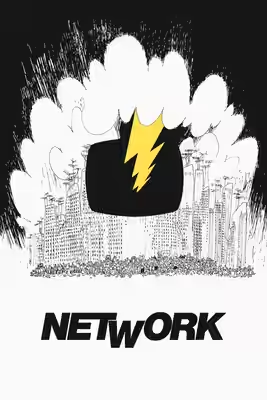
How does Quiz Show compare to Network?
Quiz Show is the calmer, more measured film, while Network is louder and angrier about what television does to the people who make it. Redford watches individuals and lets us judge them; Lumet lets his characters make speeches at us. Choose Quiz Show for performances and quiet discomfort, Network for satire with a temper.
What should I watch after Quiz Show?
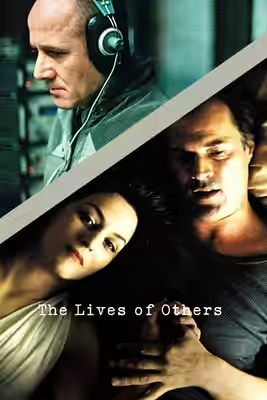
After Quiz Show, try Network (1976, Fi1m 86): Television’s commercial instincts receive a louder, angrier examination, with plenty worth arguing about. Then The Lives of Others (2006, Fi1m 84): For another patient drama about complicity, professional duty and the difficulty of changing; and The Truman Show (1998, Fi1m 88): A manufactured television reality makes deception comfortable viewing until someone starts asking questions.

Cast

Awards

Academy Awards, 1995

Nominated
Best Director
Nominated
Best Picture
Nominated
Best Supporting Actor
Nominated
Best Writing, Adapted Screenplay

If you liked this, try…

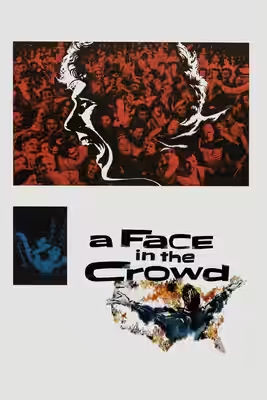
  1. A Face in the Crowd (1957) · not reviewed yetAnother television personality discovers how much bad behaviour an audience will forgive.

  2. Network (1976, Fi1m 86)Television’s commercial instincts receive a louder, angrier examination, with plenty worth arguing about.

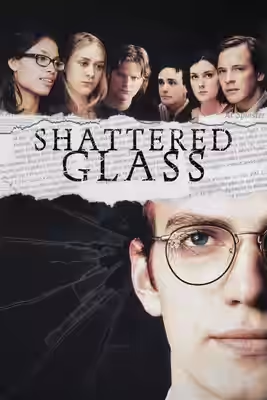
  3. Shattered Glass (2003) · not reviewed yetA persuasive fraud makes colleagues reluctant to check what they want to believe.

  4. The Lives of Others (2006, Fi1m 84)For another patient drama about complicity, professional duty and the difficulty of changing.

  5. The Truman Show (1998, Fi1m 88)A manufactured television reality makes deception comfortable viewing until someone starts asking questions.

Free account

Know what to watch tonight

Two lists that know where things are streaming, collections you can share, your own score beside ours, and Discover that remembers what you have seen.

  • Want to see, sorted by what is streaming now
  • Seen, with your score out of ten
  • No adverts, ever