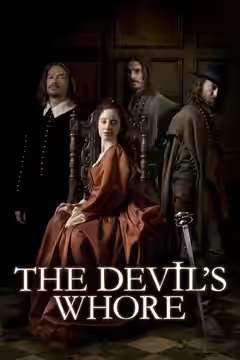
Peter Flannery writes long: dramas that run across decades and set private lives against the public history pressing on them. He is at his best when two people fail to say what they mean, and weakest when the history has to be got through.
Fi1m perspective
A Flannery scene tends to be two people in a room, one of them about to say something that matters, and the moment passing before they do. In Our Friends in the North (1996) Peter Vaughan's Felix Hutchinson hesitates his way through an ordinary conversation as if he might not reach the end of it, and we were moved by him more than by anything the series does with public history. Flannery lets awkwardness stay awkward. He does not send in a quick line to tidy it away.
He came to television from the stage. He was resident playwright at the Royal Shakespeare Company in the late 1970s and early 1980s, where Savage Amusement (1978) and the first Our Friends in the North (1982) were written. Television followed: Blind Justice (1988), then the nine-part Our Friends in the North in 1996, four friends walked from 1964 to 1995, which is the work he will be remembered for. His film scripts, Funny Bones (1995) and The One and Only (2002), have made less of a mark. Then a long gap and two returns: Inspector George Gently (2007–2017), a crime series he created and set in the North East of the 1960s, and The Devil's Whore (2008), which he had been working on for more than a decade with co-writer Martine Brant.
The design is the same each time. Invent someone and walk them through the history, so that the famous arrive as people to be met, loved or argued with. Angelica Fanshawe in The Devil's Whore is in no history book, but almost everyone she meets is, and she falls in and out of love with men on every side of the war. It works because Flannery is more interested in the meeting than in the event. It breaks when there are too many events. Both of our reviews complain of the same arithmetic: nine episodes for three decades, four for the better part of two, the private scenes given all the patience and the public story reduced to the next piece of information. Joe Walker and David Charap cut The Devil's Whore so hard that we reached for a date more than once, and Angelica's habit of loving whichever famous man is nearest starts to look like a way of moving her along.
What he gives actors is time, and permission to sound unlike one another. Christopher Eccleston, Mark Strong and Daniel Craig are three distinct men in Our Friends in the North even when they share a grievance, and Andrea Riseborough carries years of history on a young face in The Devil's Whore. Flannery has called the first of these "a posh soap opera with something to say", and it is a fair description of everything he does: the something is the politics, and the soap opera is what keeps us watching for nine episodes to hear it.
Start with Our Friends in the North and give it the evenings it asks for. Then The Devil's Whore, with a date to hand. The history will hurry you along; the people will not.
Biography
Peter Flannery is an English playwright and screenwriter. Born on 12 October 1951 in Jarrow, Tyne and Wear, he was educated at the University of Manchester and served as writer-in-residence at the Royal Shakespeare Company in the late 1970s and early 1980s.
He wrote the original stage play Our Friends in the North (1982) and its acclaimed nine-part BBC television adaptation (1996), which follows four friends in Newcastle across three decades. His other stage work includes Savage Amusement (1978) and Singer (1989). Television credits encompass Blind Justice (1988), Inspector George Gently (2007–2017, which he created and adapted), and The Devil's Whore (2008).
Flannery has received multiple awards, including BAFTAs for Our Friends in the North and the Dennis Potter Award for outstanding achievement in television writing in 1997.