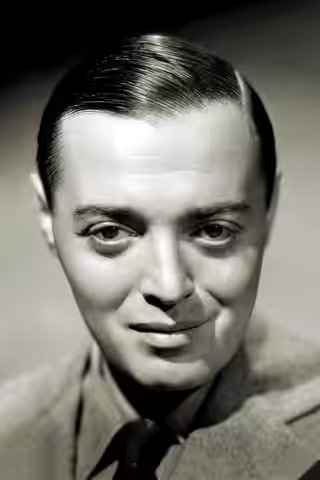
Peter Lorre can be funny and frightening in the same moment. We value him most when he makes a dangerous man seem helpless, as in M; too many films were content to give his distinctive face another familiar sinister part.
Fi1m perspective
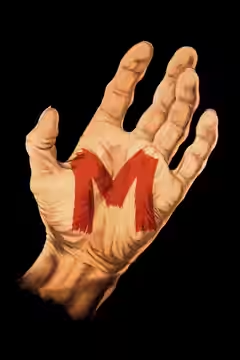
In M (1931), Peter Lorre’s frightened face makes it hard to keep our feelings about Hans Beckert straightforward. Beckert is a child murderer, and Lorre gives him a vulnerability we would rather not have to consider. We felt sorry for him, and were disturbed by our pity, because his distress was so persuasive without making his crimes less appalling. Fritz Lang gets something exceptional from Lorre here: we have to keep looking at someone we would prefer to dismiss.
After the breakthrough in M came his first English-language film, Alfred Hitchcock’s The Man Who Knew Too Much (1934), and Hollywood work from 1935. There, his accented voice and conspicuous eyes were repeatedly put to work announcing somebody suspect. Eight Mr Moto films between 1937 and 1939 show how quickly repetition became part of the job. The industry found regular uses for him without often asking as much as Lang had.
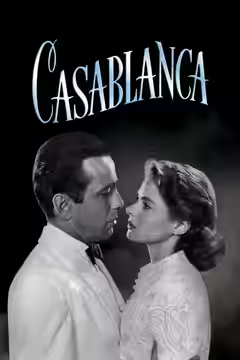
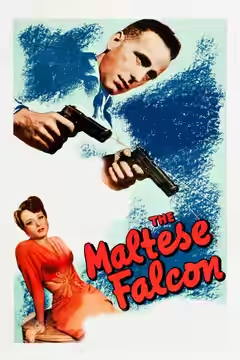
As Joel Cairo in The Maltese Falcon (1941), he makes wheedling menace comic without making it harmless. His early Warner Bros years brought repeated work with Humphrey Bogart and Sydney Greenstreet. In Casablanca (1943), Ugarte has a small role and the letters of transit that the plot needs. We recommend the film wholeheartedly, but that brief appearance gives us less to judge than Beckert does.
Der Verlorene (1951) took him back to Germany, directing as well as acting in a film about guilt and responsibility. That was a departure from the familiar supporting work, although we would not dismiss the pleasure of those smaller parts. His quick shifts between humour, pathos and menace could make a suspect character difficult to read even when the casting seemed to have done the explaining.
Lang draws some of the surrounding figures in M so grotesquely that we can feel him insisting on our disgust. Lorre gives us room to feel two things at once, which makes those broader characterisations seem blunt. He makes Beckert pitiful without asking us to forget what he has done. Start with M if you can bear the subject; for a shorter acquaintance, try Ugarte in Casablanca.
Biography
Peter Lorre, born László Löwenstein, was a Hungarian-American actor. He was born on 26 June 1904 in Rózsahegy (now Ružomberok), Austria-Hungary (now Slovakia), and died on 23 March 1964 in Los Angeles, California.
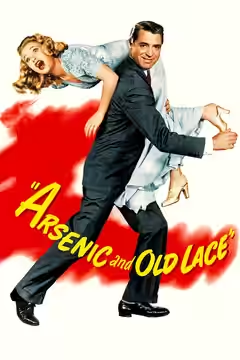
Lorre first gained international attention for his role as a serial killer in the German film M (1931). He later became a featured player in Hollywood, appearing in The Maltese Falcon (1941) as Joel Cairo, Casablanca (1942) as Ugarte, Arsenic and Old Lace (1944) as Dr. Einstein, and the Mr. Moto detective series. He frequently collaborated with Sydney Greenstreet and Humphrey Bogart.