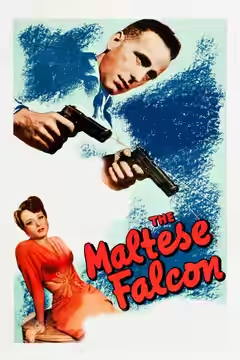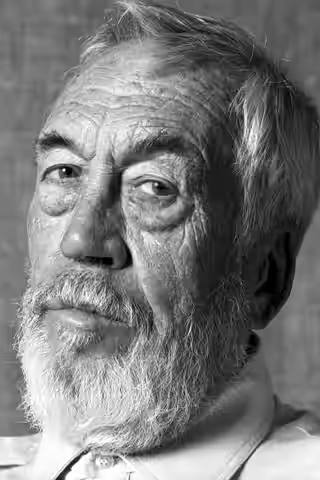
John Huston puts difficult people in a room, on a boat or up a mountain and lets them talk until the talk turns dangerous. Over five decades the method rarely failed him, though he could seldom resist explaining what his actors had already shown.
Fi1m perspective
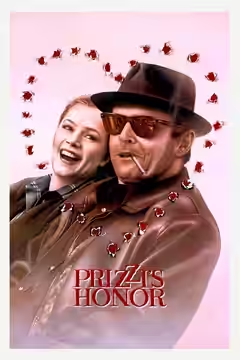
The Huston scene is two or three people sitting down to settle something. In The Maltese Falcon (1941) Sydney Greenstreet's Kasper Gutman brings a leisurely authority to the bargaining, and the film gives the conversation the attention another thriller would spend on a chase. In Prizzi's Honor (1985), forty-four years on, hired killers discuss murder with the seriousness they bring to family obligations, and the camera stays on whoever is weighing the proposition. Huston trusted that watching a person decide something is action enough. Most of the time he was right.
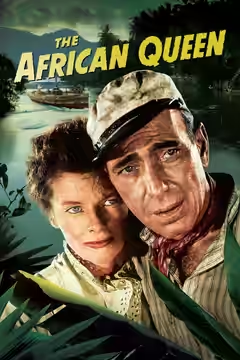
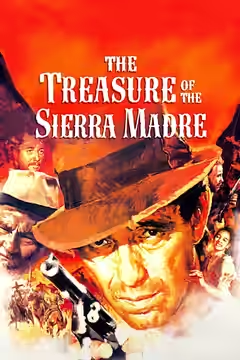
He came to directing out of the Warner Bros. writing room in the late 1930s and never stopped writing. He adapted Dashiell Hammett himself for The Maltese Falcon, his first film as director, took B. Traven's novel for The Treasure of the Sierra Madre (1948) and wrote The African Queen (1952) with James Agee. Nearly everything he made began as a book. He left Warners for an independent run through the 1950s, lost his footing in an uneven 1960s, and came back late with The Man Who Would Be King (1975), from Kipling, and Prizzi's Honor. Humphrey Bogart made six films with him.
His method with actors was to cast well and get out of the way. His father Walter Huston talks his companions half to death in Sierra Madre and gives the film most of its humour. Katharine Hepburn and Bogart bicker their way down a river in The African Queen, and the bickering carries the film past dangers that feel conveniently arranged. Kathleen Turner holds her own against Jack Nicholson in Prizzi's Honor without borrowing his mannerisms, while Andrzej Bartkowiak's camera stays on whoever is talking. We came out of The Maltese Falcon liking Sam Spade less than when we went in, and liking the film more for it, because Huston will not soften him and Bogart plays every exchange as though it might cost somebody something.
The weakness is that he did not always trust what he had filmed. Sierra Madre keeps telling us what greed does after the prospectors have shown us, and Steiner's score presses feelings the actors had already made clear. The Maltese Falcon is held so firmly that some exchanges exist only to deliver the next piece of the puzzle. Under the toughness there is a moralist who wants the lesson stated, and the films are most disturbing when he keeps quiet.
Start with The Maltese Falcon and The Treasure of the Sierra Madre, then Prizzi's Honor for proof that the method still worked in his last years. Huston told an interviewer in 1965 that he was not aware of having a style as a director, and that when people told him he did, he could not recognise it. Anyone who has watched two of his people sit down and come to an appalling agreement can recognise it for him.
Biography
John Huston was an American film director, screenwriter and actor. Born on 5 August 1906 in Nevada, Missouri, he died on 28 August 1987 in Middletown, Rhode Island. He began his career in Hollywood as a screenwriter in the 1930s before making his directorial debut with The Maltese Falcon (1941).
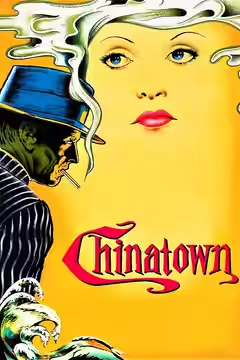
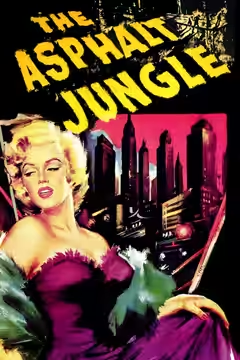
Huston directed numerous films, often writing the screenplays himself. Among those for which he is best known are The Treasure of the Sierra Madre (1948), Key Largo (1948), The Asphalt Jungle (1950), The African Queen (1952), The Man Who Would Be King (1975) and Prizzi's Honor (1985). He also acted in several productions, including the role of Noah Cross in Chinatown (1974).