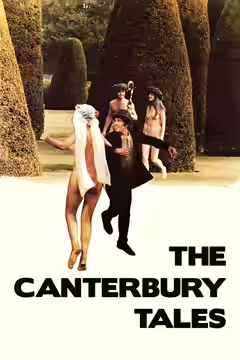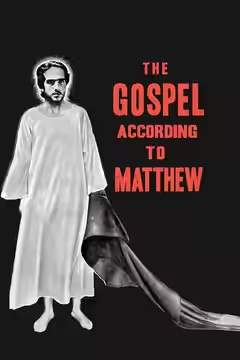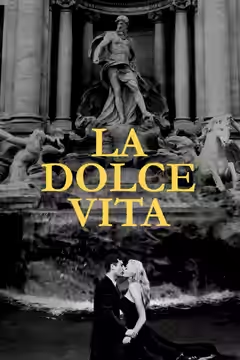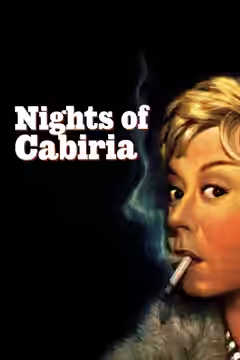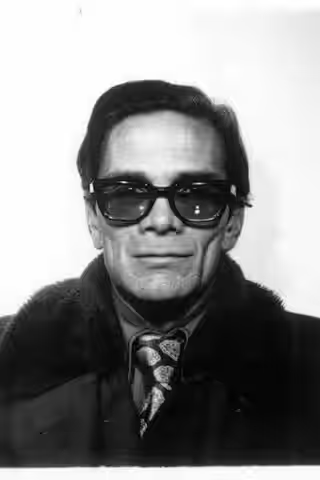
A poet and novelist who came to cinema writing dialogue for Fellini and then made films that trust a face over a speech. He wanted reality on screen rather than actors pretending to it, and in The Gospel According to St. Matthew he got it.
Fi1m perspective
A girl of perhaps sixteen stands in a doorway, visibly pregnant. A man looks at her. She looks at him. Nobody speaks, and Tonino Delli Colli holds one face and then the other until the man walks off down the road. That is how The Gospel According to St. Matthew (1965) opens, and it is Pasolini's whole method in a minute: no invented line, no professional in the frame, a poor stone town and two frightened people who do not have the words for what is happening to them. We were moved before anyone had spoken, and the reason is that Pasolini has understood the story as something that happens to ordinary people, not something they announce.
He was a writer before he was a director and he never stopped being one. He published poetry in Friulian dialect from 1942, wrote novels after moving to Rome in the 1950s, and entered cinema supplying dialogue for Fellini on Nights of Cabiria (1957) and La Dolce Vita (1960). His hand is hard to separate from the other three credited on Cabiria, but the script's tolerance of a heroine who will not behave tidily is the quality we liked best in it. Then came Accattone (1961), Roman sub-proletarian life played by people who lived it, and the pattern held for fourteen years: the Gospel; Theorem (1968), a stranger arriving in a bourgeois household; the Trilogy of Life, from The Decameron (1971) to Arabian Nights (1974); and Salò (1975), Sade moved to the last days of Italian Fascism.
The non-professionals were a principle, not a saving. He said he preferred them because they "themselves are shreds of reality as is a landscape, a sky, the sun, a donkey passing along the road". Franco Citti and Ninetto Davoli turn up film after film. Delli Colli shot eleven of them, Nino Baragli edited, and between them the pictures swing from still, painterly tableaux to handheld passages that look like news footage. The Sermon on the Mount in the Gospel is a run of close-ups against skies that change from shot to shot, Baragli cutting as if each line were said on a different day, and Enrique Irazoqui's thin, angry Christ is a man impatient with the poor being kept poor. Pasolini was a Marxist who did not believe in God, and he plainly loves him for it.
The method has a cost. When the Gospel's disciples are called, the film settles for a long stretch into speeches delivered straight to camera, and Pasolini's refusal to dramatise turns it, for a while, into a reading with pictures. Beyond the films we have reviewed, the reservations are consistent: a fondness for rural, pre-modern life that shades into nostalgia, and a charge that Salò equates Sadean cruelty with fascism too neatly. We have not reviewed it and will not rule on it here.
Start with the Gospel, and start it with a sceptic beside you. It was made by a man who did not believe a word of it and cut none of them.
Biography
Pier Paolo Pasolini (5 March 1922 – 2 November 1975) was an Italian film director, screenwriter, poet and writer. He was born in Bologna and is best known for his work in cinema from the early 1960s onwards.
Pasolini wrote the screenplay for Nights of Cabiria (1957) directed by Federico Fellini. His directorial credits include Accattone (1961), Mamma Roma (1962), The Gospel According to St. Matthew (1965), Theorem (1968) and Salò, or the 120 Days of Sodom (1975). He frequently wrote or co-wrote the screenplays for his own films.