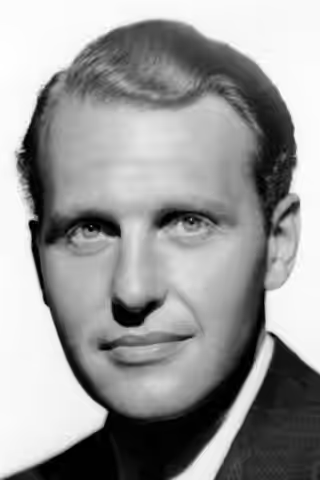
Ralph Bellamy made the earnest romantic rival worth caring about, even opposite Cary Grant. We rate his solid, unshowy presence, though the familiar casting could make it too easy to overlook the actor doing the work.
Fi1m perspective
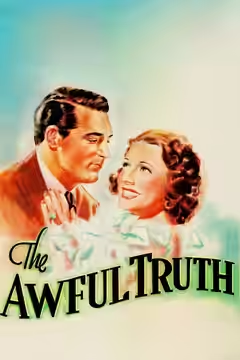
Ralph Bellamy's earnest suitor looks as though he expects everyone else to behave reasonably. In The Awful Truth (1937) and His Girl Friday (1940), that puts him at a disadvantage beside Cary Grant, but it gives the comedy someone worth caring about. We warmed to his Bruce Baldwin in His Girl Friday because the decency never seemed beneath him. His earnestness gives Grant something firmer to play against than a fool.
The trouble was how readily that figure became a casting instruction. Bellamy's shift towards Broadway in the mid-1940s matters because his dramatic work offered a less restricted use for the solidity that made him valuable in comedy. His stage portrayal of Franklin D. Roosevelt in Sunrise at Campobello (1958), reprised in the 1960 film, became central to his dramatic reputation. We need not dismiss the comic parts to recognise the restriction: being dependable is useful to a film, but it can make an actor too easy to take for granted.
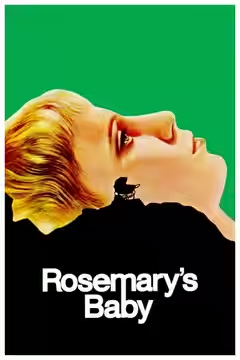
His resonant voice and craggy features also suited figures of authority. Later parts included Dr Sapirstein in Rosemary's Baby (1968) and Randolph Duke in Trading Places (1983), the latter alongside Don Ameche. We value that continued usefulness across horror and comedy, but the work with Grant remains the clearest place to see why his earnestness mattered.
Pretty Woman (1990), his final screen appearance, places him in the supporting cast as James Morse. Our recommendation of that film rests chiefly on Julia Roberts, who makes it funny and affecting, and Richard Gere, who gives her room to work. We would not turn Bellamy's presence into the reason to see it, or mistake a late credit for a summation of his abilities. We recommend the romantic escapism, with reservations about its faith in wealth. For a better introduction to Bellamy himself, start with His Girl Friday and pay attention to the man trying to be reasonable.
Biography
Ralph Bellamy was an American actor whose career on stage, screen and television spanned more than six decades. Born in Chicago, he began performing in the early 1920s and appeared in his first film, The Secret Six, in 1931.
He played leading and supporting roles in numerous films, including The Awful Truth (1937), for which he received an Academy Award nomination for Best Supporting Actor, His Girl Friday (1940), The Wolf Man (1941), Rosemary's Baby (1968), Trading Places (1983) and Coming to America (1988). On stage he won a Tony Award for his performance in Sunrise at Campobello (1958) and later portrayed Franklin D. Roosevelt in the 1960 film adaptation. Bellamy was a founding member of the Screen Actors Guild and served as president of Actors' Equity from 1952 to 1964. He received an Academy Honorary Award in 1987.
His final screen role was as James Morse in Pretty Woman (1990). He died in Santa Monica, California, in 1991.