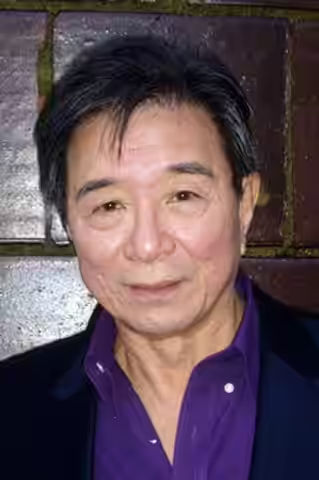
A classical stage actor who kept the cinema at arm's length for twenty years and then walked into it as the Keymaker, Randall Duk Kim is used on screen almost entirely for stillness and wisdom. It is a small fraction of what he does on a stage.
Fi1m perspective
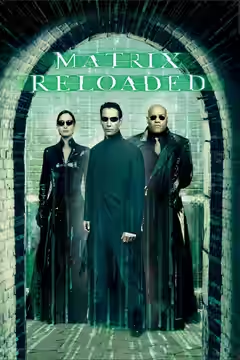
Most people who know Randall Duk Kim's face know it from a corridor. In The Matrix Reloaded (2003) he is the Keymaker, the small, courteous man who knows which door leads where and gets from one to the next at a scurry. Kim has said the scurry was the Wachowskis' idea, and he is generous to say so, because it is the thing that makes the part: a guide who is not grand, not serene, just busy. It is a few scenes. It is the role that brought him to a film audience at sixty.
The career behind it is almost entirely somewhere else. Kim began acting at eighteen in Hawaii, with no formal classes, studying kabuki and learning by imitation, and moved to New York in 1964 for summer Shakespeare and, in the early 1970s, Frank Chin's plays at the American Place Theatre. In 1977 he co-founded American Players Theatre in Wisconsin with Anne Occhiogrosso and Charles Bright, ran it as artistic director and played the leads: Hamlet at the Guthrie in 1978, Richard III, Titus Andronicus, Pericles. He was among the first Asian-American actors to be given those parts in major American productions, and for two decades he turned down the screen to keep doing them.
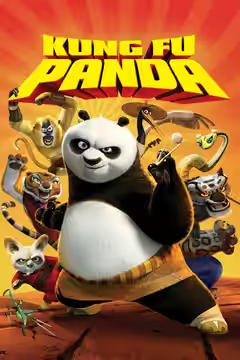
When he did start taking film work, from the mid-1990s, the cinema found one use for him and stuck to it. The Keymaker, Dr Crab in Memoirs of a Geisha, Master Oogway in Kung Fu Panda (2008) and Kung Fu Panda 3 (2016): the old Asian man who has already done the thinking and is now handing it down. Some of these are voice-only. Most are brief. We were more moved by a cartoon tortoise than we expected to be, and it was the voice that did it, the clarity he built on Shakespeare spent on a children's film and not wasted there.
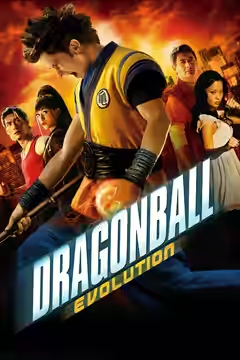
The weak end of this is Dragonball Evolution (2009), where he plays Gohan, the adoptive grandfather of the hero, in a film that is brisk, bland and short of reasons to care about anything in it. We scored it 34, and Chow Yun-Fat's silliness is the only thing worth an evening. The part asks Kim for the usual gravitas and nothing beyond it, which is the complaint that follows his screen work generally: the roles do not stretch him.
He has described acting as "a pursuit for total transformation, so that a poet's creation may be brought to life", with make-up as one of the tools, and his stage career bears that out, from Titus to one-man shows as Mark Twain and Edgar Allan Poe. The screen has never once asked him to disappear. It asks him to arrive, already wise, and leave. If you want to know what he can do, the films are thin evidence; the man who scurries through the Matrix is a good actor being used for one note, and knowing it.
Biography
Randall Duk Kim (born 24 September 1943) is an American actor of stage, film and television. Born in Honolulu, Hawaii, he studied at the University of Hawaii and began his career in theatre, becoming a co-founder and artistic director of the American Players Theatre in Wisconsin. He is known for his work in classical repertoire and as an interpreter of plays by Frank Chin; he won an Obie Award and received an Outer Critics Circle Award nomination.
In film, Kim is recognised for playing the Keymaker in The Matrix Reloaded (2003), Grandpa Gohan in Dragonball Evolution (2009), and providing the voice of Master Oogway in Kung Fu Panda (2008) and Kung Fu Panda 3 (2016). Other credits include Memoirs of a Geisha (2005), The Last Airbender (2010), and the John Wick films (2014 and 2019). He has also appeared in television series such as Fringe (2008). He is married to actress and fellow American Players Theatre co-founder Anne Occhiogrosso.