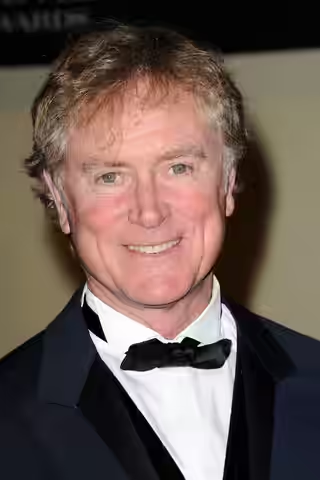
Randall Wallace writes men who know what honour is and say so, at length. His scripts are sincere to a fault, best when a director like Mel Gibson gives them a battlefield, weakest when they are left to explain themselves.
Fi1m perspective
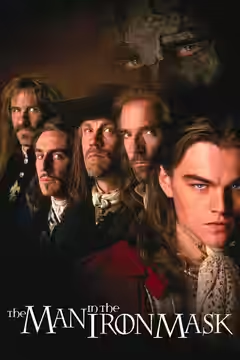
Late in The Man in the Iron Mask (1998), four old men stand together and say the words the film has spent two hours building towards, and it works because, for once, nobody is given a speech. Wallace lets Suschitzky hold on four faces and stops talking. That is the whole Randall Wallace problem in one scene. He writes about honour, has the word said out loud a great deal, and the moments that land are the ones where he trusts a face to do the work. We were moved by that scene, having laughed at the film ten minutes earlier, and the gap between the two is the truest thing we can say about him.
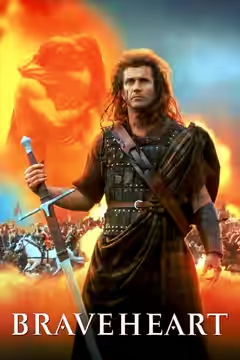
He wrote for television in the late 1980s and early 1990s under the producer Stephen J. Cannell, after a spell in Nashville and, before that, a year of seminary, which shows. His first produced screenplay was Braveheart (1995), and it made him. The script gives William Wallace almost no complications; Gibson, directing and starring, commits to that simplicity, and the battles carry it a long way across 178 minutes. Wallace has said of his hero, "I think he is an ancestor, I feel his blood in my veins", and the film believes that with him. Catherine McCormack's Murron is the one figure allowed a feeling that does not depend on the hero's importance, and we wished for more of her.
Then he began directing his own scripts. The Man in the Iron Mask was the debut: an old-fashioned swashbuckler with a conscience that runs 132 minutes and says everything twice. Gabriel Byrne and Jeremy Irons do quiet work in it, Gérard Depardieu is asked to be the comic relief and cannot land a thing, and Leonardo DiCaprio sulks in a wig. Wallace wrote Pearl Harbor (2001) for Michael Bay, went back to Gibson for We Were Soldiers (2002), and moved on to real lives and open faith with Secretariat (2010) and Heaven Is for Real (2014). We have not reviewed those, but the pattern holds: courage, sacrifice, a man with a cause, and often a shape borrowed from the New Testament.
What works is the sincerity. Nobody in a Wallace film is winking, and that is rarer in a large action script than it should be. What does not work is that he never trusts a moment to speak for itself, so every good idea arrives with a paragraph attached, and his characters are sorted into good and wicked early and stay put. He needs a director who will cut the paragraph. Gibson, on Braveheart, at least gave the speeches a hillside and an army to shout at. Directing himself, Wallace kept every line.
He is working with Gibson again on The Resurrection of the Christ, the story he has been circling since Braveheart and the material least likely in the world to make him stop explaining. We will watch it hoping for four faces and no speech.
Biography
Randall Wallace is an American screenwriter, director and producer. He began his career writing for television in the late 1980s and early 1990s, including work for producer Stephen J. Cannell.
He gained prominence with the screenplay for Braveheart (1995), which earned him a nomination for the Academy Award for Best Original Screenplay and a Writers Guild of America Award. Wallace made his directorial debut with The Man in the Iron Mask (1998). His other credits as writer or director include Pearl Harbor (2001), We Were Soldiers (2002), Secretariat (2010) and Heaven Is for Real (2014).