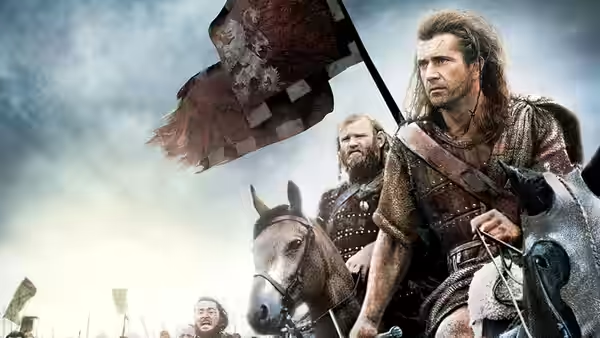
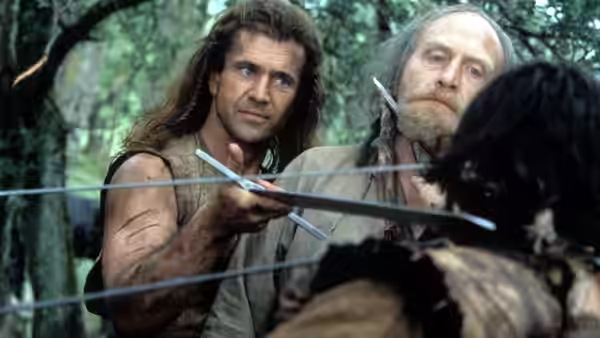
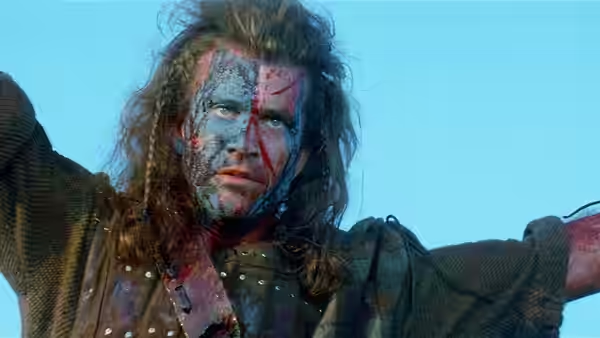
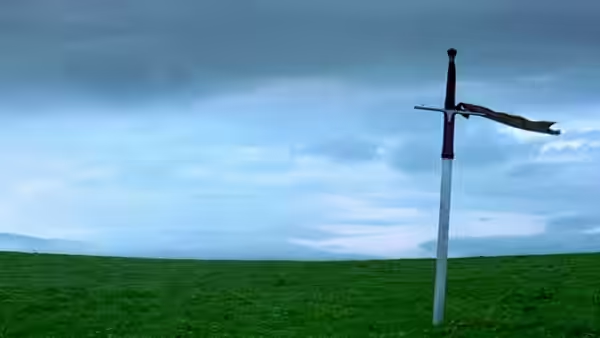
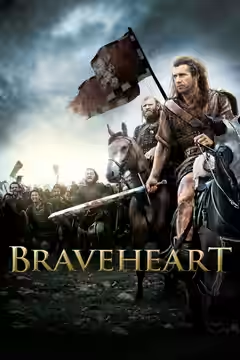
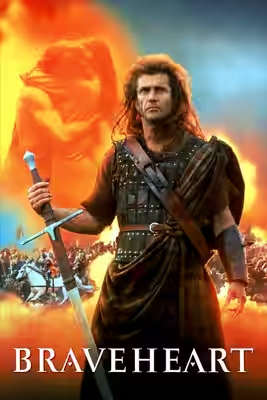
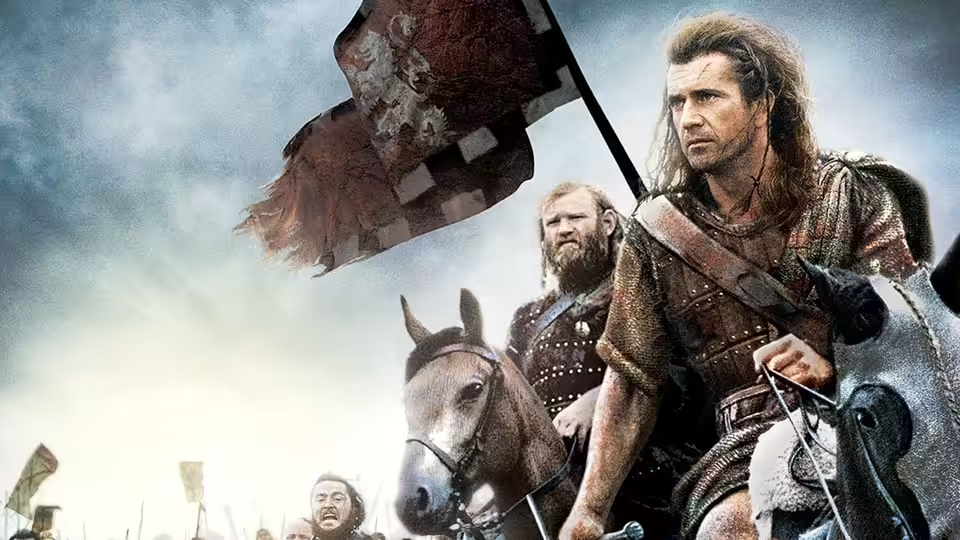
William Wallace (Mel Gibson) riding a horse while holding a tattered flag
Film review

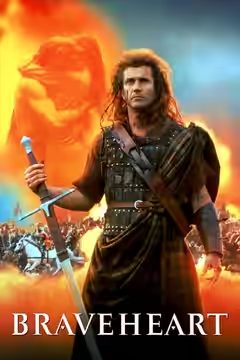
Braveheart

1995 · Directed by Mel Gibson · 2h 58m · MPA R

In a sentenceA Scottish revolt with room for several armies and scarcely a doubt about its leading man

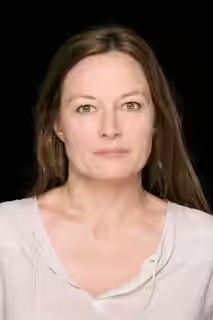
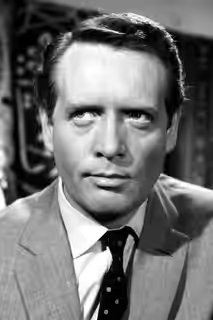
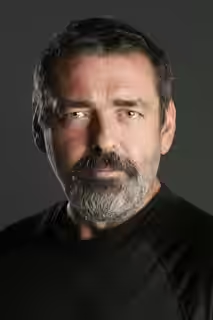
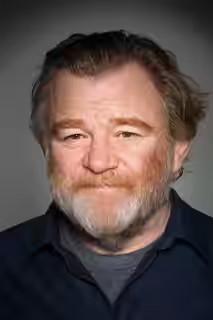
William Wallace (Mel Gibson) becomes a figure of Scottish revolt as romance and patriotism feed a struggle fought with men and horses. Around him are Murron MacClannough (Catherine McCormack), Hamish Campbell (Brendan Gleeson) and Robert the Bruce (Angus Macfadyen). Royal power has its own figures in King Edward (Patrick McGoohan) and Princess Isabelle (Sophie Marceau). Gibson also directs this war drama, which moves between personal relationships, political disputes and battles. Wallace’s place at the centre of the rebellion shapes a story concerned with heroism, loyalty and the violence of armed resistance.

Plays from YouTube when you press play; nothing loads from them until then.

Fi1m review

Mel Gibson stages the fighting with force and clarity, but Braveheart gives its politics and characters much less care. The battles justify some patience, though the broad characterisation and 178-minute running time demand plenty.

Braveheart is worth considering for the battles, provided we can tolerate how little it questions the man at their centre. Mel Gibson directs and plays William Wallace with an assurance that can carry a large-scale war film a long way. It cannot quite carry this one through all 178 minutes. William Wallace’s screenplay gives its hero few complications, and Gibson commits to that simplicity even when some doubt would make the drama more interesting.

Gibson’s performance has the conviction the material needs, and he makes Wallace’s bravado easy to follow even when it becomes tiresome. Catherine McCormack’s Murron MacClannough provides a welcome change of emphasis: her dignity gives the romance some feeling that does not depend on the hero’s importance. She makes us wish the film would spend less time insisting on him. The screenplay keeps returning to broad contrasts of goodness and malice, leaving the actors limited room to surprise us.

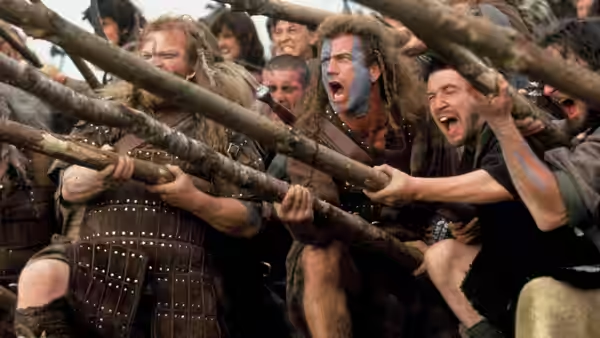
The fighting is another matter. John Toll’s photography keeps the massed men and horses legible, allowing the scale of a confrontation to register without losing the people caught inside it. Steven Rosenblum’s editing makes the violence forceful without reducing it to a succession of disconnected blows. We flinched at the bloody collisions of men and horses. Gibson lets the brutality interrupt the pleasure of watching an army move.

Thomas E. Sanders’s production design gives the fighting a substantial physical setting, and that sense of weight helps the violence work. James Horner’s music is less inclined to stand back, and its emotional emphasis becomes wearing when the drama has already made its point. Both contributions suit the kind of film Gibson wants to make. The problem comes when the scale of the images and the urging of the music leave us no space to respond at our own pace.

The politics are harder to accept, because these disputes need to feel worth thinking about. Patrick McGoohan’s King Edward belongs to a division of heroes and villains so firm that almost every complication feels unwelcome. The stereotypes make Gibson’s patriotism easier to sell and the struggle less interesting to follow. A film can ask us to support a revolt while still allowing the people involved to have inconvenient motives.

Then there is the length. Rosenblum can organise a battle, but the repeated slow motion makes an already expansive film feel reluctant to move on. Gibson understands the appeal of the traditional historical adventure: romance, danger, physical courage and the satisfaction of seeing large numbers of people move with purpose. What he does not judge as well is how often those pleasures need refreshing. Once the emotional positions are established, the film spends too long confirming them.

We would recommend it to committed admirers of battlefield spectacle, with a firm warning about the patience required between clashes. There is enough skill in the action to make that bargain reasonable, just about. Anyone hoping to understand the politics should leave time for some reading afterwards.
Critical consensus AI synthesised

66
Positive
8
Mixed
2
Negative
3

Most critics come down in favour, and almost all of them, dissenters included, agree on where the film works: the battles. The massing of men and horses, the stunt and second-unit work and the sheer bloodiness are praised across the board, and several reviews treat it as one of the last large-scale historical epics staged without digital help. Gibson the star draws nearly as much approval as Gibson the director; his Wallace is called charismatic and likeable, and The New Yorker picks out Catherine McCormack’s Murron for a dignity the villains lack.

The spread is wide. Reservations cluster on the writing: hokey dialogue, hiss-the-English villainy, stereotypes and a loose hand with history. Admirers wave this away as the price of legend; the negative reviews treat it as the whole problem, with the Los Angeles Times finding no interest in the war’s other side and Slant Magazine mocking the Christ symbolism. Later reappraisals sit in the middle, calling it silly and overlong but more durable than expected.

RogerEbert.com
24 May 1995 · Roger Ebert
90*

Ebert praises the film as a full-throated battle epic that captures the glorious sweep of Hollywood swordplay classics mixed with grungy ferocity. He singles out the frequent, bloody battle scenes for their technical brilliance in massing men and horses without becoming confusing.

Read the full review →
The New Yorker
29 May 1995 · Anthony Lane
90*

Lane finds many amazing things about the film, including Scotsmen with blue faces and spectacular battle sequences with every kind of mortal blow. He singles out the women's dignity, especially Catherine McCormack as Murron, which shames the malice of the villains and the bravado of Wallace.

Read the full review →
The New York Times
24 May 1995 · Caryn James
90*

James calls the film one of the most spectacular entertainments in years and an exhilarating new-fashioned epic. She singles out Gibson's stroke of brilliance in reveling in epic qualities like tragic romance, heroism, and gorgeous photography while adding a contemporary kick.

Read the full review →
Empire
8 September 1995 · Ian Nathan
85*

The critic hails Gibson's second directorial effort as an epic achievement that stands with classics like Spartacus, praising his passionate yet controlled direction of massive battle scenes and strong performances from the cast. It singles out the film's breathtaking beauty, resonating brutality, and rip-roaring storytelling as reasons to surrender to the legend over strict historical accuracy.

Read the full review →
Radio Times
★★★★ · Tom Hutchinson
80

Gibson directs and stars with flourish in this saga of Scottish revolt, delivering effective battle scenes and capturing the spirit of revolution and patriotism. Some stereotypes and loss of credibility in emotional moments are noted but do not outweigh its strengths.

Read the full review →
The Telegraph
25 September 2023
75*

The critic calls Braveheart a sweeping pre-CGI historical epic whose superbly staged battle scenes and likeable, charismatic central performance from Gibson make it a last gasp of the genre, despite its length, dodgy accent and historical inaccuracies. The stirring lines and Oscar wins are noted positively.

Read the full review →

Straight answers AI written, from our review

Is Braveheart worth watching?
Braveheart is worth watching for admirers of large-scale battlefield spectacle, and we scored it 68. Mel Gibson stages the fighting with force and clarity, but the politics are drawn as plain heroes and villains, and the 178 minutes drag between clashes. Anyone who wants the history examined rather than saluted should look elsewhere.
How long is Braveheart, and what is it rated?
Braveheart runs 2h 58m and is rated R by the MPA in the US. It is an action and drama film.
Where can I watch Braveheart in the US?
Braveheart is streaming on Paramount+, Amazon Prime Video, Apple TV and The Roku Channel in the US, and it is also available to rent from Apple TV and Amazon Prime Video from $4.99. Availability is checked daily; the links above go straight to each service.
How violent or frightening is Braveheart, and is it suitable for children?
Braveheart carries a UK 15 and a US R, and it is too violent for children. The battles are bloody, with men and horses colliding hard enough that we flinched, and Gibson lets the brutality register rather than glossing over it. Older teenagers used to war films should manage; the squeamish will spend long stretches looking away.
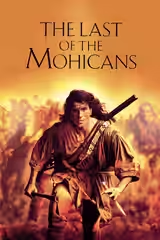
How does Braveheart compare to The Last of the Mohicans?
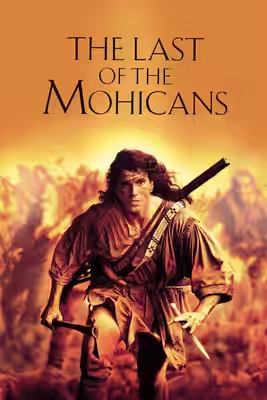
Braveheart and The Last of the Mohicans are both romances carried through warfare, and the earlier film is the tighter and more consistently entertaining of the two. Michael Mann keeps the running time under control and the action and music are hard to resist, while Gibson's battles have greater scale but the film insists on its hero for 178 minutes. Choose Braveheart for massed spectacle, Mohicans if you want the evening to move.
What should I watch after Braveheart?
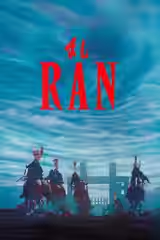
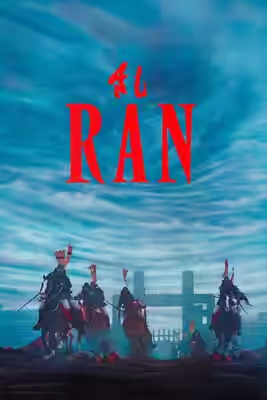
After Braveheart, try The Last of the Mohicans (1992, Fi1m 84): Another romance carried through warfare, with a tighter grip on the running time. Then Ran (1985, Fi1m 92): Armies, family loyalties and power, with considerably less faith in heroic men.

Cast

Awards

Academy Awards, 1996

Nominated
Best Costume Design
Nominated
Best Film Editing
Nominated
Best Original Dramatic Score
Nominated
Best Sound
Nominated
Best Writing, Original Screenplay
Won
Best Cinematography
Won
Best Director
Won
Best Makeup and Hairstyling
Won
Best Picture
Won
Best Sound Editing

If you liked this, try…

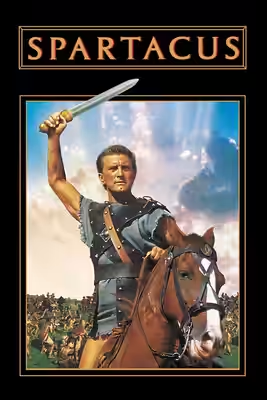
  1. Spartacus (1960) · not reviewed yetFor large-scale rebellion with more room for doubt among the speeches.

  2. The Last of the Mohicans (1992, Fi1m 84)Another romance carried through warfare, with a tighter grip on the running time.

  3. Ran (1985, Fi1m 92)Armies, family loyalties and power, with considerably less faith in heroic men.

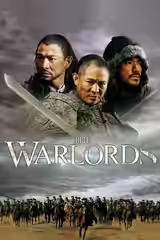
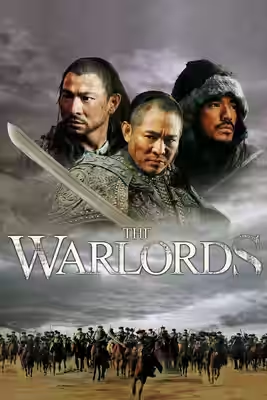
  4. The Warlords (2007) · not reviewed yetBrotherhood and battlefield spectacle, with loyalties that cannot survive on speeches alone.

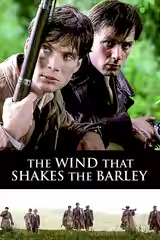
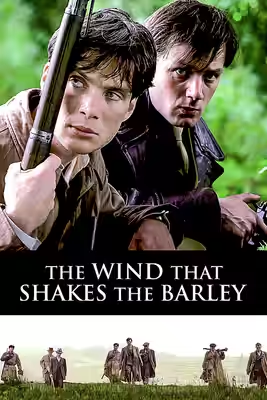
  5. The Wind That Shakes the Barley (2006) · not reviewed yetA revolt given political detail, and comrades allowed to disagree about freedom.

Free account

Know what to watch tonight

Two lists that know where things are streaming, collections you can share, your own score beside ours, and Discover that remembers what you have seen.

  • Want to see, sorted by what is streaming now
  • Seen, with your score out of ten
  • No adverts, ever