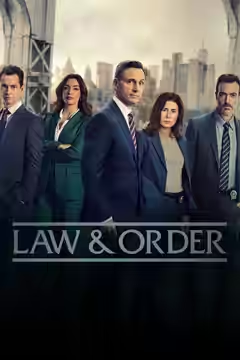
René Balcer wrote and ran Law & Order on and off across twenty years, turning each week's headlines into an hour that reaches a verdict. The hours are cleanly built and sure of themselves, and that sureness is both the craft and the ceiling.
Fi1m perspective
A Law & Order hour written by René Balcer opens on a body, moves to a case any viewer will half-recognise from that month's newspapers, and closes on a verdict the writers have decided is the right one. He was a journalist, cameraman and film critic in Canada before he was a screenwriter, and it shows: the episodes are reported before they are dramatised. His own account of the method is that the headline is "a jumping-off point from which we tell an entirely different story", and the different story is nearly always about what the case says about people rather than about the detectives' home lives, which he leaves alone.
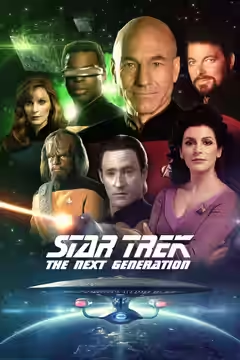
He joined Law & Order (1990) as a staff writer in its first season, ran it from 1996 to 2000, and came back as head writer from 2007 to 2010, writing and directing the finale of that run. Between the two stints he created Law & Order: Criminal Intent (2001), the spin-off built around a Major Case Squad, and ran it for its first five seasons. Later there is FBI: Most Wanted, another procedural with a case a week, and away from the networks a documentary, Above the Drowning Sea (2017), on Jewish refugees in Shanghai. Further back sits a single Star Trek: The Next Generation teleplay, 'Power Play', in 1992. Dick Wolf is the constant, three decades of him.
The joinery is the strength. Balcer keeps the shape rigid, detectives first, prosecutors second, courtroom last, and he is the writer in the franchise most willing to drag an argument in from outside, on race, on interrogation policy, on the environment, and hand it to a prosecutor to make. The limit is the one we set out in our review. Doubts are raised in the dialogue and settled by the plot. Defence lawyers are obstacles rather than people. The programme believes the system works, and Balcer, for all the trouble he imports, mostly believes it too.
We watched a run of his seasons over a few evenings and by the fourth hour felt real affection for the machine, the way one does for a train that leaves on time. Then we noticed nobody on screen had surprised us all night, because each episode had decided how we should feel about the case before the prosecutor stood up. That is a fair trade for a weeknight. It is not what we would call drama.
If you want to see what he does, the 1996 to 2000 seasons are where the method is purest, and the reviews of the 2022 revival, which keeps his shape and thins the writing, show what the show is without him. Watch two of his and you will know whether you can live with a writer who always knows the answer.
Biography
René Balcer is a Canadian-American television writer, producer and director. Born in Montreal, Quebec, in 1954, he studied creative writing and communication studies at Concordia University. He began his career in journalism and documentary filmmaking in Canada before moving to Los Angeles.
Balcer joined the writing staff of Law & Order in its first season in 1990 and later became showrunner. He created and showran the spin-off Law & Order: Criminal Intent (2001) and wrote the teleplay for the Star Trek: The Next Generation episode 'Power Play' (1992). His other credits include FBI: Most Wanted and the limited series Law & Order True Crime (2017).
He has received a Primetime Emmy Award for Outstanding Drama Series, a Peabody Award, a Writers Guild of America Award and multiple Edgar Awards from the Mystery Writers of America.