Gene Roddenberry’s science-fiction series makes intelligence and decency worth watching, with Patrick Stewart giving its optimism conviction. The solemnity can be wearing, but the ensemble supplies enough warmth to make the difficult conversations matter.
Star Trek: The Next Generation is persuasive science fiction because it takes the prospect of people behaving well seriously. Gene Roddenberry’s series gives intelligence, curiosity and restraint the attention adventure stories often reserve for aggression. We recommend it warmly, with patience for the stretches when seriousness hardens into stiffness. Its optimism works best when the actors make us believe that these people might actually enjoy one another’s company.
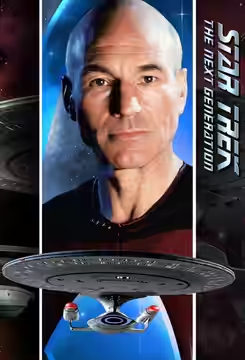
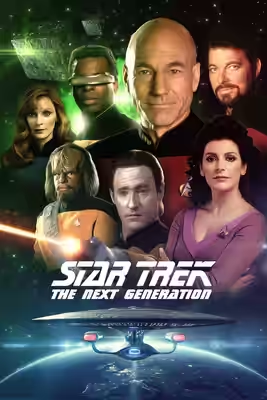
Patrick Stewart is crucial to that belief as Jean-Luc Picard. There is firmness in his delivery, but also enough attention to the person opposite him to keep authority from becoming a continuous lecture. We found his seriousness unexpectedly reassuring: the care he gives to listening makes another person’s words feel consequential. He makes a considered response worth watching. The more solemn material needs precisely that conviction, because an actor merely announcing the importance of the words would make it unbearable.
Jonathan Frakes gives William T. Riker an ease that helps loosen the programme, while Brent Spiner makes Data’s precision funny without draining the character of feeling. The pleasure is in their different rhythms, which keep exchanges between them from becoming a procession of equally weighty statements. LeVar Burton, Michael Dorn and Gates McFadden help make the ensemble feel like company worth returning to. That familiarity matters in a series whose harder questions would be dry exercises without affection for the people considering them.
The patient visual style suits those performances. Marvin V. Rush, among the cinematographers, gives faces enough attention for a small change of expression to carry weight, though the presentation can feel over-polite. The editing, with Monty DeGraff among those credited, generally allows an exchange to develop without hurrying past its meaning. It also exposes the weaker writing: when a conversation has little beneath its stated subject, there is ample time to notice.
Dennis McCarthy and Ron Jones supply music that treats the characters’ concerns with comparable gravity. At its most effective, the scoring gives the talk warmth and scale without making it feel artificially urgent. Elsewhere, the earnestness becomes a little insistent, as though a difficult decision needed additional certification. The actors are usually doing enough already, and the quieter passages give their differences more space.
The recurring weakness is the urge to spell things out. Some dialogue sounds prepared for an audience already taking notes, and the confidence in reason can make awkward feelings seem too easily tidied away. Marina Sirtis and Gates McFadden are welcome presences, but the ensemble is more enjoyable when everyone has something particular to contribute than when the writing distributes concern around the cast. We would have welcomed more untidiness, and fewer passages in which the importance of the subject is expected to supply the drama.
Across seven seasons, there is room for both the rewarding conversations and the ones that could have been shorter. The series distinguishes itself within science fiction by trusting that understanding someone else can be an event worth building a story around. Its gentleness need not mean a shortage of dramatic pressure, though it sometimes does. Give it an evening when there is time to listen; impatience will make the weaker dialogue harder to forgive.