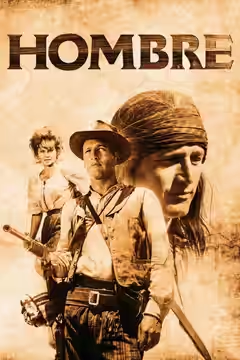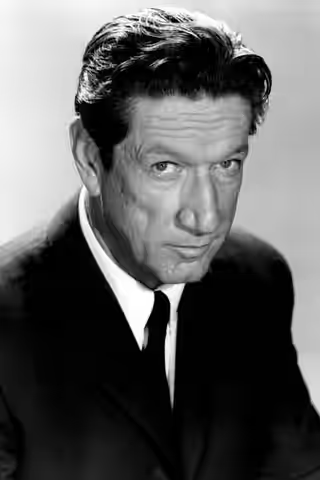
Richard Boone made authority feel dangerous, sometimes with no more than a routine gesture. We rate his economical supporting work highly, especially in Hombre, though his rough presence and gravelly voice could not always compensate for writing that laboured.
Fi1m perspective
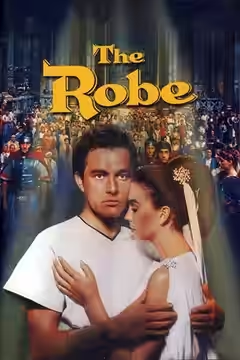
In The Robe (1953), Richard Boone's Pontius Pilate washes his hands with the ease of someone performing an ordinary duty. We were unsettled by the gesture, because he makes indifference look so practised. It is a small piece of acting in a film too fond of speeches, and it tells us more than another speech would. Boone needs little time to establish the sort of authority that expects no questions. We would not recommend the film on his account, but the performance explains why a supporting player can stay with us.
Television gave that authority more room, first with Dr Konrad Styner in Medic (1954–56), then with Paladin in Have Gun – Will Travel (1957–63). The cultured gunfighter, who quoted poetry and preferred wit or minimal force to violence, made Boone a star. His gravelly voice and formidable physical presence did not confine him to playing brutes. Budd Boetticher's The Tall T (1957) also gave him Frank Usher, an outlaw whose exchanges with Randolph Scott allow conflicting feelings to show. These parts gave him more to do than frighten the leading man.
After Paladin, there was a risk of being confined to Western heavies, but Martin Ritt's Hombre (1967) makes especially good use of him. Boone's Cicero Grimes is rough and openly intimidating, alongside Fredric March's serenely self-important Dr Alex Favor. He does not need to compete with March, and their differences keep the film's disagreeable men from becoming interchangeable. Together with Paul Newman, they make the acting the film's chief reason to watch.
Irving Ravetch and Harriet Frank Jr.'s screenplay too often spells out what the actors have already made clear. Boone remains absorbing, but we still hear the speeches going on too long. That is a useful limit to put on our admiration: his presence keeps us watching, but it cannot make the dialogue shorter. Start with Hombre, and allow for a Western that occasionally stops to explain itself.
Biography
Richard Boone was an American actor. Born in Los Angeles in 1917, he served in the United States Navy during the Second World War before studying acting at the Actors Studio in New York using the G.I. Bill.
He made his screen debut in 1951 and appeared in over 50 films. Boone played Pontius Pilate in The Robe (1953) and took supporting roles in Westerns including The Tall T (1957), Hombre (1967) and Big Jake (1971). He starred as Paladin in the television series Have Gun – Will Travel (1957–1963).
Boone died in St. Augustine, Florida, in 1981.