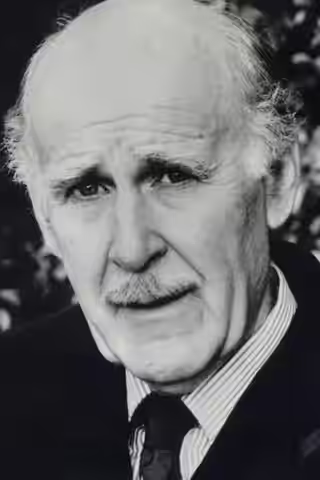
Richard Vernon spent nearly fifty years playing men who had already been chairman of something. Cast as middle-aged while still in his thirties, he made pomposity funny by never once acknowledging it, and British comedy leaned on him for a generation.
Fi1m perspective
Richard Vernon walks into a room already disapproving of it. The long face, the bald head, the voice that has never needed to raise itself: he looks like a man who was born a senior civil servant, and directors cast him accordingly. He was in his thirties when they started giving him tired peers and cold colonels, and he never argued. By his forties he had grown into the parts, which is an odd thing to say about an actor, but it is the shape of his career.
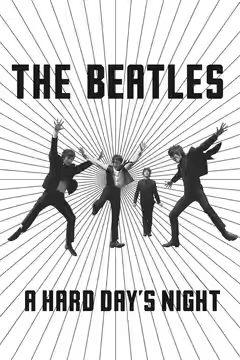
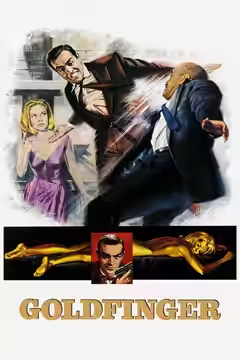
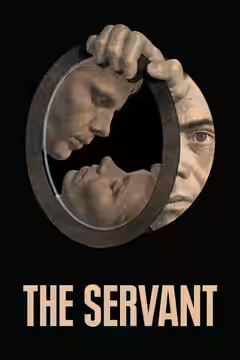
He trained at the Central School after Navy service in the war, worked on stage, and turned up in film and television from the late 1950s. The 1960s fixed him. In The Servant (1963) he is Lord Willie Mounset, one of the titled visitors to Joseph Losey's household; in A Hard Day's Night (1964) he is the city gent who shares a train compartment with the Beatles and would rather not; in Goldfinger (1964) he is Colonel Smithers, briefing Bond on gold smuggling. Three films, one type, and he is good in all of them.
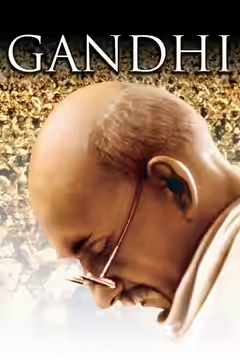
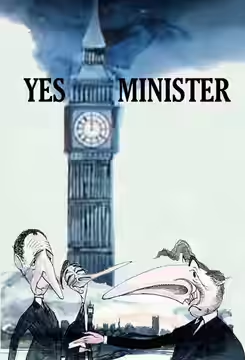
The 1980s are where most viewers will know him. He was Sir Desmond Glazebrook, the banker in Yes Minister (1980), a man who appears whenever Lynn and Jay need someone to take money seriously and nothing else. Our review of the series did not stop to mention him, and that is fair; the part is small. But watch how he does it. He never plays a line as a joke, and the laugh arrives anyway. In The Hitchhiker's Guide to the Galaxy (1981) he carried Slartibartfast, the planet-builder who designs fjords, from radio to television. In Gandhi (1982) he is Sir Edward Gait, one more official in a white uniform. In The Storyteller (1988) he plays a King, and John Hurt does the talking.
We will admit to enjoying the Smithers scene in Goldfinger more than a briefing about bullion has any right to be enjoyed. Vernon explains gold as if it were the most interesting thing in the world, which to Smithers it plainly is, and he does not look at Bond once with anything warmer than professional tolerance. That is the whole method. He plays the man's seriousness straight and lets us find it absurd on our own.
The complaint is obvious and true: it was a narrow run of parts, and he was in it from the start, because early baldness put him at the head of the table before he had earned the seat. We cannot think of a warm man he played and we can think of a dozen chilly ones. But the type existed because Britain kept producing the men, and somebody had to play them without winking. He did it on film, television and radio until 1996, and there are still evenings when a repeat comes on, the camera finds him at the end of a boardroom, and the room is instantly more believable than it was a second before.
Biography
Richard Vernon (1925–1997) was a British actor who appeared in numerous films and television programmes, frequently in aristocratic or supercilious roles. He trained at the Royal Central School of Speech and Drama and made his London stage debut in 1950.
His film credits include Colonel Smithers in Goldfinger (1964), a city gent in A Hard Day's Night (1964), Sir Edward Gait in Gandhi (1982), and roles in The Pink Panther Strikes Again (1976), Evil Under the Sun (1982) and Village of the Damned (1960).
On television he played Sir Desmond Glazebrook in Yes Minister (1980) and its sequel series, the King in an episode of The Storyteller (1988), and Slartibartfast in the television adaptation of The Hitchhiker's Guide to the Galaxy (1981). He died on 4 December 1997.