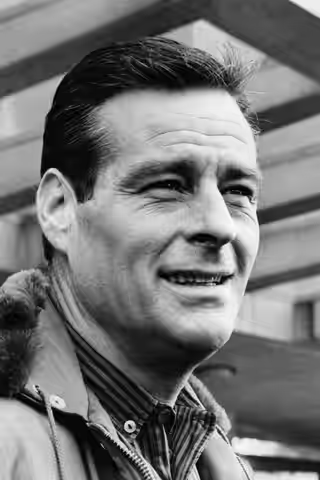
Robert Webber spent forty years playing the well-dressed man you should not have trusted: the executive, the general, the hired gun. He was never the name on the poster, and he was very rarely the weak link in the film.
Fi1m perspective
Robert Webber's parts usually arrive well dressed. The suit is good, the manners are better, and somewhere along the way it becomes clear that the man inside them is for sale, or worse. That was his trade for the better part of four decades: the sleek businessman whose polish is covering something unpleasant, or the officer whose rank is the most respectable thing about him. He was not a star and never became one. He was the man you recognised and could not place, which is a kind of success a star never gets.
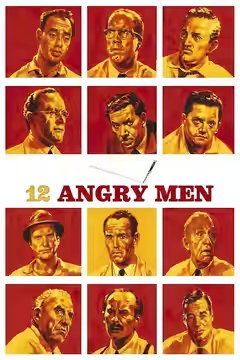
He came to films from the stage, and his first screen part, in Highway 301 (1950), was a gangster. The breakthrough was 12 Angry Men (1957), as Juror No. 12 in Sidney Lumet's jury room, and from there he worked steadily through the 1960s and 1970s in supporting parts and in hundreds of television episodes. The parts were usually the ones that needed a nice face and a bad heart: Dwight Troy, the sadist in Harper (1966); Sappensly, the hired killer in Sam Peckinpah's Bring Me the Head of Alfredo Garcia (1974). The war films gave him rank instead, Brigadier General Denton in The Dirty Dozen (1967), opposite Lee Marvin. He worked four times with the director Jack Smight.
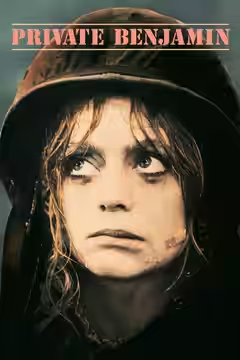
Blake Edwards saw that the same qualities worked in a comedy and used him three times, as the businessman villain Philippe Douvier in Revenge of the Pink Panther (1978) and as Hugh, Dudley Moore's lyricist partner, in 10 (1979). The one film of his we have reviewed comes from the same stretch. In Private Benjamin (1980) he is Colonel Clay Thornbush, Goldie Hawn's lecherous commanding officer, and he turns up in the half of the film we liked less, where the jokes thin out and Armand Assante is handed charm and nothing to do with it. Webber gets one strong scene. We were sorry when it ended, because for those few minutes the second half had someone in it who was being used properly, and we found ourselves wishing the film had kept the colonel and sent Assante for a walk.
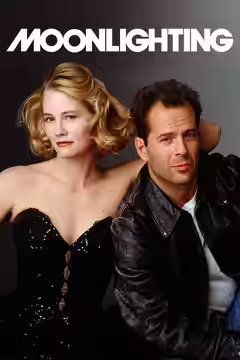
Television took a great deal of his time, and by 1985 he was Alexander Hayes, Cybill Shepherd's father in Moonlighting. Obituaries made the point that his name was often unknown even to people who had seen dozens of his films, and that is the fair caveat on the whole career: he was reliable rather than remarkable, and the record suggests he knew it. He once said that until film "gets back to being a director's medium (rather than an actor's), they're in trouble", which is not the view of a man expecting a film to be built around him. Start with 12 Angry Men, where Lumet gave him a room, eleven other men and nothing else.
Biography
Robert Webber was an American actor. Born in Santa Ana, California, he served in the United States Marine Corps during the Second World War before pursuing a career in theatre. He appeared on Broadway in productions including Two Blind Mice (1948) and Period of Adjustment (1960).
Webber made his film debut in Highway 301 (1950) and became a familiar character actor in cinema and television. His credits include the role of Juror 12 in 12 Angry Men (1957), General Denton in The Dirty Dozen (1967), Philippe Douvier in Revenge of the Pink Panther (1978), and Alexander Hayes in the series Moonlighting (1985–1988). He also appeared in Bring Me the Head of Alfredo Garcia (1974), 10 (1979) and Private Benjamin (1980).
Webber died of amyotrophic lateral sclerosis on 19 May 1989 in Malibu, California.