Roberto Benigni's gift is not knowing when to stop, and his films work best when someone on screen or behind the camera refuses to be won over. Jim Jarmusch gave him that in Down by Law; directing himself, he tends to take the resistance away.
Fi1m perspective
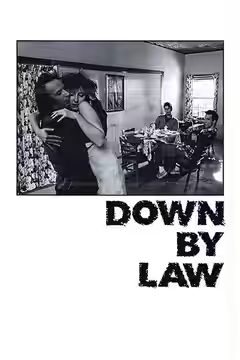
Watch Roberto Benigni enter a scene and try to find the moment he settles. There is not one. He talks with his hands, his eyebrows and most of his upper body, and he keeps going well past the point at which another actor would let the other person have a turn. In Down by Law (1986) he arrives in a cell shared by Tom Waits and John Lurie, two men who have made a style out of looking unimpressed, and he simply does not notice. He chatters, he recites, he is delighted to meet them. The joke is that they cannot make him stop being friendly, and Jim Jarmusch holds the shots long enough for their irritation to turn into something close to affection.
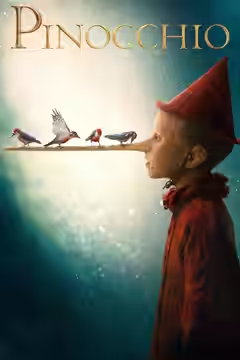
He came up through underground theatre and television in the early 1970s, made his film debut in Berlinguer ti voglio bene (1977) and directed his first feature, Tu mi turbi, in 1983. Jarmusch put him in front of audiences outside Italy, in Down by Law and again in Night on Earth (1991), and at home he became a director-star with Johnny Stecchino (1991) and The Monster (1994). Then came Life Is Beautiful (1997), which he wrote with Vincenzo Cerami, directed and starred in, and which made him known everywhere. Since then he has written, directed and played the lead in Pinocchio (2002) and The Tiger and the Snow (2005), and taken acting parts for others, in To Rome with Love (2012) and another Pinocchio (2019). He has said that Charlie Chaplin "has influenced everything I've ever done. Just everything." You can see it in every gesture.
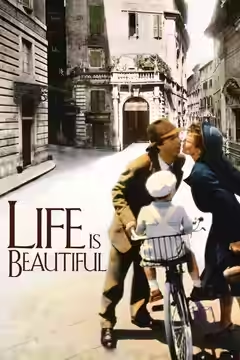
His comedy needs a wall to bounce off. In Down by Law the wall is Waits and Lurie. In Life Is Beautiful it is Nicoletta Braschi's Dora, who has to be courted at length, and the courtship is the film's best stretch because she takes so long to give in. We laughed at how much labour he puts into being ridiculous, because he does it without a flicker of embarrassment. Braschi has played opposite him in six films and knows how to stand still while he does not.
The trouble comes when he directs himself and the wall is removed. The second half of Life Is Beautiful asks Guido's inventiveness to carry a Holocaust story, and the script keeps admiring him where it should be showing us what he cannot control. We were moved, more than we expected to be, in the stretch where the smile starts to cost him something: the strain finally shows, and the clowning has a reason. But the film protects him. Nobody in it is allowed to be unconvinced for long, and reassurance is handed out where the setting demands doubt. Some critics have said the film turns the camp into a fable, and we think the charge sticks.
Start with Down by Law, then Life Is Beautiful for the courtship and for the moments when the smile costs him something. He is at his best as a guest in someone else's film, where the host decides when the party ends.
Biography
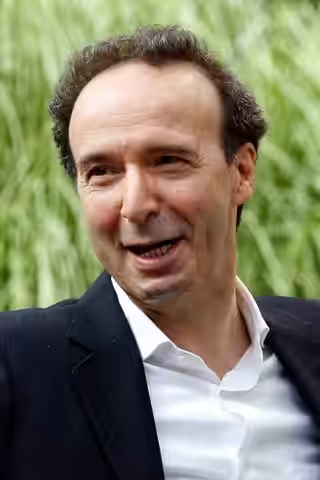
Roberto Benigni is an Italian actor, comedian, screenwriter and film director. He was born on 27 October 1952 in Manciano La Misericordia, a frazione of Castiglion Fiorentino in the province of Arezzo, Tuscany. His father had been imprisoned in a German forced-labour camp during the Second World War.
Benigni briefly attended a Jesuit seminary in Florence and worked as a magician’s assistant before joining an underground theatre group in the late 1960s. He made his directorial debut with Tu mi turbi (1983), which he also wrote and starred in, and gained international recognition for writing, directing and starring in the 1997 tragicomedy Life Is Beautiful (La vita è bella).
For Life Is Beautiful he received the Academy Award for Best Actor and the film won the Academy Award for Best Foreign Language Film. Other notable credits include Johnny Stecchino (1991), Pinocchio (2002) and To Rome with Love (2012).