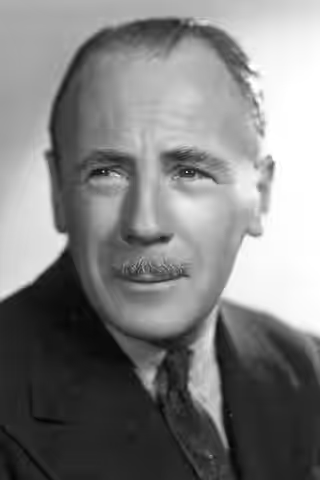
Roland Young made a career of the quiet man at the edge of the frame: the meek, tidy, faintly patrician husband who says less than everyone else and gets the laugh anyway. Given room, as Lubitsch gave him, he is the best thing on screen.
Fi1m perspective
Watch what Roland Young does when someone else has the line. He does not react. The tidy moustache stays where it is, the eyebrows barely move, and the face of a man who would rather be reading settles a little further into itself. Then he says his own line as though it had been left in his pocket by mistake, and it is funnier than the line it follows. He spent a career playing that man: meek, educated, well dressed, put upon, and quietly the sharpest person at the table.
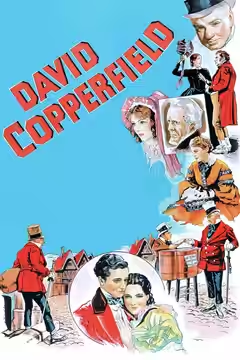
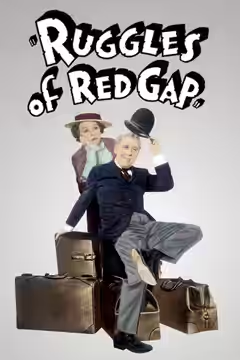
He came out of the London stage, from 1908, and Broadway from 1912, and his first film part was Watson in a silent Sherlock Holmes (1922), which is about right: the man beside the man who talks. Sound suited him better. He arrived at MGM in 1929, went freelance in 1932, and the thirties were his good decade. Ruggles of Red Gap (1935) and David Copperfield (1935) show the two ends of him, the Earl of Burnstead in the first and Uriah Heep in the second, a comic aristocrat and a Dickens villain, and by reputation he is good in both. We have not reviewed either.
Topper (1937), as the harassed banker Cosmo Topper, is the part people remember him for, and the harassment is the point: Young was never more at home than when things were happening to him. Norman Z. McLeod directed him three times and Billie Burke played opposite him four, and that pairing, the flustered wife and the husband taking cover behind good manners, is the closest he came to a partnership.
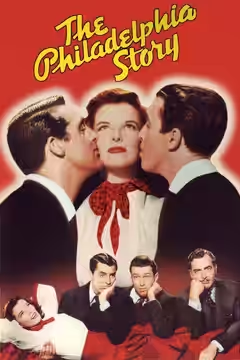
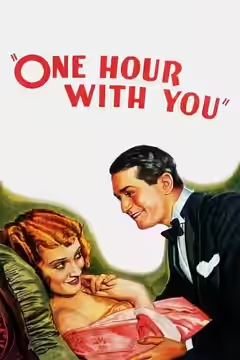
Our own evidence is Lubitsch. In One Hour with You (1932) he is Professor Olivier, a husband who would quite like to catch his wife with another man so that he can be rid of her, and he plays it with no visible effort at all. Chevalier shrugs, MacDonald sings, Tobin hunts, and Young stands slightly to one side saying as little as possible, and every time he did it we laughed harder than at the people working. It is the driest thing in a dry film, and it is the performance we would send a stranger to. In The Philadelphia Story (1940) he is Uncle Willie, in a house that also contains Hepburn, Grant and Stewart, and our review did not stop to mention him. That is the supporting actor's lot, and he seems to have accepted it.
After 1941 the parts got smaller. And Then There Were None (1945) gives him William Blore in a crowded cast, and by the end he was working in early television. The studios wanted his kind of man for a decade and then wanted him less. Start with One Hour with You, then Topper, and pay attention when he has nothing to say.
Biography
Roland Young (11 November 1887 – 5 June 1953) was an English actor. He made his first stage appearance in London's West End in 1908 and his Broadway debut in 1912. He trained at the Royal Academy of Dramatic Art and appeared in several plays in New York and London before entering films.
Young made his film debut in the 1922 silent Sherlock Holmes. He became known for character roles in comedies, including Cosmo Topper in Topper (1937) and its sequels, for which he received an Academy Award nomination for Best Supporting Actor. He played Uncle Willie in The Philadelphia Story (1940) and William Blore in And Then There Were None (1945). Other notable films include Ruggles of Red Gap (1935), David Copperfield (1935) and Topper Returns (1941). He was posthumously awarded two stars on the Hollywood Walk of Fame.