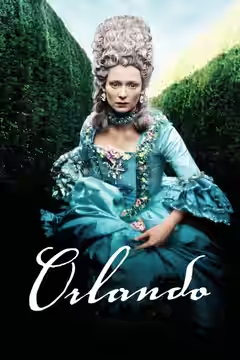
Sally Potter brings dance, music and experiment into films about identity and the roles people are expected to play. We recommend starting with Orlando, where her humour usually keeps the lessons from becoming heavy work.
Fi1m perspective
A knowing glance from Tilda Swinton gives Orlando (1992) much of its pleasure. Sally Potter sends an immortal figure through centuries of English history, but makes room for us to enjoy the company. We warmed to Swinton’s Orlando because her tenderness gave us someone to care about amid the changing conventions. Potter’s adaptation of Virginia Woolf is a good place to start, though its observations about gender can be blunt.
Her route to that welcoming film was through experimental shorts and performance work in the 1970s, followed by the feature The Gold Diggers (1983). The breakthrough of Orlando did not put an end to the experiments. The Tango Lesson (1997) has Potter performing as herself in a film about dance and making art; Yes (2004) is written entirely in iambic pentameter. She is willing to ask an audience to adjust to a film’s way of speaking or moving before settling into its story.
That makes the ease of Orlando worth noticing. Hervé Schneid’s editing carries the journey across periods briskly, though some encounters end before we have much chance to care about the people involved. David Motion and Potter’s music gives the changing periods a shared sense of play, helping the film remain light on its feet through the historical shifts. These contributions make the journey manageable, even when the romance needs more time than Potter allows it.
The reservation is that Potter can be satisfied with pointing out an absurd rule when we want to feel the hurt of living under it. In Orlando, we occasionally wanted her to stay with a person rather than hurry towards the next observation. Her later work includes the coming-of-age story Ginger & Rosa (2012) and the ensemble black comedy The Party (2017), so the appetite for different kinds of storytelling remains. Start with Orlando, and leave Yes for an evening when dialogue in verse sounds like a pleasure rather than an obligation.
Biography
Sally Potter is an English film director, screenwriter and composer. Born in London on 19 September 1949, she trained in dance and choreography at the London School of Contemporary Dance before making experimental short films, including Thriller (1979).
Her first feature, The Gold Diggers (1983), was followed by Orlando (1992), which she wrote, directed and scored. The film, starring Tilda Swinton, won the audience prize at the Venice Film Festival. Subsequent features include The Tango Lesson (1997), The Man Who Cried (2000), Yes (2004), Rage (2009), Ginger & Rosa (2012), The Party (2017) and The Roads Not Taken (2020).
Potter co-founded the production company Adventure Pictures. She was appointed OBE in 2012 for services to film and has published the book Naked Cinema: Working with Actors.