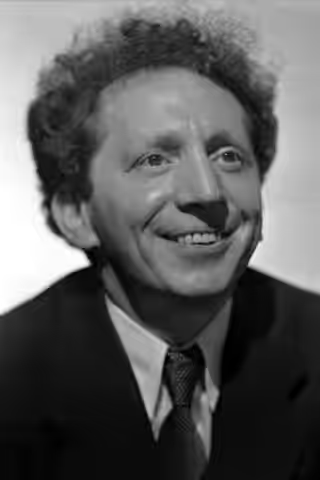
Sam Jaffe spent half a century being older, wiser and further from home than the stars he served, mostly in a whisper. Give the wisdom something to push against and he is quietly formidable; give it a dim room and it becomes a sermon.
Fi1m perspective
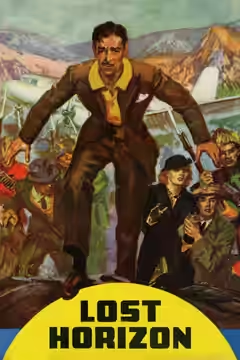
Sam Jaffe's most famous scene is a man sitting still in the dark. In Lost Horizon (1937) he is the High Lama, made up to look two hundred, telling Ronald Colman in whole paragraphs about kindness, moderation and the storm coming for the world outside. Frank Capra shoots him as a sermon and plainly believes every word. We believed it too, more or less, and we still felt the film sit down and wait for him to finish. A whispery voice and an unblinking face are useful things to have in a picture, and they stop a picture dead when nobody is allowed to interrupt them.
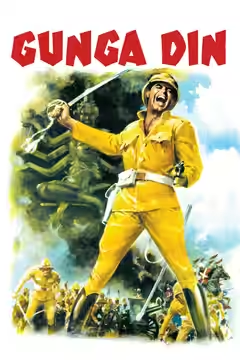
He came to films late. He had studied engineering and taught mathematics before joining the Washington Square Players in 1915, worked Broadway through the 1920s and 30s, including Grand Hotel in 1930, and did not make a film until The Scarlet Empress in 1934, when he was past forty. That is why there is no young Jaffe on screen. From the start he was the old man, the professor, the doctor, the visitor from somewhere else, and the studios leaned on the curly hair and the homely face to keep him there. Lost Horizon set the pattern. Gunga Din (1939), for George Stevens, gave him the title role, a young water-carrier, at 47, and critics have been noticing the gap ever since.
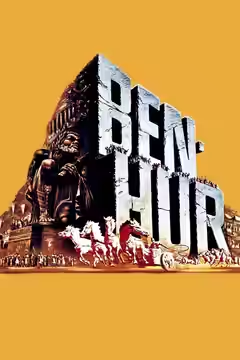
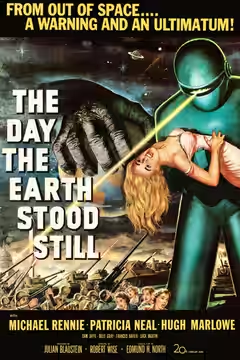
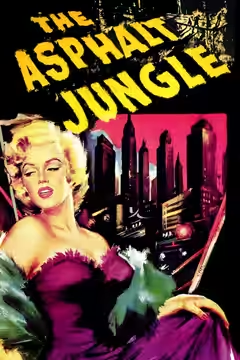
The parts that outlast the mystics are the ones with a plan in them. For John Huston in The Asphalt Jungle (1950) he is Doc Riedenschneider, the man who designs the robbery, and the whisper that made the High Lama a lullaby turns cool and calculating. Robert Wise cast him as Professor Barnhardt in The Day the Earth Stood Still (1951), the one scientist in the film who listens. In William Wyler's Ben-Hur (1959) he is Simonides, the loyal steward, and our review found no reason to single him out, which is roughly the Jaffe position: sound work in a room built for someone else. Television then gave him a mentor's chair as Dr Zorba in Ben Casey from 1961 to 1965, and he kept taking character parts into the 1980s.
Jaffe once said, "I disagree with Stanislavsky saying that there are small actors but no small parts." He knew which he had, and he chose them for what they said rather than how long they ran. The High Lama has nothing to do but be right. Doc Riedenschneider has to be right against people who would rather he were not, and that is the better use of him. Start with the heist. Come to the valley afterwards, and bring patience; he will not hurry, and after a while you stop wanting him to.
Biography
Sam Jaffe (born Shalom Jaffe) was an American actor. He was born on 10 March 1891 in New York City and died on 24 March 1984. He began working in film in 1934 and appeared in stage productions as well as films and television over a career spanning more than six decades.
Jaffe played the High Lama in Lost Horizon (1937) and the title role in Gunga Din (1939). He received an Academy Award nomination for Best Supporting Actor for his performance as Doc Erwin Riedenschneider in The Asphalt Jungle (1950). Other film roles include Professor Jacob Barnhardt in The Day the Earth Stood Still (1951), Simonides in Ben-Hur (1959) and Bookman in Bedknobs and Broomsticks (1971).
He co-starred as Dr David Zorba in the television series Ben Casey (1961–1965). Jaffe was blacklisted in the 1950s but continued to work in films directed by Robert Wise and William Wyler. He was also a teacher, musician and engineer.