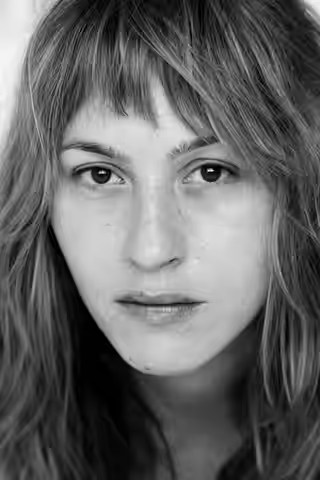
Sarah Adler plays women who have understood the worst before anyone has said it, and who then set about being reasonable. In Foxtrot the effort of that reasonableness is the performance, and it is the best thing in a film we admire.
Fi1m perspective
Two soldiers ring the bell in Foxtrot (2017), and Daphna Feldmann has understood before either of them opens his mouth. She goes down in the doorway. That is Adler's method in about four seconds: the knowledge arrives first, the body second, and words some distance behind. Samuel Maoz then has her sedated, and she spends most of the first chapter asleep while Lior Ashkenazi's Michael drinks his hourly glass of water. Her one waking scene in that chapter was harder for us to sit through than the news itself, because Ashkenazi has decided to be practical and she has not, and Giora Bejach's camera does not look away.
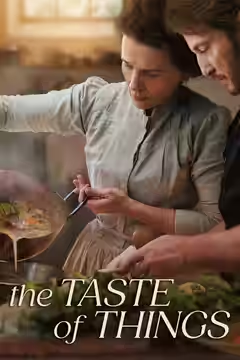
She has been working since the late 1990s, in small parts in French and Israeli productions, and the early credits that stand out are attached to other people's names: Judith Lerner in Jean-Luc Godard's Notre Musique (2004), a part in Sofia Coppola's Marie Antoinette (2006). Jellyfish (2007), in which she played Batia, is where Israeli cinema began to notice her properly. Then 2017 brought two films at once, Foxtrot and The Cakemaker, and international attention with them. She has since worked across Israeli, French and international film and television, and in 2023 turned up in The Taste of Things. Two countries' cinemas, then, and a habit of being cast as women caught between cultures or inside marriages under strain.
The third chapter of Foxtrot is where the case for her is made. Awake, she is a woman being reasonable in a voice that could break at any second; she and Michael share a joint on the kitchen floor and talk, and for ten minutes the film is as plain and sad as anything Maoz has made. Adler does almost nothing. She listens, keeps her hands still, and lets a sentence run out before it has finished. Restraint of this kind is easy to praise and hard to do, because it only works if the audience believes there is something under it, and with Adler we always do. She has said of Daphna and Michael that she could relate to "two people who are so far apart and having to make a long journey towards each other", and it is the journey she plays, not the arrival.
The limitation comes with the gift. Directors cast her for grief and quiet endurance, so we have seen a good deal of that and rather less of anything else; whether she can be silly, or cruel, or simply loud, the films have not much asked. She is not a name most viewers will recognise, which is odd given the notices she has had. We would not send you to any one film to see her do several things. We would send you to Foxtrot, and then to the kitchen floor, and if a director ever puts her in a comedy we will be first in the queue.
Biography
Sarah Adler is a French-Israeli actress. She was born in Paris on 18 June 1978 and holds dual citizenship.
She has appeared in films including Notre Musique (2004) as Judith Lerner, Marie Antoinette (2006) as the Comtesse d'Artois, Jellyfish (2007) as Batia, Foxtrot (2017) as Daphna Feldman, The Cakemaker (2017) as Anat Nachmias, and The Taste of Things (2023) as the mother of Pauline. She is married to director Raphaël Nadjari.