Scott Frank writes people who talk well and are in no hurry, and that has been his gift for more than thirty years. Given whole series to himself, the talk is as good as ever and the stories run two episodes long.
Fi1m perspective
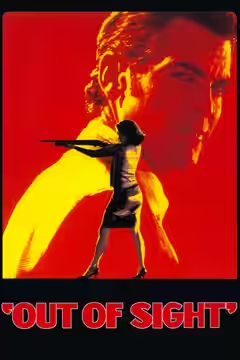
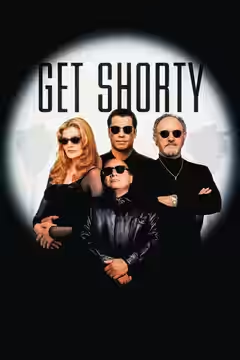
The best thing Scott Frank has written puts two people in the boot of a car and lets them talk. Out of Sight (1998) is a love story in which the robbery is what the leads do when they are not thinking about each other, and Frank, adapting Elmore Leonard, understood that the talk was the film and the crime was the excuse. He had done it once already in Get Shorty (1995), where the pleasure is watching a Miami loan shark find that Hollywood runs on the rules he already knows. Nobody in either film is in a hurry, and neither is Frank.
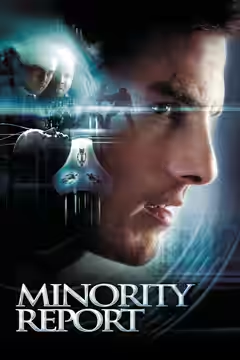
The plots have been less steady than the dialogue. Dead Again (1991) asks for more indulgence than its tangled mystery of hypnosis and reincarnation earns. Minority Report (2002), written with Jon Cohen, spends its last stretch explaining a pursuit that had already gripped us. Even Out of Sight gets busier and a little less itself once it reaches Detroit. Frank spent much of these years as an uncredited script doctor on other people's films, which may be why his own are so good at scenes and so unsure how many of them a story can hold.
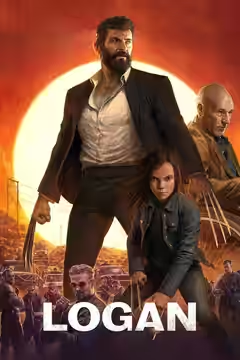
His strongest recent film script is one he shared. Logan (2017), written with James Mangold and Michael Green, gives Hugh Jackman, Patrick Stewart and Dafne Keen a makeshift family of temperaments that do not fit, and the writing has the sense to let them resist easy warmth. The people are as prickly as his crooks and the plot mostly stays out of their way.
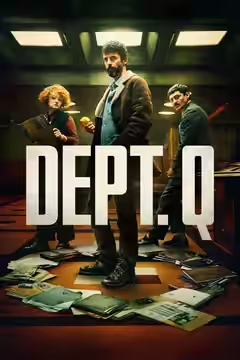
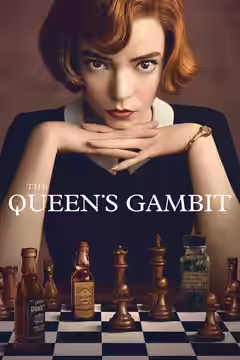
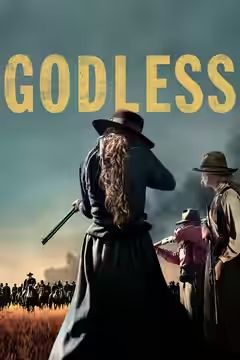
Since 2017 he has mostly written and directed whole series himself: Godless (2017), The Queen's Gambit (2020), Monsieur Spade (2024) and Dept. Q (2025). The three we have reviewed are all handsome, all well cast and all longer than the story they have to tell. Steven Meizler shot the first two and makes chess look like a knife fight and riders look small under a sky that takes two-thirds of the frame; Carlos Rafael Rivera scores all three sparingly and well. Michelle Tesoro cuts as slowly as Frank writes, which is where the trouble lies. In Godless he had a town of women running a mine and kept leaving it for flashbacks. In The Queen's Gambit he let his heroine off lightly and let her hotel-room scenes run long. In Dept. Q nine episodes carry more subsidiary storylines than one cold case can bear.
And yet the opening of Godless horrified us, and it was the quiet that did it. A marshal rides into a town a gang has been through, Frank keeps the camera back and the music away, and a decent man on a horse looks at what people have done and says nothing. Frank can do that. He does it, and then cuts to something else for forty minutes. Steven Soderbergh directed Out of Sight in 123 minutes. If you are new to Frank, start there. If you want the series, start with Godless, and know that the fourth episode is where our patience went.
Biography
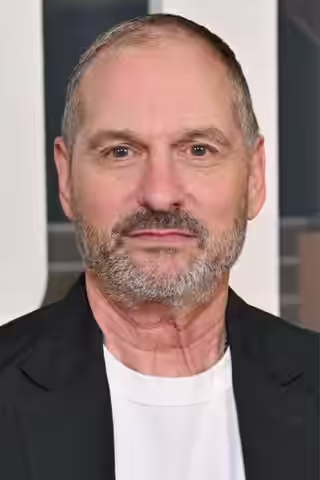
Scott Frank is an American screenwriter, director and producer. Born on 10 March 1960 in Fort Walton Beach, Florida, he studied film at the University of California, Santa Barbara and earned an MFA from the American Film Institute Conservatory.
He wrote the screenplays for Get Shorty (1995), Out of Sight (1998), Minority Report (2002) and Logan (2017). The last two earned him Academy Award nominations for Best Adapted Screenplay. Frank has also directed features including The Lookout (2007) and A Walk Among the Tombstones (2014).
For television he created, wrote and directed the Netflix miniseries Godless (2017) and The Queen's Gambit (2020), and served as writer, director and executive producer on Dept. Q (2025). He has received Writers Guild of America Awards, Emmy Awards and a Directors Guild of America Award.