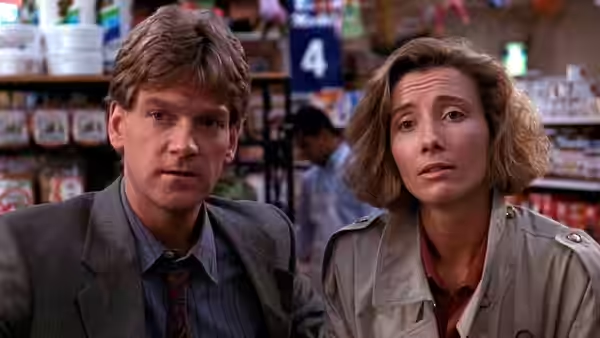
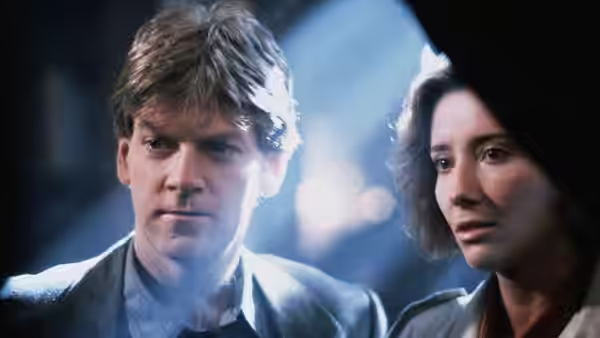
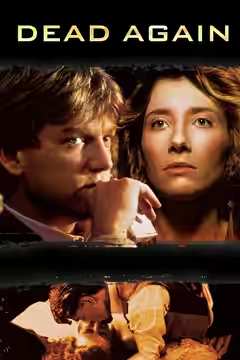
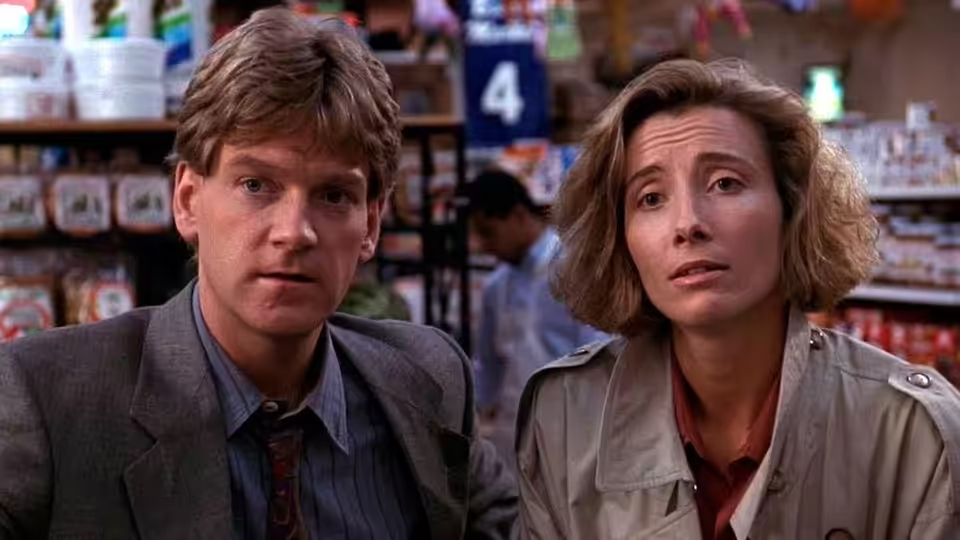
Mike Church (Kenneth Branagh) and Grace (Emma Thompson) standing in a store aisle
Film review

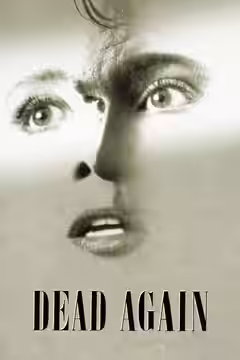
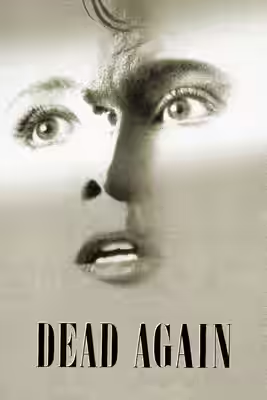
Dead Again

1991 · Directed by Kenneth Branagh · 1h 47m · MPA R

In a sentenceKenneth Branagh treats reincarnation as a reasonable excuse to turn the orchestra up

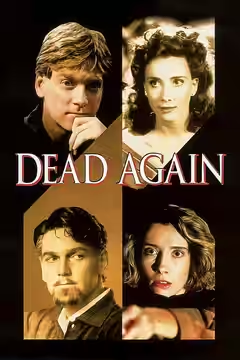
Kenneth Branagh and Emma Thompson take dual roles in a romantic mystery that moves between the 1940s and the present. Branagh plays Roman Strauss and Mike Church; Thompson plays Margaret Strauss and Grace. A murder links the two eras, while hypnosis raises the possibility that people can return in other lives and carry old attachments with them. As the mystery develops, the romance becomes bound up with questions about who these people were and what that means for them now. Andy Garcia appears, with Robin Williams as Cozy Carlisle.

Fi1m review

Dead Again is an enjoyably extravagant romantic mystery, carried by Kenneth Branagh and Emma Thompson’s chemistry. The plotting asks for more indulgence than it earns, but the romance survives the complications.

Dead Again commits itself to murder, hypnosis and reincarnation with a seriousness that makes the extravagance more enjoyable. Kenneth Branagh directs as though there were nothing remotely embarrassing about asking a romance to stretch across different lives. We recommend it to anyone who likes a thriller with large feelings and little restraint, with a warning about Scott Frank’s tangled plotting. The film needs considerable indulgence, and the performances do much of the work of earning it.

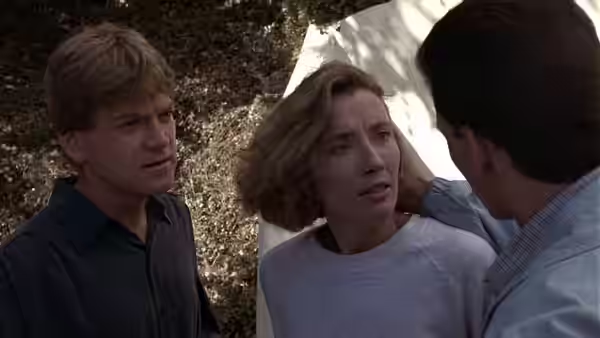
Branagh plays Roman Strauss and Mike Church, while Emma Thompson plays Margaret Strauss and Grace. The double casting gives us plenty to consider, but the actors do not let the puzzle overwhelm their scenes together. They have a warmth that makes the attraction worth following for its own sake. That matters when reincarnation is involved: without some believable desire, the business of who these people might have been would be a rather dry exercise.

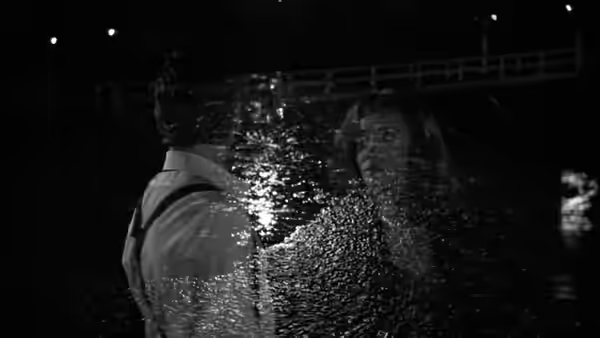
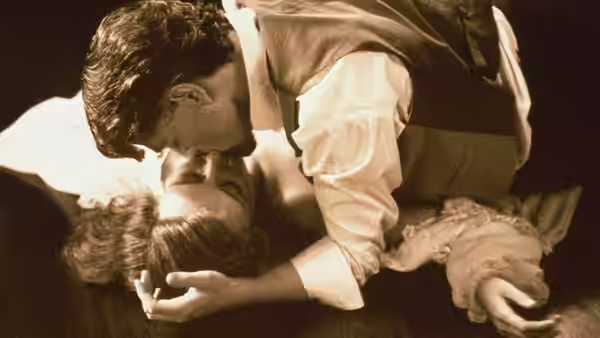
Matthew F. Leonetti’s cinematography separates the eras through black-and-white and colour, then finds visual similarities between them. We felt a small thrill at the shifts into black-and-white, because those similarities make the past seem uncomfortably close. The pictures make reincarnation seem plausible before the screenplay has finished explaining it. Branagh allows the black-and-white passages their theatricality, and Leonetti’s work makes that decision pay.

Production designer Tim Harvey gives the drama similarly exaggerated surroundings, occasionally to the point where the people have to compete with the décor. A little less would have helped. Patrick Doyle’s score is loud and emphatic, and its insistence helps make the romantic stakes felt. It can press too hard, but a discreet accompaniment would scarcely suit a film this willing to make a scene.

Peter E. Berger’s brisk editing keeps the shifts between eras lively and allows suspense to build without letting the mechanics entirely take over. The pace matters because there is plenty here that might invite an awkward question if left sitting for too long. For much of the running time, the next complication arrives while the previous one is still entertaining us. His cutting supplies much of the film’s nervous energy.

The trouble is that the screenplay’s implausibilities do not all become more persuasive through sheer enthusiasm. Some of the questions Frank raises remain annoyingly unclear, even allowing for a mystery’s right to keep us guessing. Branagh’s appetite for an emphatic effect can make this worse, giving another flourish more attention than a piece of reasoning deserves. A little more clarity would have helped the romance as well as the mystery.

This sort of romantic thriller would be in worse trouble if its lovers left us indifferent. Branagh and Thompson make us care enough to forgive quite a lot, although anyone expecting a rigorously worked-out mystery should be warned. At 107 minutes, it has the sense not to turn all this into a prolonged test of patience. Choose it for an evening when a love affair involving reincarnation sounds promising rather than like grounds for an early night.

Critical consensus AI synthesised

65
Positive
6
Mixed
1
Negative
2

Most critics find Dead Again an entertaining romantic mystery whose theatrical excess is a large part of its appeal. Praise centres on Kenneth Branagh’s exuberant direction, the chemistry between Branagh and Emma Thompson, and the use of colour and black-and-white to connect the film’s different eras. The favourable reviews enjoy its old-fashioned melodrama and elaborate flourishes, treating the story’s absurdities as a tolerable cost of the fun.

The spread is wide, however, and the same flourishes draw sharply different responses. Even sympathetic critics raise doubts about the convoluted plotting, unresolved questions and implausibilities, while Empire finds that the contemporary and 1940s elements never credibly fit together. Time Out goes further, rejecting the construction and lead performances, and finding the score and art direction overbearing. The central division is over how much narrative nonsense the film’s style and romantic chemistry can make enjoyable.

RogerEbert.com
23 August 1991 · ★★★★/4 · Roger Ebert
100

Ebert praises the film as a grand, theatrical romance-mystery in the vein of classic melodramas like Rebecca or Vertigo, suited for fans of bold gestures. He highlights Branagh's flair for direction and the effective use of dual roles by Branagh and Thompson.

Read the full review →
The AV Club
10 February 2015 · Adam Nayman
80*

The critic praises Branagh's florid, everything-but-the-kitchen-sink directorial style in this 1991 thriller as a refreshing contrast to kitchen-sink realism. He singles out the gender-flipped reincarnation twist and the romantic chemistry between Branagh and Thompson for particular note.

Read the full review →
Variety
31 December 1990 · Variety Staff
80*

The review notes Branagh brings zest and bravura style to this mystery-thriller of murder, hypnosis and reincarnation. It highlights the engaging film style buoyed by infectious fun, strong performances especially from Jacobi, and stylized black-and-white flashbacks.

Read the full review →
Slant Magazine
30 August 2016 · Odie Henderson
75*

The critic appreciates Branagh's gleefully fetishistic Hitchcockian homage and oversized dramatic flourishes in this reincarnation mystery. He singles out the bombastic score and visual parallels between the black-and-white and color sequences for praise.

Read the full review →
The New York Times
23 August 1991 · Vincent Canby
75*

Canby describes the film as a convoluted but entertaining romantic mystery melodrama that knowingly homages overripe 1940s Warner Bros.-style films. He notes its fun despite story absurdities and a somewhat commonplace ending.

Read the full review →
The New Yorker
9 September 1991
65*

The review calls it an entertaining exercise in high-style inconsequentiality with a lovely frivolous and spooky mood, shuttling breezily between eras. It praises the giddiness and flair but notes the picture crashes down with unresolved enigmas and a failure to address implausibilities.

Read the full review →

Straight answers AI written, from our review

Is Dead Again worth watching?
Dead Again is worth watching for anyone who likes a romantic thriller with large feelings and little restraint, and we scored it 78. Kenneth Branagh and Emma Thompson's warmth carries a plot about murder, hypnosis and reincarnation that asks for more indulgence than it earns. Anyone expecting a rigorously worked-out mystery should be warned.
How long is Dead Again, and what is it rated?
Dead Again runs 1h 47m and is rated R by the MPA in the US. It is a mystery and thriller film.
Where can I watch Dead Again in the US?
Dead Again is streaming on The Roku Channel, Apple TV and Amazon Prime Video in the US, and it is also available to rent from Amazon Prime Video and Apple TV from $3.99. Availability is checked daily; the links above go straight to each service.
How violent or frightening is Dead Again, and is it suitable for children?
Dead Again carries a UK 15 certificate, so it is not for children and is best kept to older teenagers and adults. The story turns on a murder linking the 1940s and the present, with hypnosis and reincarnation adding unease rather than gore, and Patrick Doyle's loud score makes the suspense felt. Treat it as a tense mystery rather than a horror film.
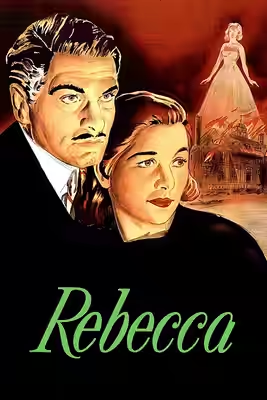
How does Dead Again compare to Rebecca?
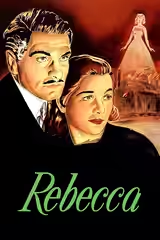
Dead Again is the more extravagant film, while Alfred Hitchcock's Rebecca is the more controlled and the better of the two. Both build suspense from a troubled romance, but Rebecca draws its unease from insecurity and jealousy, where Dead Again turns the orchestra up and asks you to accept reincarnation. Choose Rebecca for precision, Dead Again for a more indulgent evening.
What should I watch after Dead Again?
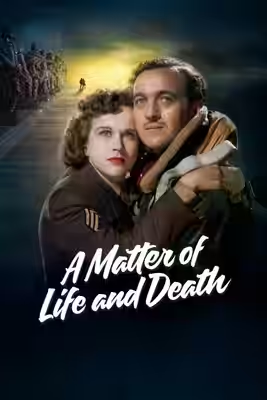
After Dead Again, try Rebecca (1940, Fi1m 85): A troubled romance, an imposing house and suspense that grows from jealousy. Then A Matter of Life and Death (1946, Fi1m 92): For another romance that takes an impossible premise seriously and earns it; and Phoenix (2014, Fi1m 68): A mystery of identity whose romantic tension becomes steadily harder to bear.

Cast

If you liked this, try…

  1. Rebecca (1940, Fi1m 85)A troubled romance, an imposing house and suspense that grows from jealousy.

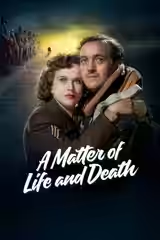
  2. A Matter of Life and Death (1946, Fi1m 92)For another romance that takes an impossible premise seriously and earns it.

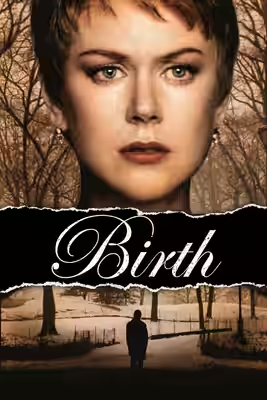
  3. Birth (2004) · not reviewed yetReincarnation troubles another romance, treated here with a much cooler composure.

  4. Phoenix (2014, Fi1m 68)A mystery of identity whose romantic tension becomes steadily harder to bear.

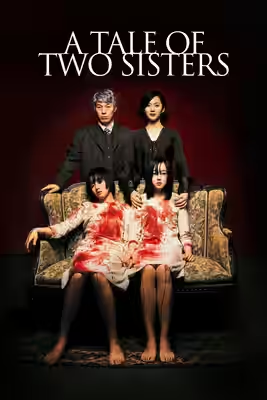
  5. A Tale of Two Sisters (2003) · not reviewed yetElaborate gothic unease and family feeling, with considerably less room to laugh.

Free account

Know what to watch tonight

Two lists that know where things are streaming, collections you can share, your own score beside ours, and Discover that remembers what you have seen.

  • Want to see, sorted by what is streaming now
  • Seen, with your score out of ten
  • No adverts, ever