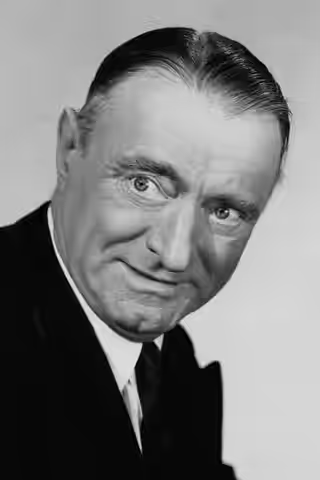
Ruman spent thirty-odd years playing large, loud German officials, and the joke never wore out because he never treated it as one. The Marx Brothers needed something solid to knock over; Lubitsch put him in a Gestapo uniform and made the laugh uneasy.
Fi1m perspective
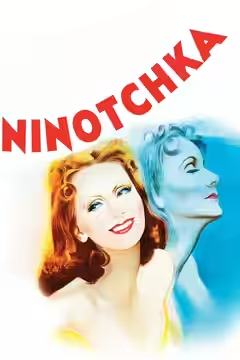
The scene is going along nicely and then Sig Ruman enters it, and the scene has to make room. He is a big man with a bigger voice and an accent he never bothered to thin, and he arrives already certain of his own importance. The film then spends the next few minutes disagreeing with him. That disagreement is the whole of his comedy, and he could run it in a courtroom, a hotel suite or an opera house without changing his posture. In Ninotchka (1939) he is Iranoff, one of three Soviet envoys sent to Paris to sell some jewels, and within an afternoon he has found the Royal Suite and room service. We said at the time that the film loves the three of them a little too easily. It does, and Ruman is a large part of why it is so easy.
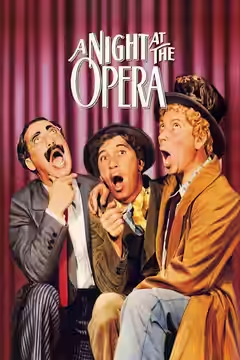
He came to acting late, by way of electrical engineering and the German stage, and to Hollywood later still, after Broadway and a film debut in Lucky Boy (1929). The career that followed has three clear stretches. First the Marx Brothers, who used him as a foil in A Night at the Opera (1935) and again in A Day at the Races (1937): a stuffed shirt for Groucho to unstuff. Then Lubitsch, twice, who gave the same figure a script worth listening to. Then the war and the years after it, when the German officer, the guard and the bureaucrat became steady work, and Billy Wilder cast him three times, most notably as the guard Schulz in Stalag 17 (1953).
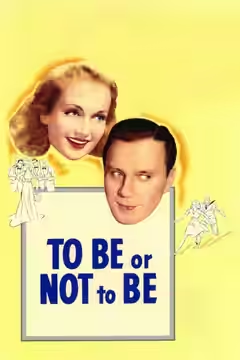
The Lubitsch films are where to start, and To Be or Not to Be (1942) is the one that stays with us. Ruman plays Colonel Ehrhardt, a pompous Gestapo commander who cannot keep his own story straight, and we laughed at him, loudly, and then sat with the odd feeling of having laughed at the Gestapo in a film made while the war was still on. That unease is Lubitsch's design, and Ruman serves it exactly, because he plays Ehrhardt with the same bluster he gave the Marx Brothers' impresario, and the uniform does the rest. A Hamburg-born actor playing this part in 1942 could have signalled his distance from it. He does not, and the film is sharper for it.
The nearest thing to a criticism is that he was typecast, in and after the war, as the stereotypical German, and it is fair. It is also what he was for. The real limit is elsewhere: he never argued with a script that made him easy, so where the writing is thin the accent does the work and the man behind it goes missing. Iranoff's conversion to capitalism takes a minute and a bottle, and Ruman does not ask for a second minute.
See the two Lubitsch films first; they are our two highest marks for him and the reader can judge for themselves. Then Stalag 17, where Wilder takes the joke away and leaves the man standing in the barracks, which turns out to be the more unsettling picture.
Biography
Sig Ruman was a German-American character actor. Born Siegfried Carl Alban Rumann in Hamburg, Germany, on 11 October 1884, he studied electrical engineering before serving in the Imperial German Army during the First World War. He emigrated to the United States in 1924 and appeared in numerous Broadway productions.
Ruman made his film debut in Lucky Boy (1929) and went on to appear in more than 100 films. He played Gottlieb in A Night at the Opera (1935), Comrade Iranoff in Ninotchka (1939), Colonel Ehrhardt in To Be or Not to Be (1942), Johann Schulz in Stalag 17 (1953), and Eric Von Bissell in an episode of The Addams Family (1964). He also appeared in A Day at the Races (1937), Only Angels Have Wings (1939), White Christmas (1954), One, Two, Three (1961) and The Fortune Cookie (1966).
Ruman died of a heart attack in Julian, California, on 14 February 1967.