Tamara Lawrance plays women who have decided to say less than they know, and lets us hear the rest. On the evidence of Get Millie Black she can carry a series by herself; the parts have not always asked her to.
Fi1m perspective
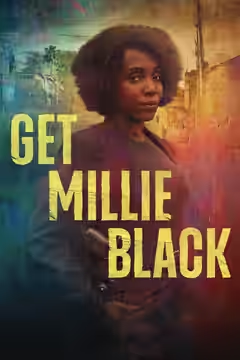
Watch Tamara Lawrance's shoulders in Get Millie Black (2024). Millie-Jean Black, back from the London police to work missing persons in Kingston, walks through her station with them up round her ears and her voice flattened to nothing. Then Marlon James gives her a narration, and the woman in her head turns out to be furious, funny and incapable of stopping. The gap between the two voices is the performance. Lawrance plays a person who has learned that saying what she thinks costs more than it is worth, and who thinks it anyway, at full volume, where only we can hear.
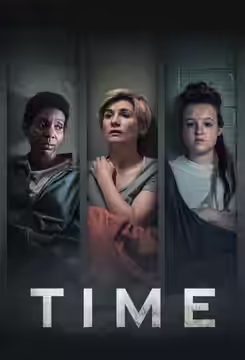
She left RADA in 2015 and was working at once, on television in Undercover (2016) and on stage at the National Theatre in Ma Rainey's Black Bottom, then as Viola in Twelfth Night (2017) barely out of drama school. Dominic Cooke, who has directed her on stage and on screen, cast her in On Chesil Beach (2017). The screen leads followed: July in The Long Song (2018), an enslaved woman in nineteenth-century Jamaica; Steve McQueen's Small Axe: Education (2020); Jennifer Gibbons, opposite Letitia Wright, in Agnieszka Smoczyńska's The Silent Twins (2022); Abi Cochrane, serving a life sentence, in Jimmy McGovern's Time; Mr Loverman (2024). Kingston, and Millie, came after.
What the stage gave her is clarity. She can handle verse and direct address without either sounding like a recitation, and James's narration is direct address by another name. She also moves between Caribbean and British voices without signalling the switch, which in a series built on a woman who belongs to two cities matters more than any single scene. Critics who saw The Silent Twins noticed the same precision in her paired work with Wright, where the two had to move as one and still be told apart. We have not reviewed it and will not judge it at length.
The scenes that got us in Get Millie Black were not in the police station. Millie's sister Hibiscus (Chyna McQueen) lives in the gullies under the city and will not be rescued, and Lawrance's face when she realises it, wanting to hold on and knowing the decision is not hers, moved us more than anything in the case. It is the clearest example of what she does well: defiance and helplessness in the same expression, neither winning. We came away from a whodunit thinking about a sister rather than a suspect. That was her doing, and James's; the plot was in a hurry by the fifth episode and she was not.
The caveat is one of evidence. We have seen her carry one series; in Time she is part of an ensemble our review did not single out, and a good deal of her best-regarded work is on stage or in films we have not covered. Lawrance said of Millie that she is "not remotely interested in being palatable", and that is the kind of woman she plays best. Television has only just started handing her those parts. It should keep doing so.
Biography
Tamara Lawrance is a British actress. She was born on 15 July 1994 in Wembley, London, and trained at the Royal Academy of Dramatic Art after attending St Dominic's Sixth Form College.
She first gained attention for her stage work, including the role of Viola in a 2017 National Theatre production of Twelfth Night, which was cinecast via NT Live, and received the second prize at the Ian Charleson Awards in 2018. On screen, she has appeared in King Charles III (2017), The Long Song (2018), On Chesil Beach (2018), Small Axe (2020), Invasion (2021), The Silent Twins (2022) and Get Millie Black (2024).
Lawrance played Abi Cochrane in the second series of the BBC drama Time (2023) and appears in the film Love of Your Life (2026).