Terry Jones wrote and directed comedy that runs on structure rather than punchlines, and in Life of Brian and Monty Python and the Holy Grail the structure holds. Working outside the troupe, on Labyrinth, the odd encounters kept coming and the story behind them wandered.
Fi1m perspective
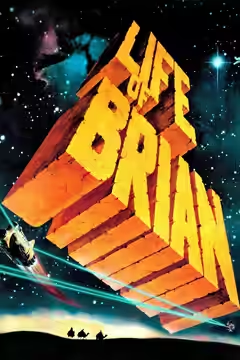
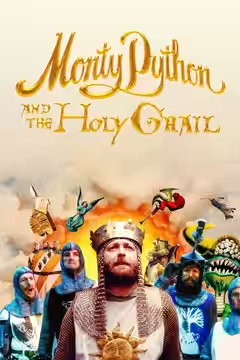
Terry Jones's own face on screen usually belongs to a woman: Mandy Cohen in Life of Brian (1979), shrieking at a crowd she never asked for, certain of everything and right about very little. It is a small part and it tells you what he found funny. Not the line so much as the person delivering it with total conviction, and the people who insist on listening. As Sir Bedevere in Monty Python and the Holy Grail (1975) he conducts a witch trial with a schoolmaster's patience while the reasoning gets worse at every step. We laughed and then felt slightly sick, because nobody in the scene doubts himself for a second and Jones never stops to say they are wrong.
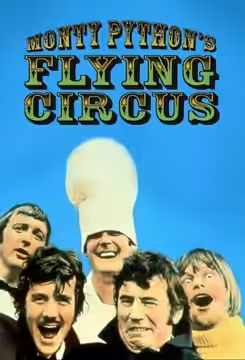
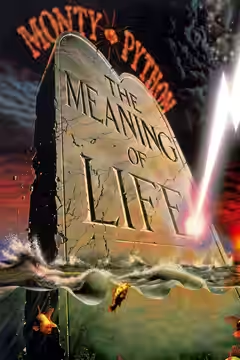
He came to that as a writer. Jones and Michael Palin wrote together for 1960s television, The Frost Report and Do Not Adjust Your Set among them, before Monty Python's Flying Circus (1969), where Jones pushed for sketches that flowed into one another rather than stopping for a punchline. It is why the series still feels loose and exact at the same time. The weaker stretches run long, but the cast's command of pompous speech carries them, and Jones is the most forceful of the five when the shouting starts. He co-directed Holy Grail with Terry Gilliam and then directed Life of Brian and Monty Python's The Meaning of Life (1983) on his own. He said he "was always totally concerned about the finished product and how things looked", and it shows: Holy Grail is more carefully made than its horse substitutes suggest.
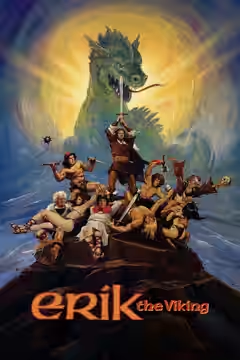
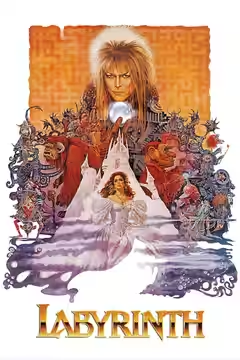
Life of Brian is the best of it, a comedy about the urge to tell other people what to believe, with Graham Chapman giving the arguments something to push against. Holy Grail is nearly as good, though Jones and Gilliam are sometimes too fond of a joke to notice it has already worked. The Meaning of Life is the patchiest of the three, saved by the musical number and the clerks' rebellion and let down by gross-out material that mistakes our endurance for an inexhaustible supply. Outside the troupe, his screenplay for Labyrinth (1986) hands Jim Henson's creatures a run of strange encounters and gives Jennifer Connelly's Sarah rather less to feel. It went through heavy rewrites and Jones said the finished film was not entirely his. Reviews of his later solo features, Personal Services (1987), Erik the Viking (1989) and The Wind in the Willows (1996), have generally found them patchier than the Python films.
He spent much of his last stretch on children's books and medieval history programmes, which is where Bedevere's trial came from in the first place. Start with Life of Brian, and watch the crowd rather than the man they are following. That is where Jones was always looking.
Biography
Terence Graham Parry Jones (1942–2020) was a Welsh actor, comedian, writer and director. He was a member of the Monty Python comedy troupe and appeared as various characters while also writing for the television series Monty Python's Flying Circus (1969–1974).
Jones studied English at St Edmund Hall, Oxford, where he performed in revues with Michael Palin. Before Monty Python he wrote for The Frost Report and appeared in Do Not Adjust Your Set (1967–1969) and The Complete and Utter History of Britain (1969). He co-directed Monty Python and the Holy Grail (1975) with Terry Gilliam and directed Monty Python's Life of Brian (1979) and Monty Python's The Meaning of Life (1983).
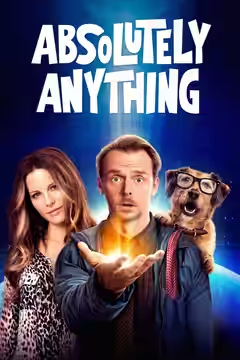
His other film work includes acting and writing credits on Jabberwocky (1977), Erik the Viking (1989) and Absolutely Anything (2015).