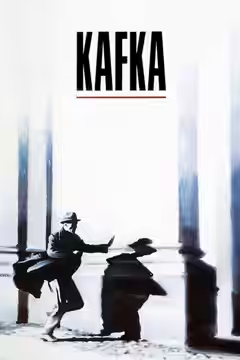
Theresa Russell built a career on troubled women in films that made audiences uncomfortable, most of them with Nicolas Roeg. She is at her most persuasive when a director wants that discomfort; in Kafka, handed slogans, she looked stranded.
Fi1m perspective
The thing Russell does, and did from the start, is decline to charm. The women who made her name are brooding, troubled, sometimes plainly disturbed, and she plays them without the small apologies most actors slip in to keep an audience onside: no wink, no softening close-up, no sign that she knows better than the character. She trained at the Lee Strasberg Institute, and the approach is method in the old sense, built from her own experience rather than from imitation, which gives the work a directness that can be hard to sit with. She has put it herself: "If I read something and it frightens me, I’m compelled to do it." The filmography bears that out.
The career divides cleanly. A debut at nineteen in Elia Kazan's The Last Tycoon (1976), a lead opposite Dustin Hoffman in Straight Time (1978), and then Bad Timing (1980), the first of six films with Nicolas Roeg and the one most often cited as fixing her reputation. Roeg's cinema is non-linear and preoccupied with obsession and identity, and Russell suited it; in Insignificance (1985) she played a version of Marilyn Monroe and built the woman up from nothing rather than doing the voice and the walk. Black Widow (1987), for Bob Rafelson, was the one time the mainstream came to her, as a serial killer opposite Debra Winger. It did not change her habits. The same year brought Whore for Ken Russell and Kafka for Steven Soderbergh; after that came supporting parts in Wild Things (1998) and The Believer (2001), and television.
We have reviewed only Kafka, and it is not the place to start. Soderbergh's black-and-white Prague looks superb and the story under it is pulp, and Russell's Gabriela, the dead man's lover who insists he did not kill himself, is written in slogans. She delivers them as if she would rather not, and we believed her. Watching it, we felt less that she was failing the part than that the part had nothing for her to do, and we kept waiting for a scene in which someone let her stop declaiming and simply look at Irons. It never arrives. Other reviewers noticed the accent and the delivery in the period setting. We noticed an actor whose gift is rawness being asked for stylisation, which is the wrong order.
The pattern is plain enough. Give her a director who wants a woman to be difficult and unglamorous, Roeg above all, Rafelson once, and she holds her own against anyone in the frame. Give her a mannered thriller and she looks like a guest. Her own choices did the rest: she took the frightening script over the safe one, and there were commentators at the time who said that cost her the larger career. On the evidence, she would not have wanted it. The films that made her name are the Roeg ones, and we have not yet reviewed them. Kafka we have, and we would send you to it for the lighting.
Biography
Theresa Russell is an American actress, also credited as Theresa Paup. Born Theresa Lynn Paup on 20 March 1957 in San Diego, California, she made her film debut in The Last Tycoon (1976) and appeared in Straight Time (1978). She starred in Nicolas Roeg's Bad Timing (1980) and married the director in 1982. She trained at the Lee Strasberg Institute.
Russell collaborated with Roeg on further films including Eureka (1983), Insignificance (1985) and Cold Heaven (1991). In 1991 she played Gabriela in Steven Soderbergh's Kafka and appeared in Ken Russell's Whore. Later film roles include Wild Things (1998), The Believer (2001) and Spider-Man 3 (2007). She has also worked in television, with appearances in Fringe (2008) and Cold Case (2010).