Tim Pigott-Smith played men with authority and something ugly underneath it, and he played them so exactly that the ugliness was never the whole story. Ronald Merrick in The Jewel in the Crown is the performance; almost everything after was cast in its shadow.
Fi1m perspective
Watch Ronald Merrick in The Jewel in the Crown (1984) take an insult. The face does almost nothing. The eyes hold a second longer than is comfortable, and you understand that the man is working out what the slight will cost him, and what it will cost the person who gave it. Pigott-Smith played authority, usually in uniform or in office, and he nearly always let something ugly show through it. What made him worth watching was that he never let the ugliness be the whole of the man. Merrick's cruelty is clear early on, and we found him unsettling because the performance kept pulling us back to the complicated person responsible for it, rather than letting us file him as a villain and relax. Over fourteen episodes he is the reason to keep going when the pace flags, and it does flag.
He had come up through regional theatre and small television parts in the early 1970s, and the serial made him famous in a way he said he found uncomfortable. It also fixed him. In his own words: "Villains are always the best roles, but that meant that for months afterwards, all I got offered were absolute cads and bounders and really nasty pieces of work, as well as a lot of people who only had one arm." The stage was where he got away from that. He worked at the RSC and the National Theatre, with Peter Hall and Howard Davies among his directors, in Shakespeare and in new plays, and what people noticed there was precision and feeling arriving in layers, which is what Merrick has too.
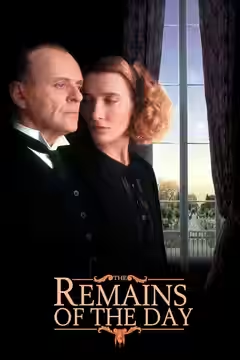
On screen the parts stayed supporting and the men stayed powerful. Thomas Benn in The Remains of the Day (1993). Richard Hale in North & South (2004), the father, in a story in which he had once played the son. Creedy in V for Vendetta (2006), a government official of the sinister kind, in a thriller we liked despite its speeches and in which our attention, like everyone's, went to Hugo Weaving. Lord Elms in The Hour (2011), a series that was well acted and about half the drama it meant to be. He is reliable in all of these. In none of them is he the reason to press play.
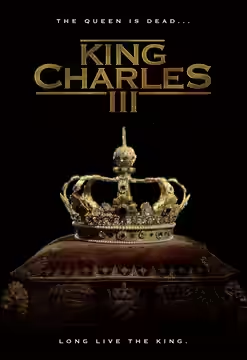
The complaint about him, that he was asked to do the same thing again and again, is a complaint about casting rather than about the actor. When a part had room, as King Charles III (2014) did, first on stage and later filmed, it gave him a king who is neither cad nor bounder, and it was the role that finally got him talked about for something other than Merrick. If you know him only as the cold eye in the corner of a thriller, go back to 1984 and watch the whole face. The eye was what television kept asking for. It was the least of what he had.
Biography
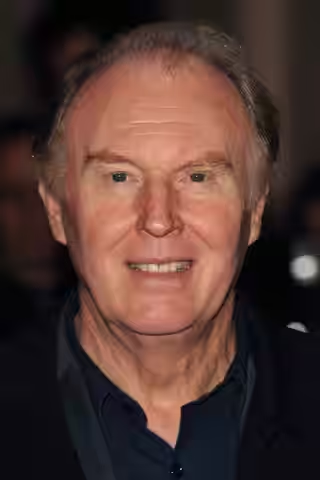
Tim Pigott-Smith (13 May 1946 – 7 April 2017) was a British actor known for his work in film, television and theatre. Born in Rugby, Warwickshire, he studied at the University of Bristol, graduating in 1967, and trained at the Bristol Old Vic Theatre School. He made his professional stage debut in 1969 with the Bristol Old Vic company.
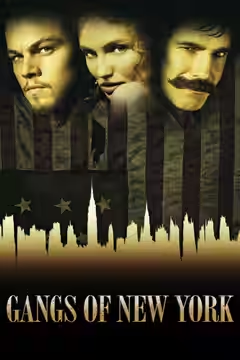
Pigott-Smith appeared in numerous films, including The Remains of the Day (1993) as Thomas Benn, Gangs of New York (2002), Johnny English (2003), V for Vendetta (2006), Quantum of Solace (2008) and Alice in Wonderland (2010). On television he was acclaimed for his leading role as Ronald Merrick in the 1984 series The Jewel in the Crown, for which he received a BAFTA Television Award for Best Actor. His stage credits included a Broadway debut as Dr Watson in the 1974 revival of Sherlock Holmes and the title role in King Charles III (2015–2016).