Warren Ellis can keep a quiet scene tense or let tenderness register without softening the hardship around it. We rate him highly, with one reservation: he sometimes presses for feelings the actors have already supplied.
Fi1m perspective
In Back to Black (2024), a woman and her granddaughter sit at a kitchen table with a pot of tea, while Nick Cave and Warren Ellis supply a single line of strings. We were moved by Cynthia's watchful pride in her granddaughter; the music leaves room for the worry beneath it. The film is too soft on its subjects, but that passage earns its tenderness. Ellis can be worth listening for even when the film around him disappoints.
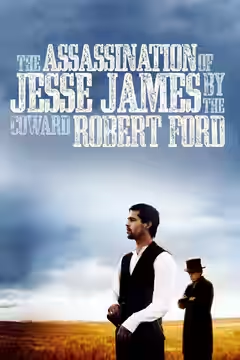
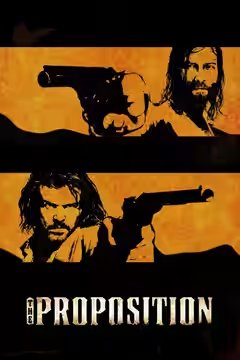
His film-scoring partnership with Cave began with The Proposition (2005). Working from a rock and improvisational background, he often makes complete pieces to be placed against the images later, rather than composing to each cue. In Andrew Dominik's The Assassination of Jesse James by the Coward Robert Ford (2007), their mournful score gives the long waits a sadness that makes Ford's hunger for approval painful rather than merely ridiculous. Their score for The Road (2009) similarly supports the tenderness between father and son without making their surroundings seem any less desolate.
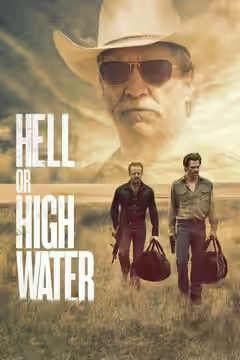
David Mackenzie's Hell or High Water (2016) makes especially good use of the partnership. Jake Roberts's editing keeps the pursuit moving while leaving room for conversation; Cave and Ellis make the quieter stretches lonely and uneasy, so the tension survives without another incident. In Wind River (2017), their mournfulness presses harder, but it keeps the grief present while the characters get on with examining evidence.
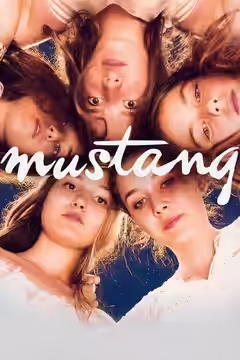
Solo work brings a useful change of emphasis. His first solo feature score, for Deniz Gamze Ergüven's Mustang (2015), encourages belief in the sisters' resourcefulness, though it sometimes insists on feelings the performers have already supplied. In Walter Salles's I'm Still Here (2024), a low held tone is used sparingly, leaving most of the music to the family's record player. We prefer that discretion: the songs belong to the household, and Ellis does not need to tell us how to feel about it.
There are passages where Cave and Ellis would do better to leave a scene alone. In DAHMER - Monster: The Jeffrey Dahmer Story (2022), they add unease to a series already prolonged and uncomfortable. More discomfort is seldom what those scenes need, and the music cannot correct the repetition. Start with Hell or High Water, where they keep us anxious even when nobody is doing much.
Biography
Warren Ellis is an Australian musician and composer. Born in Ballarat, Victoria, he studied classical violin at university in Melbourne before forming the instrumental group Dirty Three in 1992. He has been a member of Nick Cave and the Bad Seeds since 1994 and was also part of Grinderman.
Ellis has composed numerous film scores, often in collaboration with Nick Cave. Their work includes The Assassination of Jesse James by the Coward Robert Ford (2007), The Road (2009), Hell or High Water (2016), Wind River (2017) and Back to Black (2024). He plays violin, piano, accordion, bouzouki, guitar, flute, mandolin and viola.