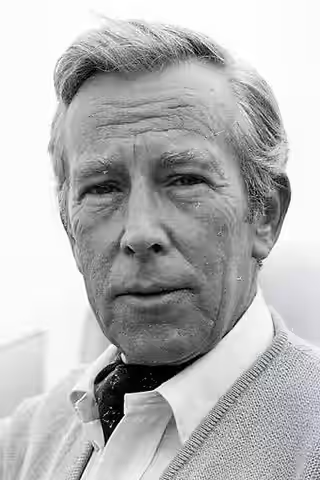
From the 1940s to the 1970s Whit Bissell was the man in the white coat or the uniform who told the hero something he did not want to hear. He was never the point of the scene, and the scene rarely worked without him.
Fi1m perspective
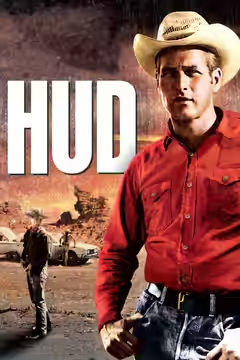
A heifer is found dead by the water tank in Hud (1963), and the state vet arrives to look at it. He is Whit Bissell, playing Mr Burris, and he wants to run tests before anyone moves a cow. It is a small part, as nearly all of his were, and the whole of Martin Ritt's film turns on it: Hud wants the herd sold before the results come back. We were glad to see him. Homer Bannon is right too loudly and Hud is no good at all, and here, briefly, is a man with no stake in the argument who simply wants to do his job properly. Bissell plays him as exactly that and asks for nothing more.
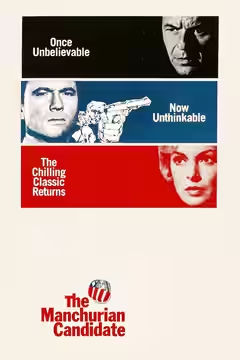
He worked in films from 1943 to the 1970s, in hundreds of pictures and television episodes, and Hollywood came to an early agreement about him. He was the silver-haired man with a title on his door: the officer, the doctor, the psychiatrist, the official, the undertaker. In the cheap science fiction and horror of the 1950s that meant the scientist, sane or otherwise: Dr Edwin Thompson in Creature from the Black Lagoon (1954), the psychiatrist in the framing scenes of Invasion of the Body Snatchers (1956), Dr Alfred Brandon in I Was a Teenage Werewolf (1957), the mad-scientist part he is most often remembered for. The 1960s gave him grander company and the same jobs: Walter Kemp in The Time Machine (1960), the undertaker Chamlee in The Magnificent Seven (1960), a medical officer in The Manchurian Candidate (1962).
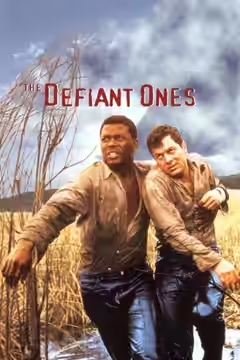
Casting him was a way of not drawing attention, and it worked. His face was pleasant and unremarkable, the kind you would not pick out of a queue, and that is why you believed the title. A doctor who looked like a film star would have been a film star. He could be fussy when a scene needed a fussy man, or stand with a soldier's straight back when it needed a soldier, and either way the scene got on with its business and left him behind. The cost is that you can have seen him in a dozen films and not know his name. He is Lou Gans in The Defiant Ones (1958), and when we reviewed it we did not think to mention him. That is not a complaint about the performance. It is the performance.
In 1993 he said he missed the work, "the challenge of breathing something special into every role you played". Special is a large word for what he did. Believable is nearer it, and he managed believable several hundred times over, which few actors can say. If you want to see the trick at its cleanest, watch Hud, and notice how much of the plot is left resting on him.
Biography
Whit Bissell was an American character actor, born Whitner Nutting Bissell in New York City on 25 October 1909. He died on 5 March 1996 in Woodland Hills, California.
He began his film career with Holy Matrimony (1943) and appeared in hundreds of films and television episodes. His credits include Creature from the Black Lagoon (1954), Invasion of the Body Snatchers (1956), The Defiant Ones (1958) as Lou Gans, The Time Machine (1960), The Magnificent Seven (1960), The Manchurian Candidate (1962) and Soylent Green (1973). On television he appeared in episodes of Star Trek (1966), I Dream of Jeannie (1965) and The Incredible Hulk (1977).
Bissell trained with the Carolina Playmakers at the University of North Carolina and had stage experience on Broadway before entering films.