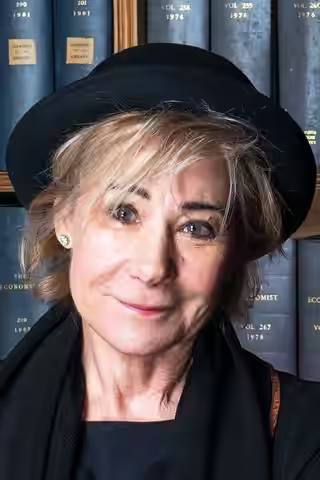
Zoë Wanamaker has spent nearly fifty years playing women who are difficult to be in a room with, in comedy and drama alike, with a low voice she rarely needs to raise. Her best television work is the smaller, angrier kind.
Fi1m perspective
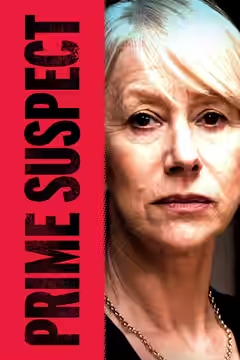
Moyra Henson is the place to start. In the first Prime Suspect (1991) Zoë Wanamaker plays the partner of John Bowe's George Marlow, a travelling salesman with a pleasant manner and an old conviction, and the police keep coming back. Bowe gives them nothing to read. Wanamaker gives them too much: a loyalty that is half love and half fury at being asked about it, so that every question from the police lands as an insult first and a possibility second. We found her scenes harder to sit through than anything in the interview room. Marlow can hold his face; Moyra cannot, and the not knowing is written all over hers.
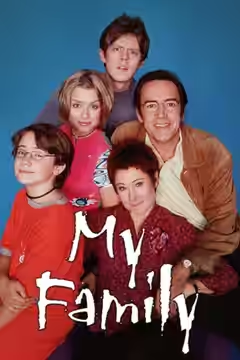
The voice is the constant. Wanamaker trained at the Central School of Speech and Drama, spent 1976 to 1984 with the Royal Shakespeare Company, and arrived on television in the 1980s and 1990s already sounding like nobody else: low, husky, a little amused. Critics have spent decades reaching for animals to describe the face, part cat and part pixie, and the parts followed the description. She has been cast, over and over, as the eccentric, the formidable or the plainly odd woman, in comedy and in drama, and she has rarely fought it. Love Hurts (1992–1994) gave her Tessa Piggott and a wider audience. My Family (2000–2011) gave her Susan Harper, the matriarch opposite Robert Lindsay, for eleven series. Harry Potter and the Philosopher's Stone (2001) gave her Madam Hooch, and it remains the film most people under forty know her from.
She is at her best when the comedy and the nastiness are in the same part. Ariadne Oliver in Agatha Christie's Poirot and Clarice Groan in Gormenghast are both women who are funny and slightly monstrous at once, and Wanamaker plays them without asking to be liked. On stage the parts have been larger and darker, Electra (1997) above all, and the intensity people describe there looks to us like Moyra Henson with the volume up. Television has not always known what to do with it. My Family ran long enough for the writing to change hands and settle into formula, and there is only so much an actor can do with the same exasperated look, however well she does it. In Criminal Record (2024) she is Maureen, and it says something about how tightly the series holds to Peter Capaldi and Cush Jumbo that we did not stop to mention her.
Wanamaker has said of her own career choices, "I wasn't brave enough." It is an odd thing to hear from someone who held a sitcom lead for eleven series and has spent the rest of the time playing women nobody would call nice. Start with the first Prime Suspect, where the part is a supporting one and she makes it feel like the second lead, and then decide for yourself what she meant.
Biography
Zoë Wanamaker is an American-born British actress. She was born on 13 May 1949 in New York City and trained at the Central School of Speech and Drama. She has worked extensively in theatre, including with the Royal Shakespeare Company and the National Theatre, winning two Laurence Olivier Awards.
Wanamaker is known for her film roles as Madam Hooch in Harry Potter and the Philosopher's Stone (2001) and Ada Leverson in Wilde (1997), and for television performances including Susan Harper in My Family (2000–2011), Ariadne Oliver in Agatha Christie's Poirot (from 2005), Cassandra in Doctor Who (2005), Helen Jacobson in Killing Eve (2018) and Maureen in Criminal Record (2024). She was appointed CBE in 2001.