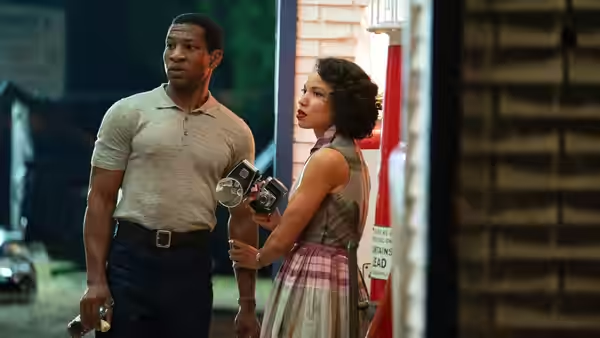
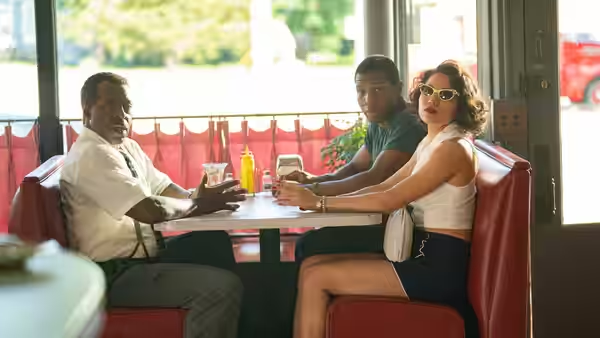
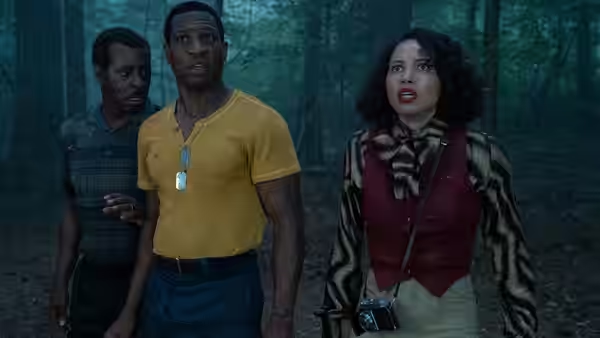
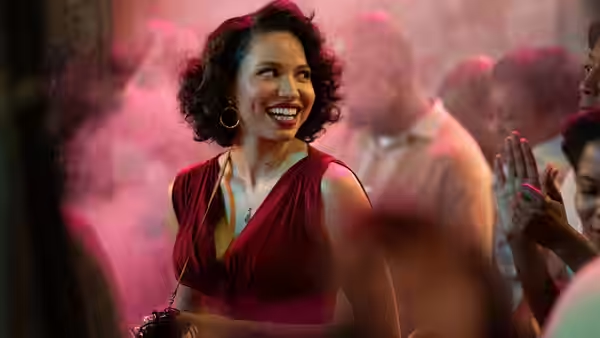
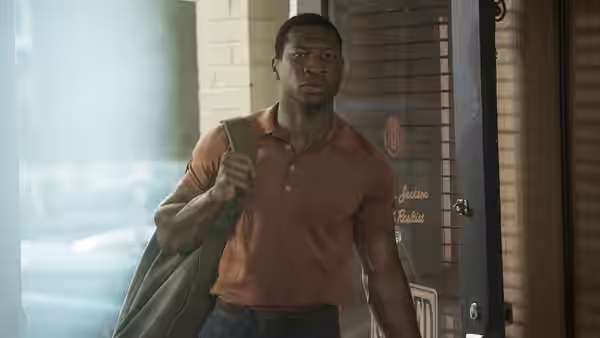
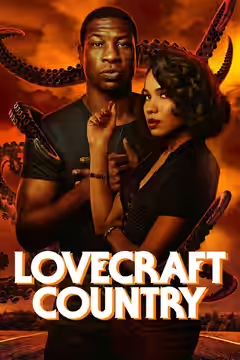
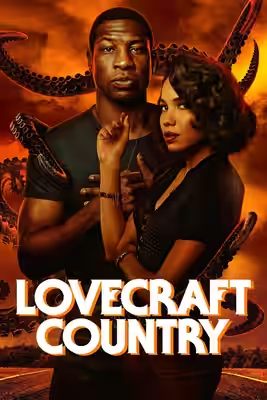
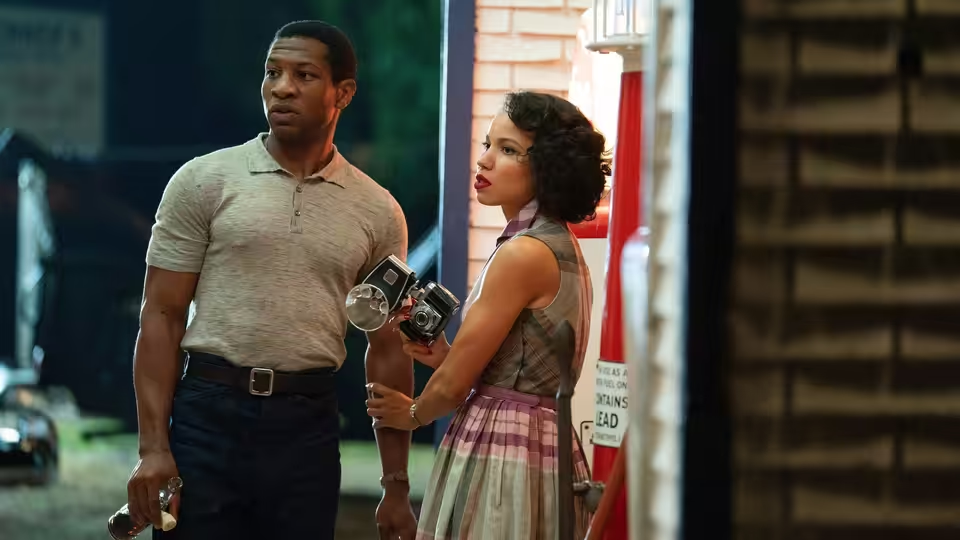
Atticus Freeman (Jonathan Majors) and Letitia Lewis (Jurnee Smollett) standing outside at night
Series review

Lovecraft Country

2020 · Created by Misha Green · Series · 1h 00m · MPA TV-MA

In a sentenceA road trip through Jim Crow America where the monsters in the woods are, for once, the light relief

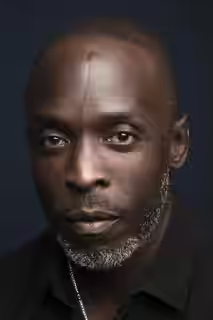
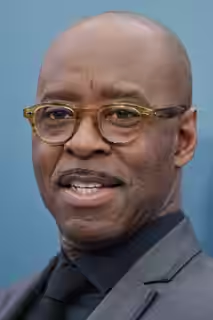
Atticus “Tic” Freeman (Jonathan Majors), back from the Korean War, returns to Chicago’s South Side in the 1950s after a letter from his estranged father Montrose (Michael Kenneth Williams), who has gone missing chasing a family secret in Ardham, Massachusetts. Tic sets off to find him with his uncle George (Courtney B. Vance), who publishes a travel guide for black motorists, and his childhood friend Letitia “Leti” Lewis (Jurnee Smollett-Bell), a photographer with nowhere else to be. On the road a sheriff (Jamie Harris) wants them gone by sundown, and the woods hold something worse. At Ardham, Christina Braithwhite (Abbey Lee) is expecting them.

Fi1m review

Misha Green’s adaptation of Matt Ruff’s novel starts as the most frightening hour of horror television in years and ends as ten of the busiest. We recommend it, with a warning: the first episode sets a standard the rest cannot keep.

Misha Green’s series takes its title from H. P. Lovecraft, the New England horror writer whose racism was not incidental to his work, and sets out to give his monsters to the people he feared. Adapted from Matt Ruff’s novel, it follows Atticus Freeman (Jonathan Majors), home from Korea, on a drive north with his uncle George (Courtney B. Vance) and his friend Leti (Jurnee Smollett-Bell) to find his missing father Montrose (Michael Kenneth Williams). The first season runs to ten hour-long episodes. It is a series that would rather try twelve things and drop four than try six and land them all.

Our verdict is that the trying is worth your time, and that it is uneven in ways that matter. The opening episode is as good as anything of its kind we have seen. By the tenth the show has spent most of what it had and is running on plot.

The scene that frightened us properly comes early. The three travellers are stopped by Sheriff Eunice Hunt (Jamie Harris), who tells them, almost kindly, that they have a few minutes to be out of his county before the sun goes down, and then follows them to make sure. Yann Demange directs it as a slow drive, the car crawling because it cannot be seen to speed, the light going orange behind the trees. Nothing supernatural has happened yet and we could hardly breathe. When the creatures do arrive, many-eyed and fast, they are a release. That is the show’s whole argument in one sequence, and it never puts it better.

Tat Radcliffe and Robert McLachlan shoot the human world in warm daylight and the other one in purple and green, and the Ardham lodge, built by production designers Howard Cummings and Kalina Ivanov as a place of carved wood and long tables, looks like a country house that has been waiting for guests it intends to eat. Laura Karpman and Raphael Saadiq supply the score, and Green lays songs recorded decades after the setting over 1950s streets. We expected to hate this and did not. It makes the point that the past is not over without anyone having to say so.

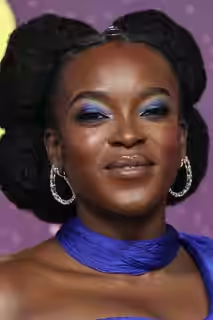
The cast carries the rest. Majors plays Tic as a large man who has learned to stand still, and Smollett-Bell gives Leti a temper that keeps the scenes moving when the writing stalls. Wunmi Mosaku, as Ruby Baptiste, is the best thing in it, and gets an episode of her own that we will not describe except to say it is the one hour where the horror and the argument about race are the same thing at the same moment. Williams makes Montrose a father you understand without forgiving, and Aunjanue Ellis-Taylor’s Hippolyta, George’s wife, has a stretch late on that moved us more than the plot around it deserved.

What does not work is the shape. Green and her writers send each episode off in a different direction, a haunted house here, a Korean war story there, a treasure hunt, a time slip, and the four credited editors, Joel T. Pashby, Marta Evry, Chris Wyatt and Bjorn T. Myrholt, are asked to cut across places and decades at a pace that flattens the differences. The mythology of the Braithwhite family, with its spells and books and bloodlines, is explained at length and matters less each time. Abbey Lee’s Christina is more interesting when she is a threat in a doorway than when she is delivering the rules.

Lovecraft wrote about the dread of the unknown from the point of view of a man who found most of humanity unknown. Green’s answer is to put a black family in his New England and let the actual horrors of the period, the sundown towns and the sheriff’s deputies, sit beside the invented ones. When the show trusts that idea it is fierce. When it reaches for a bigger plot it becomes ordinary fantasy television, well dressed.

Watch the first three episodes. If they hold you, keep going, and accept that the later hours will be louder and less sure of themselves. If they do not, nothing after will change your mind.

Critical consensus AI synthesised

80
Positive
10
Mixed
3
Negative
0
The Guardian
17 August 2020
90*

The critic calls it great television that prioritizes thrilling action-adventure while embedding a prescient message about racism; praises its heart and emotional family drama akin to Buffy the Vampire Slayer.

Read the full review →
The Hollywood Reporter
7 August 2020 · Daniel Fienberg
85*

The review hails the audacious mash-up of pulp fiction, topicality, and gore, praising the cast (especially Jurnee Smollett) and calling it impossible to be ambivalent about.

Read the full review →
Vulture
10 August 2020 · Matt Zoller Seitz
85*

The review highlights how the series blurs monsters from Lovecraftian fiction with real-world racism and human threats in segregated 1950s America. It singles out the strong grasp of pacing, tone, and thematic depth for praise.

Read the full review →
The i Paper
17 August 2020 · Sarah Hughes
80*

The critic calls the series an absolute delight and a fun, wide-eyed homage to pulp fiction that expertly weaves Jim Crow-era racism with horror and fantasy elements.

Read the full review →
The Telegraph
19 October 2020 · ★★★★
80

The critic finds the series finale a fitting end to an exuberant, messy and ambitious show that defied expectations with its bold, bonkers blend of fantasy-horror and racial themes.

Read the full review →
The Times
21 August 2020 · Hugo Rifkind
80*

The critic describes the series as unlike anything else, brutal and righteously furious in confronting racism by equating white people with the monsters in its 1950s setting.

Read the full review →

Straight answers AI written, from our review

Is Lovecraft Country worth watching?
Lovecraft Country is worth watching for anyone who likes horror with the real world pressing in on it, and we scored it 74. The first episode is as frightening as any hour of television we have seen; the later ones are busier and less sure of themselves. Watch three, and if they hold you, keep going.
How long is Lovecraft Country, and what is it rated?
Lovecraft Country has episodes of about 1h 00m and is rated TV-MA by the MPA in the US. It is a drama and mystery series.
Where can I watch Lovecraft Country in the US?
Lovecraft Country is streaming on HBO Max, Amazon Prime Video, The Roku Channel and Hulu in the US, and it is also available to buy from Amazon Prime Video and Apple TV. Availability is checked daily; the links above go straight to each service.
How violent or frightening is Lovecraft Country, and is it suitable for children?
Lovecraft Country is adult horror, rated TV-MA in the United States, and it is not suitable for children. The monsters are many-eyed and fast, but the most frightening scene is a sheriff following a car at sundown, and the racism of 1950s America is shown without softening. Teenagers used to horror may cope; the squeamish should think twice.
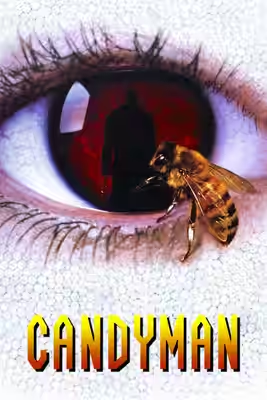
How does Lovecraft Country compare to Candyman?
Lovecraft Country and Candyman both put horror in black Chicago and both are more troubling than their monsters. The film is the tighter piece of work, ninety-odd minutes with a hook you will not forget; the series has more ideas and less shape, and spends its best material early. Choose the film for a single unnerving evening, the series if you want the argument drawn out.
Is Lovecraft Country based on a true story or a book?
Lovecraft Country is based on Matt Ruff's novel of the same name, not on a true story, though its 1950s setting, with sundown towns and hostile sheriffs, draws on real history. The title comes from H. P. Lovecraft, whose racist fiction the show turns against him. You do not need to know the book or Lovecraft to follow it.
What should I watch after Lovecraft Country?
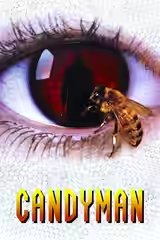
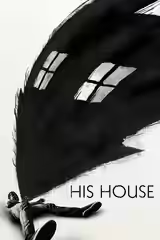
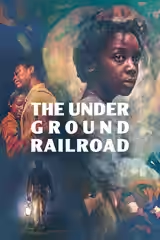
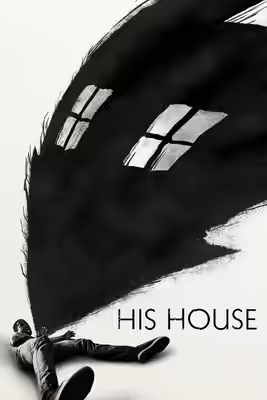
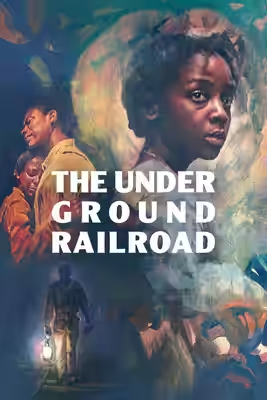
After Lovecraft Country, try Candyman (1992, Fi1m 81): Chicago housing, a legend that punishes disbelief, and a hook you will not forget. Then His House (2020, Fi1m 79): Wunmi Mosaku again, in a haunted council flat where the ghost is what you fled; and The Underground Railroad (2021, Fi1m 86): Barry Jenkins’s history rewritten as fable, patient where Lovecraft Country is hurried.

Cast

If you liked this, try…

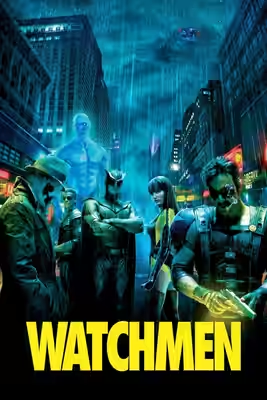
  1. Watchmen (2019) · not reviewed yetAnother American genre series that puts Tulsa and race at its centre, and holds together better.

  2. Candyman (1992, Fi1m 81)Chicago housing, a legend that punishes disbelief, and a hook you will not forget.

  3. His House (2020, Fi1m 79)Wunmi Mosaku again, in a haunted council flat where the ghost is what you fled.

  4. Ganja & Hess (1973) · not reviewed yetBlack American horror before anyone called it that; strange, slow and unrepeatable.

  5. The Underground Railroad (2021, Fi1m 86)Barry Jenkins’s history rewritten as fable, patient where Lovecraft Country is hurried.

Free account

Know what to watch tonight

Two lists that know where things are streaming, collections you can share, your own score beside ours, and Discover that remembers what you have seen.

  • Want to see, sorted by what is streaming now
  • Seen, with your score out of ten
  • No adverts, ever