Rob Reiner makes A Few Good Men an absorbing courtroom drama, with Tom Cruise holding his own against Jack Nicholson. Aaron Sorkin’s dialogue is sharper than the film’s thinking about military responsibility.
Rob Reiner’s A Few Good Men is an absorbing courtroom drama that knows the pleasure of watching an able speaker meet someone who will not be impressed. Aaron Sorkin’s screenplay supplies the verbal contests, and Reiner gives the actors room to make them matter. Its treatment of military responsibility is too tidy. For anyone who likes the genre, though, the performances alone justify the evening.
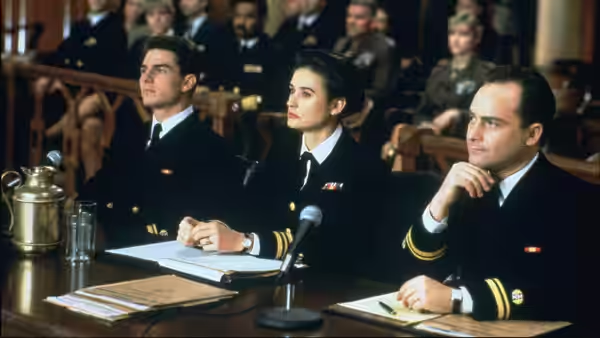
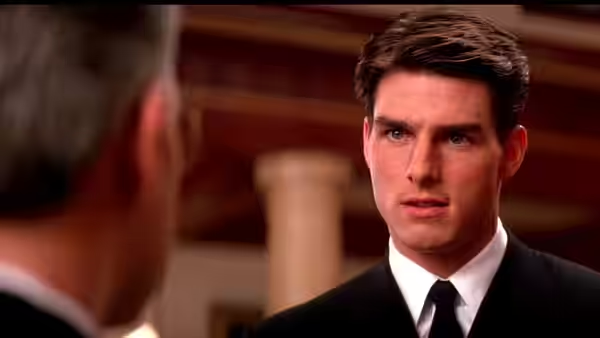
Tom Cruise makes Lt. Daniel Kaffee’s confidence both useful and faintly irritating, a sensible choice for a film so interested in the uses of authority. His quickness gives Sorkin’s dialogue pace without making every exchange feel rehearsed. There is enough effort beneath the assurance to stop competence becoming dull. Demi Moore’s Lt. Cdr. JoAnne Galloway provides a sterner presence, though Sorkin asks her to carry rather too much of the film’s conscience. Moore makes that seriousness credible; we wish the writing allowed her the same ease it grants Cruise.
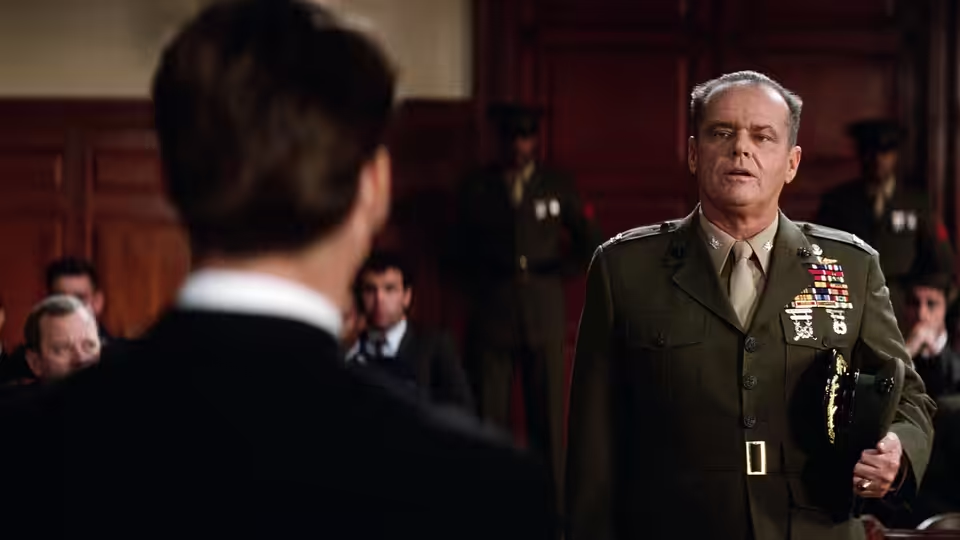
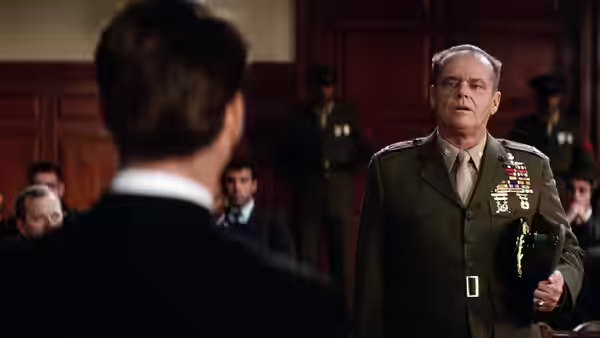
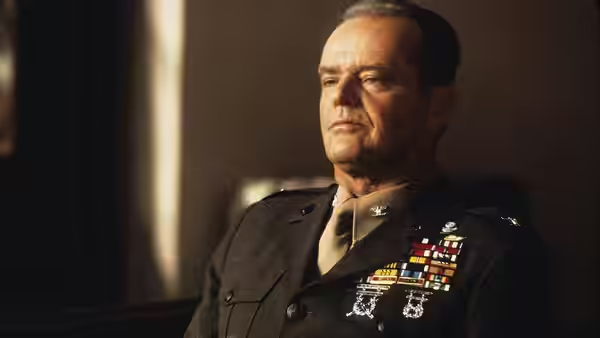
Jack Nicholson gives Col. Nathan R. Jessep the ease of a senior officer who has grown accustomed to deference. His amusement is particularly unpleasant, because it makes disagreement seem beneath his notice. We found him frightening. That relaxed expectation of obedience makes his authority disturbing before we have had time to consider what he believes. The performance leaves room for us to understand why someone might willingly follow him.
The supporting performances keep this from becoming a contest between two stars. Kevin Bacon gives Capt. Jack Ross enough conviction to make him seem worth listening to, rather than merely someone the leading man must answer. Kevin Pollak’s Lt. Sam Weinberg has a welcome steadiness, while Kiefer Sutherland makes Lt. Jonathan Kendrick’s severity uncomfortable to watch. Reiner gets useful differences out of these actors: authority can be persuasive, companionable or threatening, and the uniforms do not make the men interchangeable.
Robert Richardson’s cinematography keeps the uniforms imposing and the faces readable. J. Michael Riva’s production design lends the government surroundings a respectability that makes the questions being asked there more uncomfortable. Neither makes the official setting so grand that it overwhelms the actors. Editors Steven Nevius and Robert Leighton keep the talk moving while allowing reactions to register, so a pause can matter as much as a reply. Marc Shaiman’s music is less helpful when it encourages a gravity the actors have already supplied.
The weakness is Sorkin’s eagerness to make each moral position readily recognisable. Duty, loyalty and responsibility are difficult subjects, and the script sometimes makes being articulate seem sufficient to settle them. We can enjoy a well-turned answer and still feel that an awkward question has been disposed of too quickly. Moore’s constrained role belongs to the same problem: the writing is sure what each person stands for, and does not often let them stray from it.
Measured against the courtroom drama’s familiar promises, however, this works: the exchanges grip, the opposing personalities are distinct, and the actors make listening an active business. At 138 minutes, it gives itself plenty of room, and not every discussion needs quite so much ceremony. The attraction is the chance to watch capable performers press one another without the direction constantly demanding notice. Choose it for an evening of forceful talk, and allow yourself to disagree with the confidence of the answers.