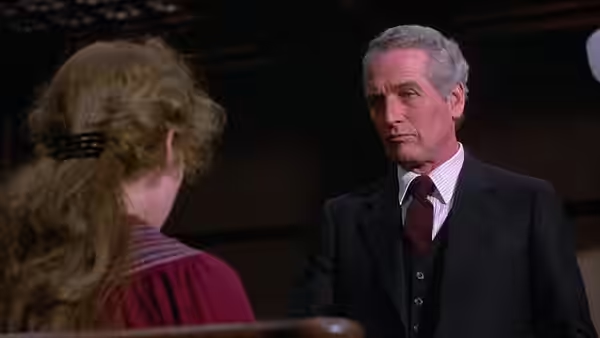
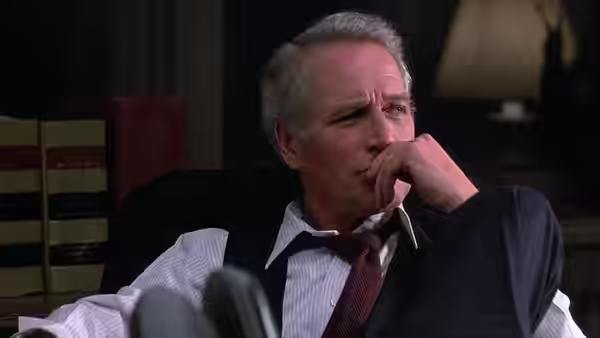
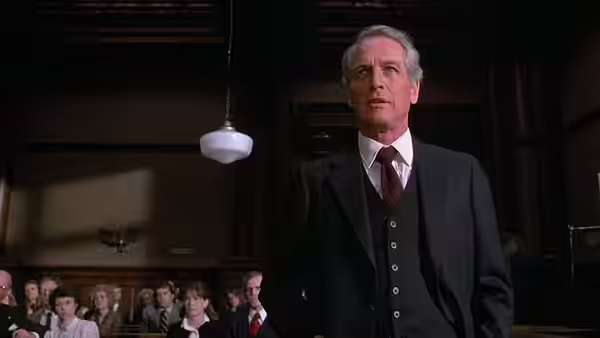
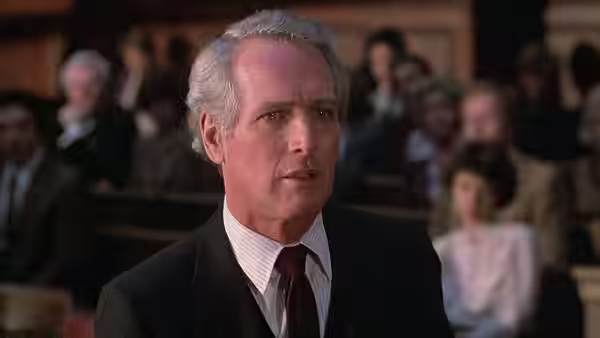
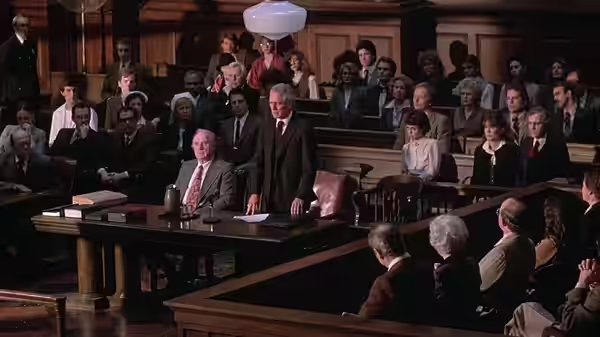
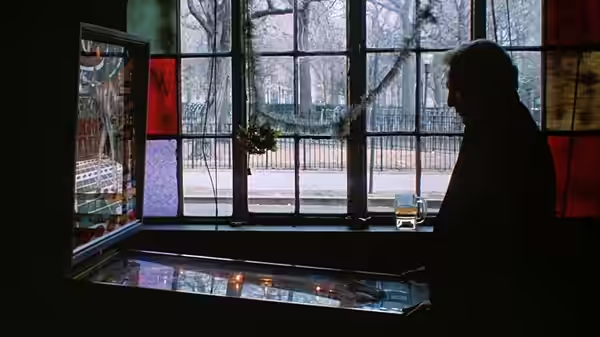
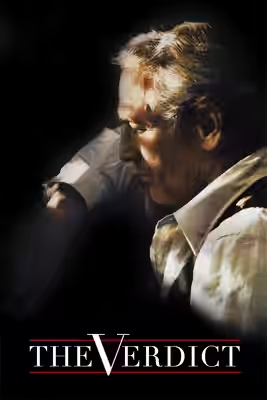
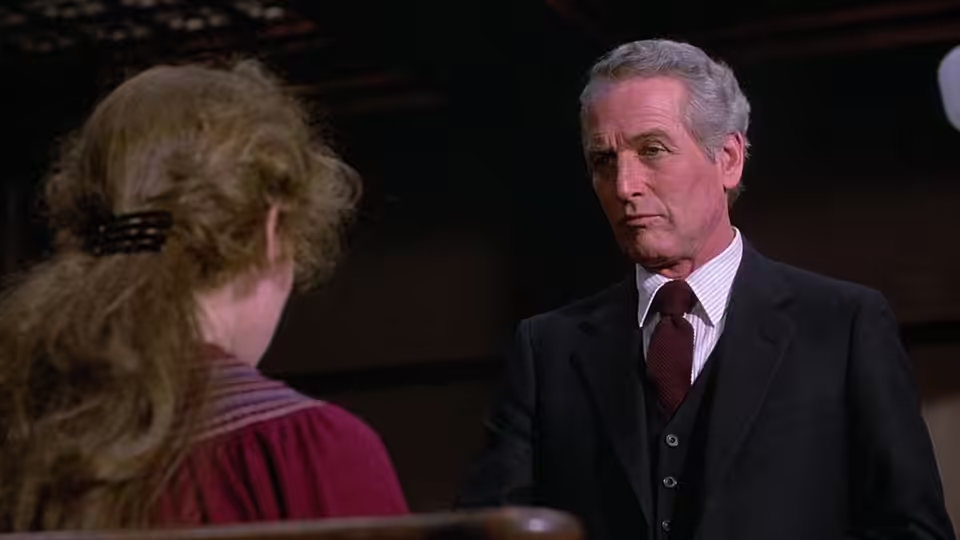
Frank Galvin (Paul Newman) facing a woman with her back turned in a room
Film review

The Verdict

1982 · Directed by Sidney Lumet · 2h 09m · MPA R

In a sentencePaul Newman looks too tired for another question; we would happily watch him think about the answer

Paul Newman plays Frank Galvin, a washed-up lawyer struggling with alcoholism. A medical malpractice case gives him a chance to do something right, but taking it on also means confronting his own professional decline. His need to redeem himself becomes bound up with the work of pursuing the case. Charlotte Rampling plays Laura Fischer, Jack Warden is Mickey Morrissey and James Mason is Ed Concannon. Sidney Lumet directs this courtroom drama from David Mamet’s screenplay, adapted from the novel by Barry Reed.

Fi1m review

Sidney Lumet’s legal drama is moving and superbly acted, though its solemn pace sometimes becomes self-important. Paul Newman’s worn-down Frank Galvin makes a familiar redemption story worth an unhurried evening.

We would hesitate to hire Frank Galvin. That hesitation helps Sidney Lumet turn The Verdict into a moving courtroom drama, despite its occasionally over-solemn pace. Paul Newman plays Frank, a washed-up alcoholic lawyer whose malpractice case offers a chance to redeem himself. David Mamet’s screenplay follows a familiar route, but Newman’s exhaustion makes it difficult to take the man’s recovery for granted.

Newman does not ask us to find the alcoholism romantic. His weariness makes Frank’s professional collapse feel embarrassing and exhausting, and there is no easy pleasure in seeing how badly this man needs another chance. We were moved by the exhaustion in his face; the possibility of Frank becoming useful again feels painfully uncertain. Newman lets us see the intelligence without suggesting that a capable lawyer has merely been waiting for the right assignment.

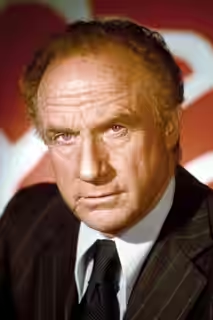
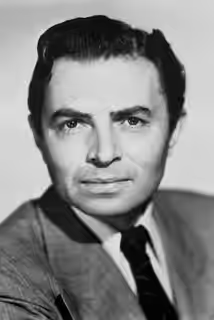
Jack Warden and James Mason keep the film from depending entirely on Newman. Warden, as Mickey Morrissey, brings a welcome directness, while Mason’s Ed Concannon has the assurance Frank cannot muster. Their different degrees of ease sharpen our sense of how far Frank has fallen within his profession. Lumet gives these performances room without letting the drama become a succession of invitations to admire the cast.

Andrzej Bartkowiak’s cinematography makes Newman’s weary face easy to study, though the sombre images can become oppressive. Edward Pisoni’s production design makes the legal surroundings feel settled and intimidating, with little suggestion that they might accommodate Frank’s difficulties. The people in these spaces seem expected to know what they are doing, and Newman keeps us conscious of the effort that costs Frank. It is an effective setting for a story about a lawyer trying to recover his professional confidence.

The cost is a solemnity that Lumet does not always know when to interrupt. Peter C. Frank’s editing gives Newman’s weariness time to register, but also draws out the suspense until some pauses feel more dutiful than tense. Johnny Mandel’s score adds a restrained sadness; it is welcome, though Newman scarcely needs the help. At 129 minutes, the film has stretches where a little less ceremony would have made Frank’s difficulties more immediate.

Mamet is better at making the case matter to Frank than at making the courtroom story unfamiliar. The malpractice suit gives the film moral questions worth considering, especially the uneasy business of using somebody else’s claim as a route back to self-respect. Frank’s need to redeem himself does not automatically make him the person anyone else should rely upon. The film is strongest when Newman’s frailty keeps that concern alive, even as the screenplay encourages our allegiance.

Anyone hoping for a brisk exchange of legal surprises will need some patience with Lumet’s attention to this depleted man. We think that patience is repaid, despite the stretches in which the film seems reluctant to get on with its case. Newman makes the effort of returning to useful work absorbing enough to carry a familiar story. Settle in for him, and forgive a few pauses that last longer than they need to.

Critical consensus AI synthesised

77
Positive
8
Mixed
2
Negative
0

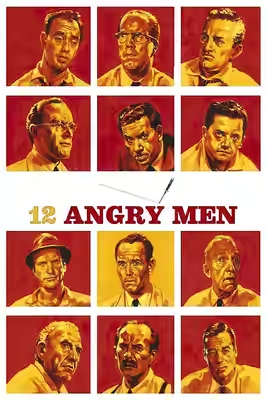
Most critics like The Verdict, and the praise settles on two names. Paul Newman’s performance as the drinking, self-loathing lawyer given one last case is what nearly every review returns to: weary, fearless and unshowy. David Mamet’s screenplay is the other constant, fast and hard-hitting, credited with turning a routine malpractice suit into a story about a man trying to save himself. Several reviews rank it alongside 12 Angry Men among Lumet’s best, and his restrained direction and muted palette are noted approvingly.

The reservations are about pace and originality. The New Yorker finds the sombre mood dragged out self-importantly, the long wait for a surprise witness testing patience. Variety thinks the script offers little out of the ordinary and the film not compelling enough, whatever the acting. The Playlist admits some hackneyed and dated elements while still counting it among Lumet’s jewels. The spread is narrow: no outright dismissals, and both mixed notices date from the film’s release.

RogerEbert.com
1 January 1982 · Roger Ebert
90*

Ebert praises the film as a strong character study of an alcoholic lawyer seeking redemption through a malpractice case, more than a standard thriller. He singles out Paul Newman's weary, authentic performance as the standout element that makes the story absorbing.

Read the full review →
The Times
2 July 2020 · Kevin Maher
90*

The film is one of the greatest courtroom dramas and the second greatest from Sidney Lumet after 12 Angry Men. It showcases Paul Newman's fearless performance as a boozing, self-hating lawyer given a shot at redemption in a medical malpractice case, supported by strong turns from James Mason and others.

Read the full review →
Time Out
14 March 2012 · DP
90*

Praises David Mamet's fast-paced, eloquent and suspenseful screenplay for turning a washed-up lawyer's malpractice case into a gripping underdog story. Notes that Lumet prioritises story over performance, resulting in near-invisible acting perfection and a strong indictment of the US legal system.

Read the full review →
Empire
1 January 2000 · William Thomas
80*

The critic calls the film a critical success thanks to Lumet's precise direction, David Mamet's hard-hitting screenplay, and especially Paul Newman's powerhouse performance as the washed-up lawyer, which elevates it close to the level of 12 Angry Men. Notes regret that Newman missed out on the Oscar for the role.

Read the full review →
The AV Club
18 February 2015 · Jesse Hassenger
80*

The critic recommends the film as a strong Best Picture nominee overlooked in favor of Gandhi, praising its restrained courtroom drama and redemptive arc. Lumet’s somber direction and muted visual palette stand out as particularly effective in balancing Mamet’s dialogue with a moody, observant tone.

Read the full review →
The New York Times
2 November 2009 · A. O. Scott
75*

The critic highlights the dark twist given to the standard courtroom drama by David Mamet's screenplay. It leaves the sense that justice can prevail, but when it does, it is too little, too late, and cannot compensate for the harm already done.

Read the full review →

Straight answers AI written, from our review

Is The Verdict worth watching?
The Verdict is worth watching for anyone with the patience for an unhurried courtroom drama built around one worn-down man, and we scored it 84. Paul Newman's exhausted Frank Galvin makes a familiar redemption story feel uncertain and moving. Those wanting brisk legal surprises will find Lumet's solemn pace tests them.
How long is The Verdict, and what is it rated?
The Verdict runs 2h 09m and is rated R by the MPA in the US. It is a drama film.
Where can I watch The Verdict in the US?
The Verdict is available to rent from Amazon Prime Video from $3.99. Availability is checked daily; the links above go straight to each service.
How violent or frightening is The Verdict, and is it suitable for children?
The Verdict carries a UK 15 certificate, and its adult content is in its subject rather than in violence or frights. The film is a sombre drama about an alcoholic lawyer and a medical malpractice case, with nothing that we found frightening. It is too slow and too adult in its concerns for children, and suits older teenagers only if they have the patience for it.
How does The Verdict compare to 12 Angry Men?
The Verdict is the slower and more solemn of Sidney Lumet's two legal dramas, and 12 Angry Men is the tighter film and the one we would hand to almost anyone. The earlier film watches a jury argue; this one watches a single depleted lawyer try to become useful again. Choose The Verdict for Paul Newman's performance, and the other for grip.
Is The Verdict based on a true story or a book?
The Verdict is based on a novel by Barry Reed, adapted for the screen by David Mamet, not on a true story. Our review does not measure how closely Mamet follows the book, only that his screenplay takes a familiar route through the courtroom. Knowing the novel is not needed to follow or enjoy the film.
What should I watch after The Verdict?
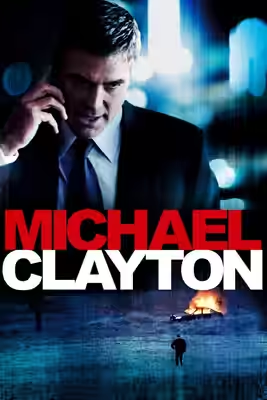
After The Verdict, try 12 Angry Men (1957, Fi1m 91): Lumet makes legal procedure gripping by watching people struggle to think honestly. Then A Separation (2011, Fi1m 93): A legal dispute grows harder to judge as each person’s needs become clear; and Michael Clayton (2007, Fi1m 86): A compromised legal fixer discovers how expensive a working conscience can become.

Cast

Awards

Academy Awards, 1983

Nominated
Best Actor
Nominated
Best Director
Nominated
Best Picture
Nominated
Best Supporting Actor
Nominated
Best Writing, Adapted Screenplay

If you liked this, try…

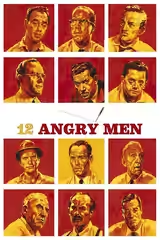
  1. 12 Angry Men (1957, Fi1m 91)Lumet makes legal procedure gripping by watching people struggle to think honestly.

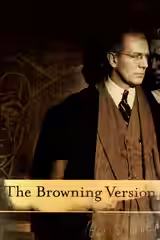
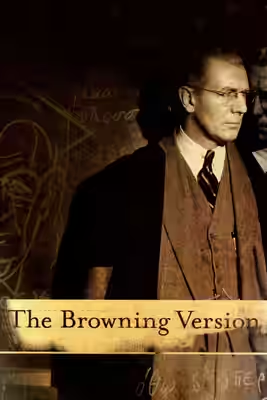
  2. The Browning Version (1951) · not reviewed yetAnother damaged professional faces his failures, with little room for comforting excuses.

  3. A Separation (2011, Fi1m 93)A legal dispute grows harder to judge as each person’s needs become clear.

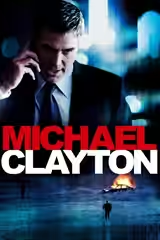
  4. Michael Clayton (2007, Fi1m 86)A compromised legal fixer discovers how expensive a working conscience can become.

  5. Court (2014) · not reviewed yetThe daily workings of a courtroom expose injustices that nobody needs to announce.

Free account

Know what to watch tonight

Two lists that know where things are streaming, collections you can share, your own score beside ours, and Discover that remembers what you have seen.

  • Want to see, sorted by what is streaming now
  • Seen, with your score out of ten
  • No adverts, ever