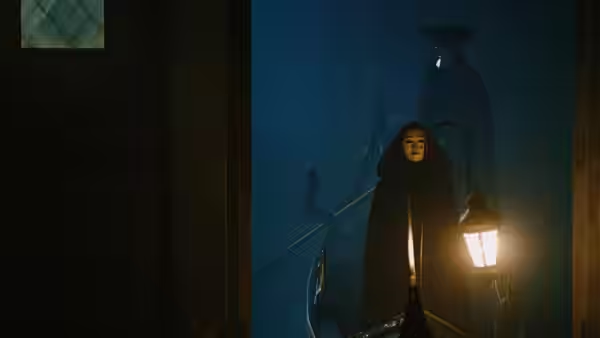
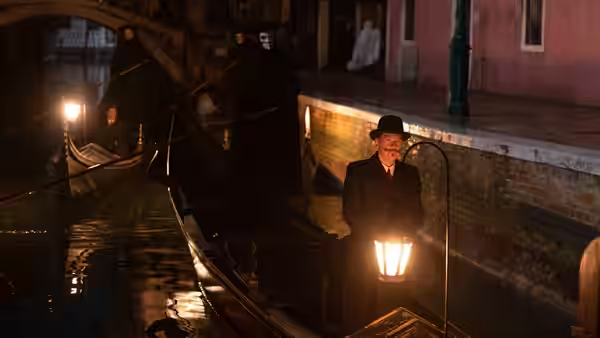
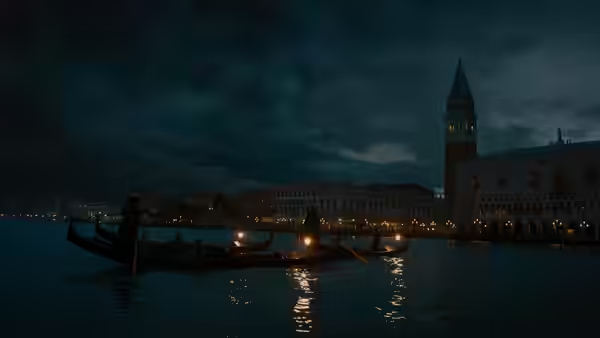
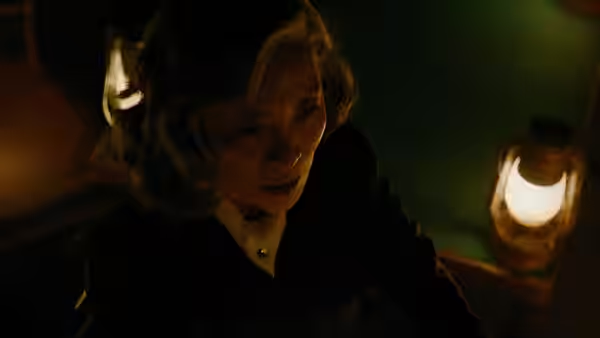
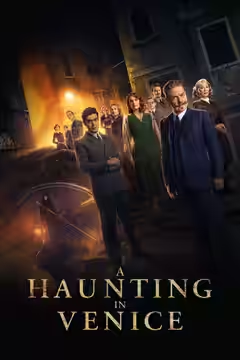
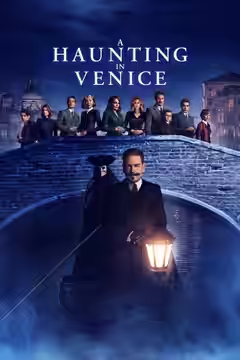
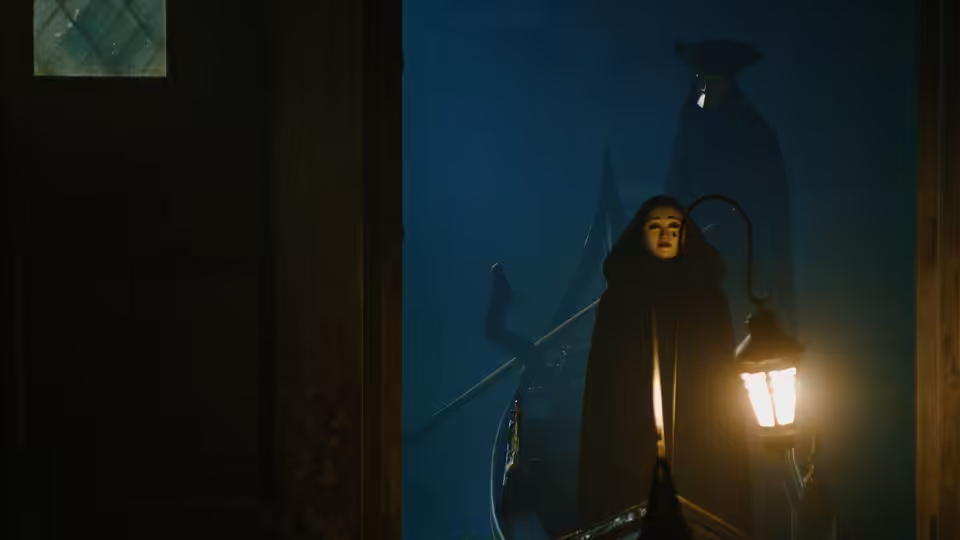
Woman in hooded cloak holding a lantern on a gondola at night
Film review

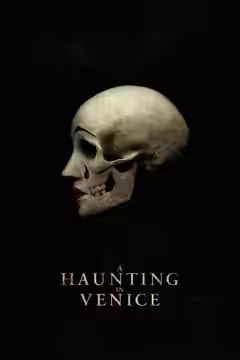
A Haunting in Venice

2023 · Directed by Kenneth Branagh · 1h 44m · MPA PG-13

In a sentenceThe palazzo is haunted, the camera is terrified, and the suspects hand over clues like Halloween sweets

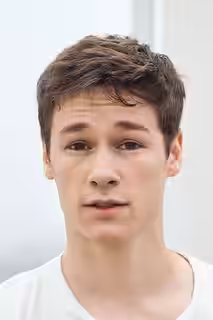
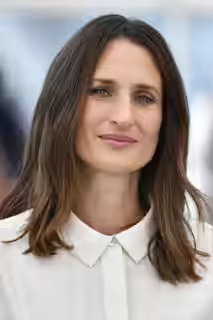
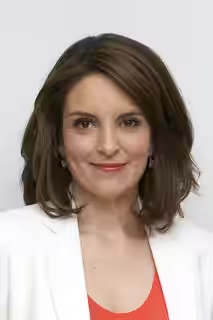
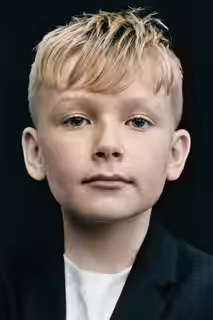
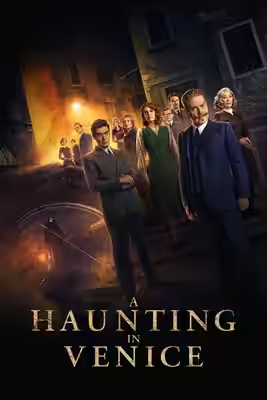
Venice, 1947. Hercule Poirot (Kenneth Branagh) has retired to the city and employs a bodyguard, Vitale Portfoglio (Riccardo Scamarcio), to turn callers away. His old friend Ariadne Oliver (Tina Fey), a crime novelist, talks him into one evening’s work: a séance on Halloween night at a palazzo owned by Rowena Drake (Kelly Reilly), whose daughter has died. The medium is Joyce Reynolds (Michelle Yeoh), and Oliver wants Poirot to prove her a fraud. Also present are the family doctor Leslie Ferrier (Jamie Dornan) and his young son Leopold (Jude Hill), the housekeeper Olga Seminoff (Camille Cottin), and Maxime Gerard (Kyle Allen), once engaged to the dead girl. Before the night is out there is a body and nobody can leave. Adapted from Agatha Christie’s Hallowe’en Party.

Plays from YouTube when you press play; nothing loads from them until then.

Fi1m review

Branagh’s third Poirot is his best: one leaking palazzo, one stormy night, a camera that leans at everything. The mood holds for an hour; the mystery underneath it is thin, its clues obvious and its solution rushed through in a single room.

Kenneth Branagh’s third go at Hercule Poirot, after Murder on the Orient Express (2017) and Death on the Nile (2022), gets him off the trains and boats and shuts him in a house. Michael Green’s screenplay starts from Agatha Christie’s Hallowe’en Party, keeps a few names and the Halloween setting and moves the rest to Venice in 1947. Poirot has retired. Ariadne Oliver (Tina Fey), a crime novelist, talks him into attending a séance in a palazzo so that he can expose the medium, Joyce Reynolds (Michelle Yeoh). It is the best of the three films, and it is still not much of a mystery.

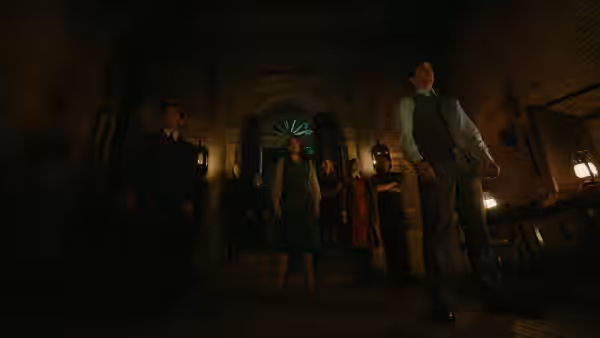
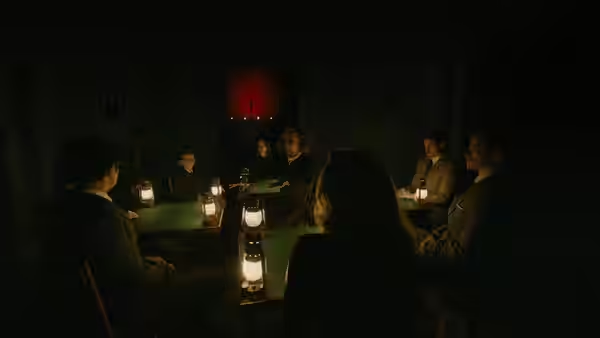
The house is the point, and the house works. John Paul Kelly’s palazzo has water at the front step and plaster coming off the walls in sheets, and Haris Zambarloukos shoots it as if he were slightly afraid of it. He puts wide lenses close to faces so the rooms bend at the edges, tilts the camera until the doorways lean, and shoots up from the floor so the ceilings crowd the frame. Hildur Guðnadóttir’s score is low strings held a long time and then dropped, so that rooms go silent at the wrong moment. Sammy Sheldon puts almost everyone in black and grey, so the candles are the only warm thing in shot. The séance is the film’s best ten minutes: Lucy Donaldson cuts it in short looks between faces, Yeoh keeps her voice low and her eyes level, and the storm outside does the rest. We jumped once, properly, and were not ashamed of it.

Fey is the one having fun, and the film needs her. She plays Oliver fast and dry, an American who says what everyone else is thinking. Branagh has trimmed the moustache and trimmed the performance with it; this Poirot is tired and quiet, and for once the accent is not the loudest thing in the film. Jude Hill, the boy from Belfast, plays Leopold Ferrier as a solemn child who has read too much and looks after his father, and he takes every scene he is in. Jamie Dornan is that father, a doctor who came back from the war with his nerves gone, and plays it small. Yeoh is the film’s best idea, and there is not enough of her.

Then the séance ends and the questioning begins, and the film has nothing else. Poirot takes each guest to a different room and asks what they saw, and Donaldson cuts every interview to the same rhythm, so that by the hour mark they had run together. The clues are set out where a child could find them. The scares, after the first, can be seen coming from the previous shot: a figure at the end of a corridor, a face where a face should not be. Somewhere around the seventh interview we realised we had stopped being frightened and had started admiring the plasterwork, and we were annoyed about it, because the house had earned better.

The solution is delivered at speed, in one room, and it puts the whole thing to bed in about five minutes. We will not say who did it. We will say that Christie’s plots run on the pleasure of watching the pieces fit, and Green’s script has the pieces but never lets us watch them fit. The film also hints at ghosts and then explains them, one after another, and a ghost story that keeps explaining itself does not frighten anyone.

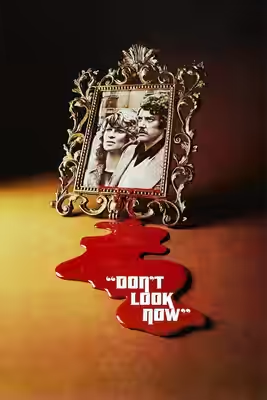
Against Branagh’s own series this is a clear step up. The two earlier films were long, crowded and lit like adverts; this one is 104 minutes, one building and a dozen people, and it is better for it. Don’t Look Now (1973) found real dread in the same canals without tilting anything.

Watch it at home, with the sound up; the leaning frames are less insistent on a small screen and Guðnadóttir’s silences carry better. It is a 12A and there is nothing in it to trouble anyone over ten, which is a recommendation if there are children on the sofa and a warning if there are not.
Critical consensus AI synthesised

64
Positive
8
Mixed
7
Negative
2

Most critics like this third Poirot better than the second, and a good number call it the best of the three. The praise clusters around the same things: the Venetian locations, the gothic atmosphere Branagh works up with tilted camera angles, the production design, and an ensemble in which Tina Fey and Michelle Yeoh are singled out most often. Several also welcome a quieter, sadder Branagh in the lead.

The reservations are almost as consistent. The mystery itself is thought thin, its clues too obvious and its reveal hurried, and the horror is judged mild rather than frightening, with a script that leans on exposition. The spread is wide. The Times calls it the weakest of the series, glum and without tension; the Telegraph finds the camerawork a distraction from the plot; The Hollywood Reporter thinks it watchable but uninvolving. Even so, the reviews land more warm than cold.

Empire
12 September 2023 · Helen O'Hara
80*

Branagh gives the Poirot series a shockingly different gothic feel set in 1947 Venice, with a creepier energy and Dutch angles that emphasize the eeriness. The gothic twist works remarkably well even if it remains business as usual for the detective.

Read the full review →
Screen Daily
9 September 2023
80*

The third Poirot film is the most enjoyable yet, succeeding as an engaging, undemanding exercise in gothic mood with spooky textures, strong production design and an improved, less hammy performance from Branagh.

Read the full review →
The i Paper
13 September 2023 · Francesca Steele
75*

This is Branagh’s best Poirot yet, lifted by a cast including Tina Fey and Michelle Yeoh and a jumpy frisson from PTSD themes that suits the tale. The film moves merrily along but the script remains exposition-heavy with a skimmed-over reveal.

Read the full review →
Radio Times
★★★ · Patrick Cremona
60

Branagh conjures a spooky atmosphere and makes fine use of the moody Venetian locales in this loose adaptation. However, the mystery itself is rushed and convoluted, rendering it a middling Christie adaptation.

Read the full review →
Time Out
11 September 2023 · ★★★ · Olly Richards
60

The critic finds it a fun but horror-lite outing for Poirot. Branagh makes handsome use of Venice's spookiness and the cast delivers lightly camp performances, but the mystery feels soggy with too-obvious clues and repetitive interrogations.

Read the full review →
Evening Standard
15 September 2023 · Charlotte O'Sullivan
50*

The film is consistently gorgeous and toys smartly with rational explanations while allowing Tina Fey to shine, making it an indulgent Halloween treat. It fails to haunt compared to classic chillers and has problems with casting and an underwhelming script.

Read the full review →

Straight answers AI written, from our review

Is A Haunting in Venice worth watching?
A Haunting in Venice is worth an evening for anyone who wants a handsome, atmospheric Christie adaptation and does not mind a thin mystery underneath it; we scored it 65. The leaking palazzo, the séance and Tina Fey's dry Ariadne Oliver carry the first hour, but the interviews run together and the solution is rushed through in a single room.
How long is A Haunting in Venice, and what is it rated?
A Haunting in Venice runs 1h 44m and is rated PG-13 by the MPA in the US. It is a mystery and thriller film.
Where can I watch A Haunting in Venice in the US?
A Haunting in Venice is streaming on Disney+ in the US, and it is also available to rent from Amazon Prime Video from $3.99. Availability is checked daily; the links above go straight to each service.
How violent or frightening is A Haunting in Venice, and is it suitable for children?
A Haunting in Venice is a 12A, and there is nothing in it to trouble anyone over ten. There is a body, a séance and a handful of jump scares in dark corridors, most of which can be seen coming from the previous shot. Younger children may find the storm and the leaning, shadowy rooms unsettling; the squeamish have little to fear.
How does A Haunting in Venice compare to Don't Look Now?
A Haunting in Venice and Don't Look Now share Venice, water and a dead child, and the earlier film is the better and the more frightening of the two. Roeg finds real dread in grief and in people worth caring about; Branagh finds mood in tilted frames and a crumbling palazzo. Choose Branagh for a puzzle with the family, Roeg for fear that stays with you.
Is A Haunting in Venice based on a true story or a book?
A Haunting in Venice is based on Agatha Christie's novel Hallowe'en Party, not on a true story. Michael Green's screenplay keeps a few names and the Halloween setting and moves everything else to Venice in 1947, so it is a loose adaptation and knowing the book will not spoil the solution. Readers of Christie should expect the mood rather than the plot.
What should I watch after A Haunting in Venice?
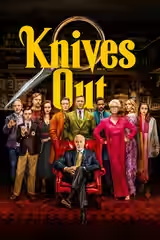
After A Haunting in Venice, try Don't Look Now (1973, Fi1m 90): Venice in winter, a drowned child, and dread earned without a single tilted shot. Then The Others (2001, Fi1m 80): Nicole Kidman, closed shutters and children who see things; a ghost story that commits; and Knives Out (2019, Fi1m 81): The modern whodunit done with wit and a plot you can actually follow.

Cast

If you liked this, try…

  1. Don't Look Now (1973, Fi1m 90)Venice in winter, a drowned child, and dread earned without a single tilted shot.

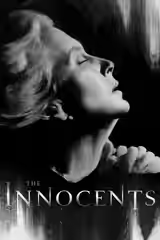
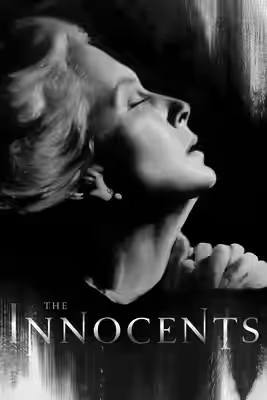
  2. The Innocents (1961) · not reviewed yetDeborah Kerr in a house that may or may not be haunted; the doubt is the horror.

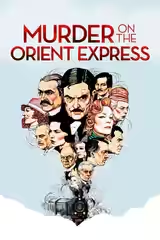
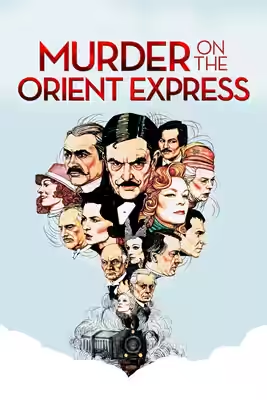
  3. Murder on the Orient Express (1974) · not reviewed yetLumet’s version, with Finney’s Poirot and a carriage of stars who each get a scene.

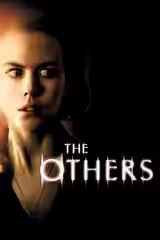
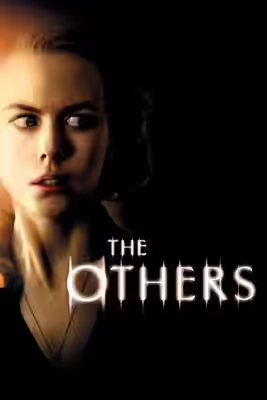
  4. The Others (2001, Fi1m 80)Nicole Kidman, closed shutters and children who see things; a ghost story that commits.

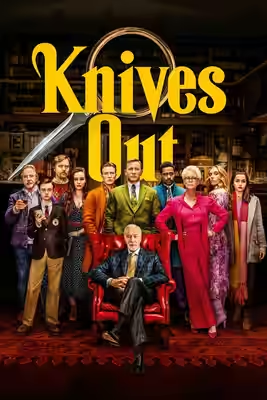
  5. Knives Out (2019, Fi1m 81)The modern whodunit done with wit and a plot you can actually follow.

Free account

Know what to watch tonight

Two lists that know where things are streaming, collections you can share, your own score beside ours, and Discover that remembers what you have seen.

  • Want to see, sorted by what is streaming now
  • Seen, with your score out of ten
  • No adverts, ever