Two young men standing side by side against a green tiled wall
Film review

Amores Perros

2000 · Directed by Alejandro González Iñárritu · 2h 34m · MPA R

In a sentenceThe dogs deserved better owners, and we needed a quiet walk afterwards

A car crash in Mexico City links three stories that cross the distance between street-level violence and high society. Gael García Bernal plays Octavio, Goya Toledo plays Valeria and Emilio Echevarría plays El Chivo. Love, desire and loss run through their lives, while dogs connect the stories and become victims of human violence, including dogfighting. Alejandro G. Iñárritu directs from a screenplay by Guillermo Arriaga. The cast also includes Vanessa Bauche as Susana, Álvaro Guerrero as Daniel and Marco Pérez as Ramiro.

Plays from YouTube when you press play; nothing loads from them until then.

Fi1m review

Alejandro G. Iñárritu’s Mexico City drama is gripping and often upsetting, with performances that make its contrivances worth accepting. We recommend it warmly, with a firm warning about the graphic cruelty to dogs.

Amores Perros is gripping, upsetting and worth the time it asks for, though its contrivances sometimes show. Alejandro G. Iñárritu directs three stories linked by a car crash in Mexico City, with Guillermo Arriaga’s screenplay taking an unabashed interest in love, violence and bad decisions. There is nothing cautious about the way it brings these things together. The crash connects street-level hardship with high-society comfort, giving the film a reason to move between people separated by money.

Gael García Bernal gives Octavio a restless urgency that makes patience seem beyond him. We are drawn to the performance without being asked to approve of the man, which matters in a film so full of desperate behaviour. Goya Toledo makes Valeria difficult company without reducing her to someone we can comfortably dismiss. Emilio Echevarría’s El Chivo has a quieter sadness, and his performance allows some tenderness into the film without seeming to ask for a change of subject. The actors hold our attention even when the connections between their stories feel strained.

Rodrigo Prieto’s handheld photography stays close to the commotion, making it difficult to look calmly at the violence. The movement can be wearing, but it suits a film in which so little feels safely settled. Brigitte Broch’s production design gives the differences between poverty and wealth enough substance that the social contrast does not need explaining. The changes in surroundings register clearly, while the people remain recognisably part of the same city.

Luis Carballar, Iñárritu and Fernando Pérez Unda edit with a strong sense of when to push ahead and when to let a story occupy us. A film built around a shared collision could easily become an exercise in waiting for everyone to reach it. Here, the individual strands have enough urgency to make us care about more than how they join up. The cutting makes a complicated arrangement manageable without draining its energy. Across 154 minutes, we rarely felt impatient for the film to move on.

The dogfighting horrified us, particularly because the pace gives so little relief from the graphic cruelty. It is difficult to enjoy the film’s momentum while watching dogs suffer, and that discomfort seems deliberate. Their treatment across the stories helps us judge the people, though making animals illustrate human failings can become heavy-handed. Gustavo Santaolalla’s music sustains the sadness through the quieter stretches, allowing the film to ease off without losing our attention.

Arriaga’s weaker moments come when a connection between two lives is made to seem important simply because it exists. The fact that people suffer in different parts of the city does not, by itself, tell us much about them. The actors have usually told us more already. Yet this is a thriller willing to spend time on hurt and longing, and it remains absorbing when the plotting gets pushy. Give it an uninterrupted evening, but take the warning about dogs seriously.


Critical consensus AI synthesised

85
Positive
6
Mixed
1
Negative
0

Most critics respond warmly to Amores Perros, praising the force of its direction and the emotional weight of its interlocking stories. The praise clusters around the handheld camerawork, urgent pacing and strong performances, which give the violence and melodrama an immediate, unsettling charge. The reviews repeatedly find tenderness and an understanding of desperation beneath the brutality. Several also draw attention to the dogs as a means of expressing the characters’ circumstances rather than merely provoking shock.

Reservations centre on whether the links between the stories justify the film’s ambition. The AV Club admires the raw energy but finds those connections vague and shallow, whereas the Evening Standard praises the editing for revealing thematic links. Slant is positive but finds the storytelling somewhat pat. The spread runs from fervent admiration to qualified approval, with graphic cruelty to dogs a further caution even among favourable reviews.

Radio Times
★★★★★ · Alan Jones
100

This absorbing Mexican marvel eschews Tarantino-esque quirkiness to emerge as a startling original, expertly fashioned into a stunning rumination on the traumas and desperation of love and desire. Shot with handheld camera for documentary-style immediacy, it is a uniquely twisted romantic tragedy and exhilarating masterpiece that is suspenseful, shocking, disturbing and ultimately very moving.

Read the full review →
RogerEbert.com
13 April 2001 · ★★★★/4 · Roger Ebert
100

The film is the work of a born filmmaker who plunges into melodrama, coincidence, sensation and violence with passion. It is rich with character and atmosphere, reminding the critic of Buñuel, Ripstein and Jodorowsky in its comfort with society's scruffy underbelly.

Read the full review →
The New York Times
30 March 2001 · Elvis Mitchell
85*

This is a satisfying, tough-minded episodic film noir that immerses itself in melodrama without shame. González Iñárritu is unashamed to embrace the power of filmmaking and evolves into a grown-up love of narrative; it is rare for a director to enter films with this much verve and emotional understanding.

Read the full review →
Los Angeles Times
13 April 2001 · Kevin Thomas
80*

A major work that spins a timeless, universal tale of interlocking fate involving love, tragedy and redemption. Every moment seethes with vitality and passion for life even at its harshest; it is fully realized, ablaze with vital portrayals and rich in meaning, though its graphic depiction of cruelty to dogs will prove too intense for some.

Read the full review →
Slant Magazine
2 May 2001
75*

The review calls it an engrossing, embittered, ironic vision with magazine-chic style and biblical undertones, owing more to Kieślowski than Tarantino. It prefers the less pat Los Olvidados but sees it as the film Kieślowski would have made in Mexico.

Read the full review →
The AV Club
14 May 2000 · Scott Tobias
65*

The critic praises Iñárritu's audacious debut for its raw immediacy, primal emotions, and kinetic energy in weaving three stories around a car crash, while noting its visceral dogfighting scenes. However, the connections between stories are seen as disappointingly vague and shallow, with trite ideas not matching the ambition.

Read the full review →

Straight answers AI written, from our review

Is Amores Perros worth watching?
Amores Perros is worth watching for anyone who can take a long, upsetting Mexico City drama, and we scored it 85. Gael García Bernal, Goya Toledo and Emilio Echevarría hold three stories together even when Guillermo Arriaga's plotting strains to connect them. Set aside an uninterrupted evening, and be ready for graphic cruelty to dogs.
How long is Amores Perros, and what is it rated?
Amores Perros runs 2h 34m and is rated R by the MPA in the US. It is a drama and thriller film.
Where can I watch Amores Perros in the US?
Amores Perros is streaming on MUBI, Apple TV and Amazon Prime Video in the US, and it is also available to rent from Amazon Prime Video and Apple TV from $5.99. Availability is checked daily; the links above go straight to each service.
How violent or frightening is Amores Perros, and is it suitable for children?
Amores Perros is an 18 certificate and not suitable for children at all. The violence between people is often hard to watch, and the dogfighting is graphic and horrified us, with the pace giving little relief from it. Teenagers should wait, and anyone who cannot bear to see animals suffer should probably skip it.
How does Amores Perros compare to The Young and the Damned?
Amores Perros is the more elaborate of the two films, weaving three stories around one car crash, while The Young and the Damned is a plainer, harsher account of poverty and violence among Mexico City's children. Buñuel's film is the bleaker and the more direct; Iñárritu's has the more urgent performances. Choose the earlier film for force, the later one for absorption.
What should I watch after Amores Perros?
After Amores Perros, try Los Olvidados (1950, Fi1m 84): A harsher, plainer account of young lives shaped by poverty and violence. Then Short Cuts (1993, Fi1m 84): More interlocking lives, with room for awkward conversations and ordinary disappointments; and La Haine (1995, Fi1m 90): Another city under pressure, with friendship giving the anger a human scale.

Cast

Awards

BAFTA Film Awards, 2002

Won
Best Film Not in the English Language

Academy Awards, 2001

Nominated
Best International Feature Film

Ariel Award for Best Picture, 2001

Won
Ariel Award for Best Picture

International Submission to the Academy Awards, 2001

Nominated
International Submission to the Academy Awards

London Film Critics Circle Award for Director of the Year, 2001

Won
London Film Critics Circle Award for Director of the Year

National Board of Review Award for Best Foreign Language Film, 2001

Won
National Board of Review Award for Best Foreign Language Film

If you liked this, try…

  1. Los Olvidados (1950, Fi1m 84)A harsher, plainer account of young lives shaped by poverty and violence.

  2. Short Cuts (1993, Fi1m 84)More interlocking lives, with room for awkward conversations and ordinary disappointments.

  3. La Haine (1995, Fi1m 90)Another city under pressure, with friendship giving the anger a human scale.

  4. A Separation (2011, Fi1m 93)Family loyalties and bad decisions produce tension without a car crash.

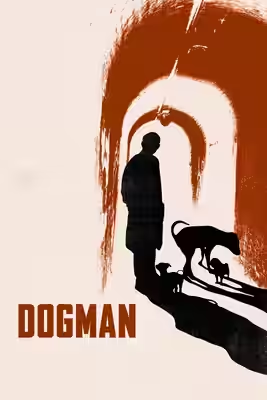
  5. Dogman (2018, Fi1m 78)Tenderness towards animals offers little protection from the cruelty of people.

Free account

Know what to watch tonight

Two lists that know where things are streaming, collections you can share, your own score beside ours, and Discover that remembers what you have seen.

  • Want to see, sorted by what is streaming now
  • Seen, with your score out of ten
  • No adverts, ever