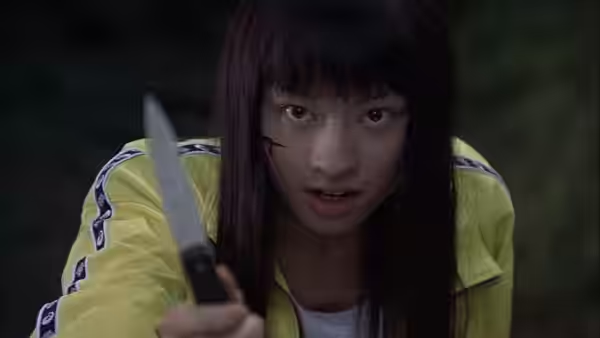
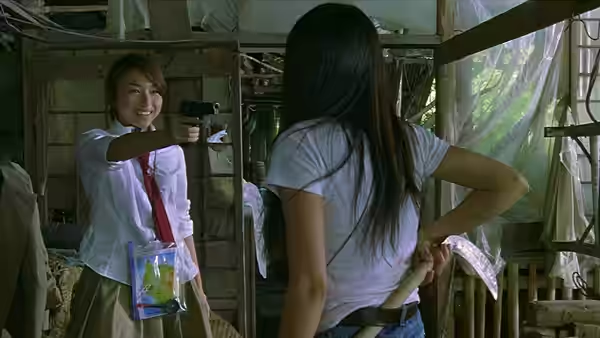
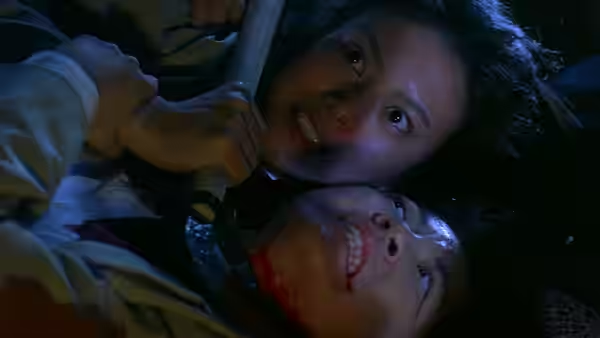
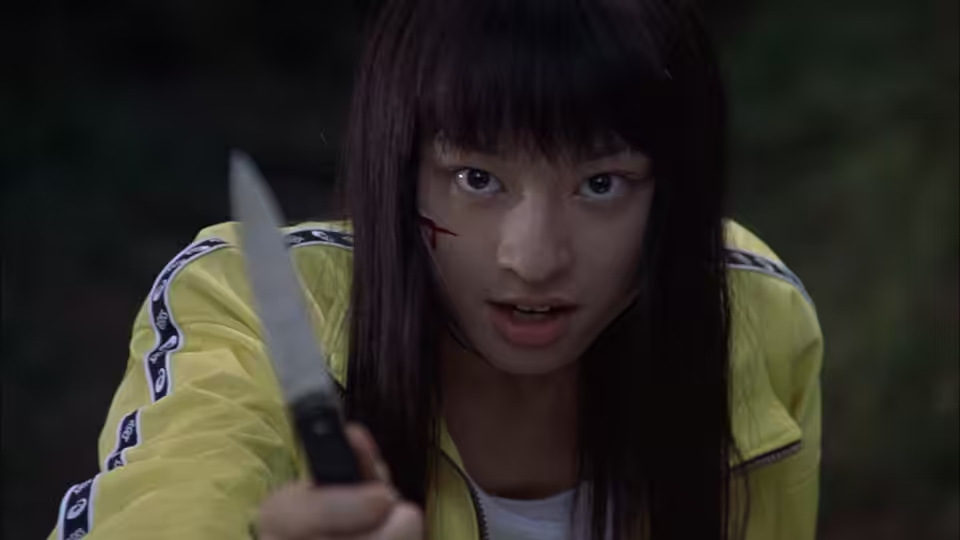
Young woman in yellow jacket holds knife forward with blood on face
Film review

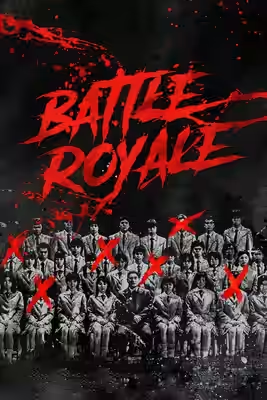
Battle Royale

2000 · Directed by Kinji Fukasaku · 1h 53m · MPA R

In a sentenceThe adults have arranged the killing; the teenagers still have crushes to worry about

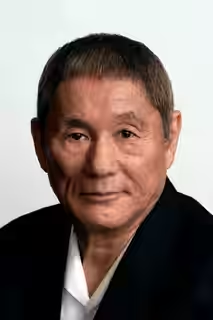
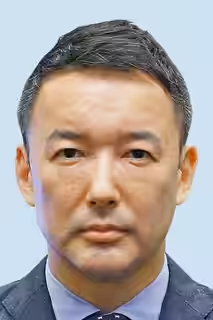
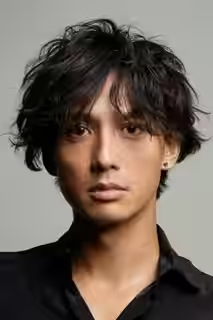
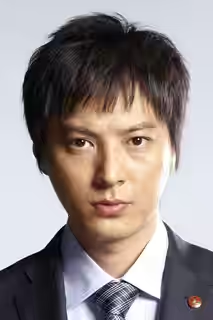
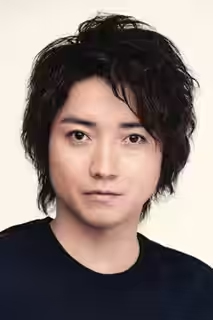
In a near-future society, adults force teenagers into a government-run contest in which they must kill one another. Shuya Nanahara (Tatsuya Fujiwara) and Noriko Nakagawa (Aki Maeda) are among the young people caught in it. They face classmates rather than strangers, carrying adolescent attachments and rivalries into a struggle to survive. Takeshi Kitano plays Kitano, with Taro Yamamoto as Shogo Kawada and Ko Shibasaki as Mitsuko Souma. As the contest pits the students against each other, friendship, trust and loyalty become immediate questions about how to behave and whom to believe.

Plays from YouTube when you press play; nothing loads from them until then.

Fi1m review

Kinji Fukasaku’s Battle Royale makes its teenage killing contest frightening by taking the teenagers seriously. The flashbacks labour the point, but the cruelty, foolishness and stubborn affection are hard to shake.

Kinji Fukasaku’s Battle Royale is a disturbing, sometimes clumsy thriller that earns its brutality by caring about the children subjected to it. Its government forces teenagers to kill their classmates, making adult hostility towards the young brutally literal. Kenta Fukasaku’s screenplay, adapted from Koushun Takami’s novel, gets considerable force from that choice of opponent: these people already know one another. The horror begins with the requirement that they decide what those existing friendships are worth.

Tatsuya Fujiwara’s Shuya Nanahara and Aki Maeda’s Noriko Nakagawa give us people to care about without making the other teenagers feel disposable. Their earnestness suits a film in which adolescent feeling remains urgent even when survival ought to make everything else irrelevant. Fukasaku lets crushes and yearnings occupy space that a tidier action film would reserve for tactics. We were more upset than we expected by those crushes persisting amid the killing. The children cannot simply stop being children because adults have ordered them to.

Takeshi Kitano is essential to the film’s unpleasant humour. His menace makes the adult cruelty feel personal, and his performance is funny without making the situation seem harmless. Fukasaku keeps comedy close enough to the violence that laughter can become uncomfortable almost as soon as it starts. The imbalance matters: adults have imposed this contest, while the teenagers must supply all its suffering.

The craft serves that discomfort well. Katsumi Yanagijima’s cinematography makes the violent action horribly watchable, and its directness suits the film’s anger. Kyōko Heya’s production design is less assertive, and usefully so: our attention stays on the teenagers rather than their surroundings. Masamichi Amano’s music embraces the melodrama, giving the adolescent feelings a seriousness that another action film might be embarrassed to allow them.

Hirohide Abe’s editing is less persuasive when the film turns to flashbacks. Too often they repeat an emotion we have already understood, interrupting the immediate danger to underline the teenagers’ sadness. The screenplay also gives some of the young people too little beyond a crush or a grievance. At those points the sentimentality feels imposed, and the succession of killings begins to flatten differences the performances are working to preserve.

As a survival thriller, it keeps adolescent romance unusually close to the action. The crushes are embarrassing, persistent and recognisable, and the film does not demand that they disappear so the plot can get on with killing people. That choice gives its attack on adult power something firmer than a slogan. We understand the cruelty because we have been allowed to notice what else these teenagers might have been doing with their lives.

The ugliness is worth sitting through, despite the repetitions. At 113 minutes, Battle Royale has less need to explain itself than its flashbacks suggest, and we would gladly lose a few of them. The 18 certificate is a useful warning about the severity of the violence. Give it your attention, but do not choose it to unwind.
Critical consensus AI synthesised

71
Positive
5
Mixed
0
Negative
2

Most critics like Battle Royale, and the praise clusters in the same place: the premise, and what Kinji Fukasaku does with it. Reviewers read the film as a satire on adults’ cruelty to the young, on schools and on government, and they credit its speed, its shock and its odd mix of splatter with comedy and adolescent romance. Fukasaku’s own urgency, several note, is what gives the film its edge. Takeshi Kitano’s teacher is singled out even by those who dislike the rest.

The spread is wide. The reservations gather around repetition: killings that start to feel redundant, flashbacks that recur, characters given too little motivation, a tone that slips into sentiment. Slant Magazine finds it smug rather than shocking; Time Out thinks it works as neither satire nor death-sport fantasy; the Evening Standard calls it tedious; Eye for Film calls it the pornography of violence. The dissenters are few, but they are not mild.

The New Yorker
3 April 2012 · Joshua Rothman
85*

Battle Royale anticipated The Hunger Games but surpasses it with extreme violence and candor that allow a more rebellious and trenchant critique of adult cruelty toward the young. Its relentless, shocking bloodshed makes it more horrifying and realistic than sanitized counterparts.

Read the full review →
Empire
1 January 2000 · Kim Newman
80*

The critic highlights how the film cleverly establishes its premise and mixes satire with splatter, making the horrors alien and degrading while showing both nobility and beastliness among the characters.

Read the full review →
The AV Club
29 May 2008 · Scott Tobias
80*

The film is a cult classic that taps into millennial anxieties about youth through its high-concept premise of teens forced to kill each other. It succeeds as a metaphor for teenage life, generational clashes, and government control while delivering visceral action, though it has some flaws like repetitive flashbacks.

Read the full review →
Evening Standard
10 April 2012
30*

The review finds the film tedious and unsophisticated, with unrealistic violence that becomes repetitive and is aimed more at older viewers' schadenfreude than genuine thrills.

Read the full review →
Screen Daily
9 February 2001 · festival review

The review notes the film's massive controversy and box-office success in Japan but finds it disappointing for foreign viewers expecting extreme gore, though it could become a cult hit abroad; praises Kitano's menacing performance while criticizing the lack of characterization and motivation.

Read the full review →
Slant Magazine
20 May 2012 · Chuck Bowen

The film squanders its potentially subversive premise with a rocky opening, inconsistent tone, and repetitive killings that become redundant. It fails to develop momentum or meaningful satire and comes across as smug rather than shocking.

Read the full review →

Straight answers AI written, from our review

Is Battle Royale worth watching?
Battle Royale is worth watching for anyone who can stomach a brutal survival thriller that takes its teenage victims seriously, and we scored it 83. Kinji Fukasaku keeps crushes and rivalries close to the killing, which makes the cruelty land harder. The flashbacks repeat themselves, and it is not a film to unwind with.
How long is Battle Royale, and what is it rated?
Battle Royale runs 1h 53m and is rated R by the MPA in the US. It is a drama and thriller film.
Where can I watch Battle Royale in the US?
Battle Royale is streaming on Tubi, The Roku Channel and Amazon Prime Video in the US, and it is also available to rent from Amazon Prime Video from $3.99. It leaves Tubi on 1 October. Availability is checked daily; the links above go straight to each service.
How violent or frightening is Battle Royale, and is it suitable for children?
Battle Royale is an 18 certificate in the UK and R in the US, and it is not suitable for children. The violence is severe and direct: teenagers are forced to kill their classmates, and the film shows it plainly rather than looking away. The squeamish should stay clear; older teenagers and adults should know what they are choosing.
How does Battle Royale compare to if....?
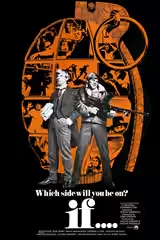
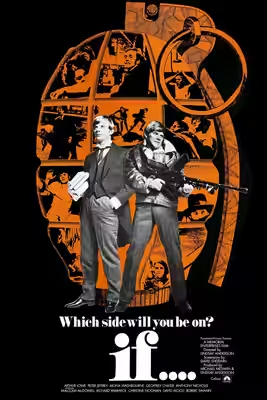
Battle Royale and if.... both turn school discipline into open war between adults and the young, and both find uncomfortable comedy in it. Lindsay Anderson's film is the more observant and less violent of the two, a drama of bullying and institutional absurdity rather than a killing contest. Choose Fukasaku for brutality with feeling, Anderson for sharper social observation.
Is Battle Royale based on a true story or a book?
Battle Royale is based on a novel by Koushun Takami, not on a true story. Kenta Fukasaku's screenplay keeps the book's central idea of classmates forced to kill one another, which gives the film much of its force. You do not need to have read the novel to follow or feel the film.
What should I watch after Battle Royale?
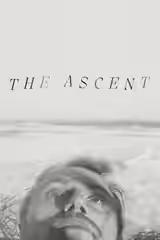
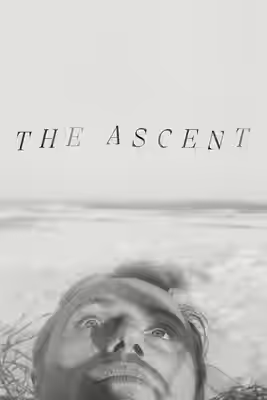
After Battle Royale, try If.... (1968, Fi1m 82): School discipline meets youthful revolt, with a similarly unsettling sense of humour. Then The Ascent (1977, Fi1m 88): Survival under occupation forces choices that make easy moral judgements impossible.

Cast

If you liked this, try…

  1. Lord of the Flies (1963) · not reviewed yetSchoolboys build their own cruel society, with no adult contest required.

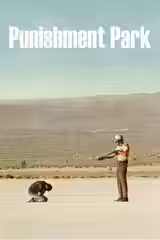
  2. Punishment Park (1971) · not reviewed yetA state-run ordeal turns political hostility into physical danger.

  3. If.... (1968, Fi1m 82)School discipline meets youthful revolt, with a similarly unsettling sense of humour.

  4. The Ascent (1977, Fi1m 88)Survival under occupation forces choices that make easy moral judgements impossible.

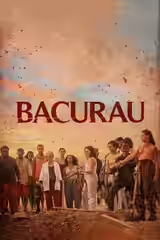
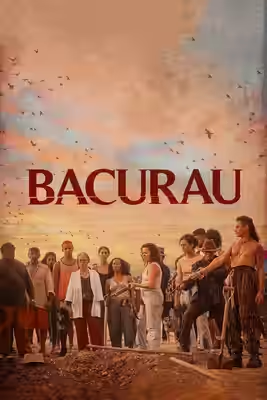
  5. Bacurau (2019) · not reviewed yetAn isolated community faces organised violence in another angry, unruly thriller.

Free account

Know what to watch tonight

Two lists that know where things are streaming, collections you can share, your own score beside ours, and Discover that remembers what you have seen.

  • Want to see, sorted by what is streaming now
  • Seen, with your score out of ten
  • No adverts, ever