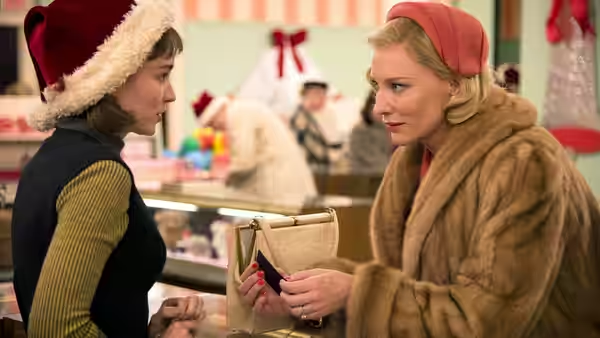
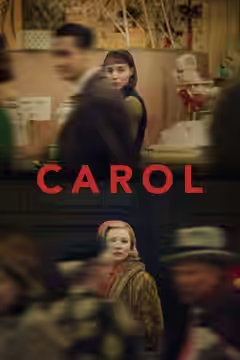
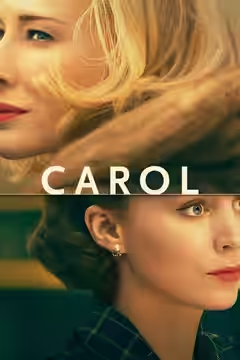
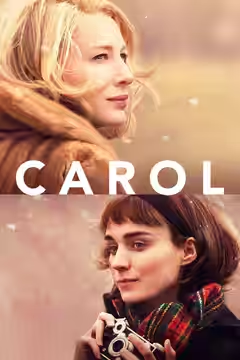
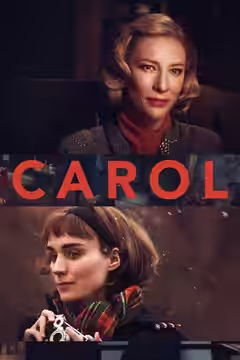
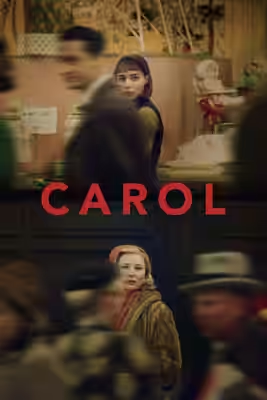
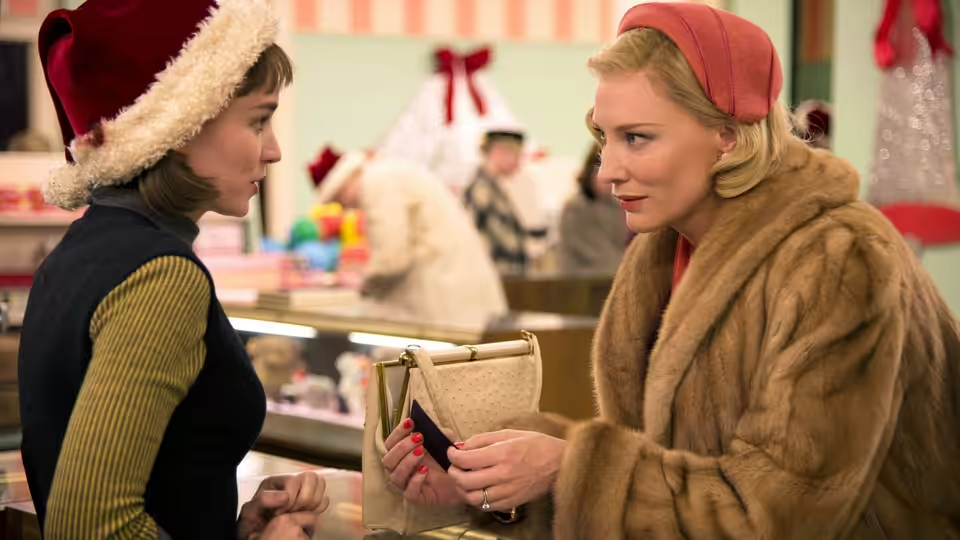
Therese Belivet (Rooney Mara) and Carol Aird (Cate Blanchett) facing each other in a department store
Film review

Carol

2015 · Directed by Todd Haynes · 1h 58m · MPA R

In a sentenceCate Blanchett and Rooney Mara make eye contact feel like something that ought to require a permit

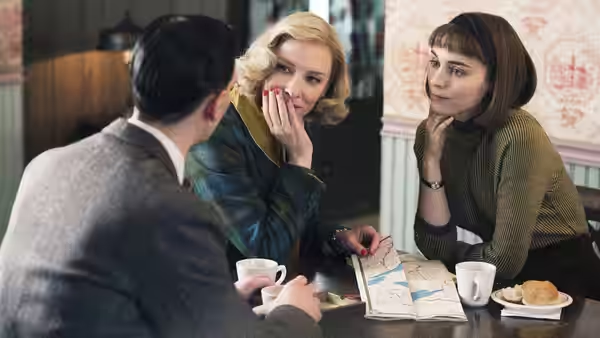
Carol Aird (Cate Blanchett), Therese Belivet (Rooney Mara) and Harge Aird (Kyle Chandler) inhabit 1950s New York, where a romance between women must be approached with caution. Therese is drawn to the older Carol and wants to explore an attraction that neither can comfortably announce. The women read each other’s glances and small gestures, trying to work out what can be said and what must remain unspoken. Around them, the expectation is that they will live as society requires. Getting closer means risking the disapproval that keeps their desire so carefully concealed.

Plays from YouTube when you press play; nothing loads from them until then.

Fi1m review

Todd Haynes makes Carol a deeply affecting romance by trusting Cate Blanchett and Rooney Mara to make small gestures matter. Its careful manners occasionally keep us outside, but the performances earn our patience.

Few romances ask us to pay this much attention to the delay before someone looks back. Todd Haynes’s Carol deserves that attention: it is a moving, carefully acted film whose occasional stiffness never quite gets in the way of the two women at its centre. Adapted by Phyllis Nagy from a novel by Patricia Highsmith, it follows an attraction that has to be approached cautiously in 1950s New York. The script keeps explanations to a minimum, and the direction gives the actors time to establish how much can be risked in a glance.

Cate Blanchett plays Carol Aird with a composure that can make the character seem almost out of reach. There is pleasure in that assurance, and a little danger: an actor this controlled can turn a person into someone we merely watch with admiration. Here the small changes of expression matter because the face usually gives so little away. We start paying attention to the effort involved in remaining so composed.

Rooney Mara gives Therese Belivet a different kind of reserve, less certain of how she appears to the woman watching her. Her attention to Carol is active, questioning, sometimes difficult to read; she prevents the younger woman from becoming merely an audience for the older one’s glamour. We were moved by the hesitations in their exchanged looks. Each seems to be waiting for permission to be a little less careful, and both actors make that waiting hurt.

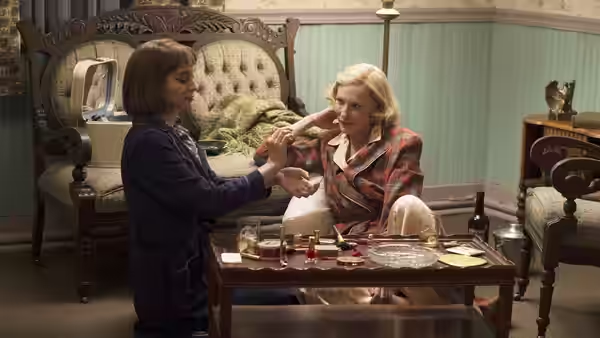
Edward Lachman’s cinematography rewards this close attention to faces. The images can feel chilly, but their restraint makes the small gestures legible without insisting on their importance. Judy Becker’s production design establishes the period through detail that feels chosen to suit the people living among it. We sometimes noticed the care of the arrangement too much, though the surroundings are persuasive enough to make the women’s caution seem ordinary.

Affonso Gonçalves’s editing lets the silences last long enough for a look to become uncomfortable. That patience matters in a film where a quick exchange would let everyone escape too easily. Carter Burwell’s spare score supports the same restraint, giving the feelings room without treating every hesitation as a crisis. Together, the cutting and music keep the measured pace from becoming simply slow.

The reservation is that such care can become self-conscious. Some passages seem so concerned with maintaining the film’s poise that desire feels politely demonstrated, and we wanted a little more untidiness from people taking an emotional risk. Romantic melodrama needs us to believe that people might lose control, and Carol sometimes seems too determined to keep everything tidy. The small hesitations in the performances do more to overcome this than the direction.

We would recommend it even to someone who usually wants a romance to move faster. Allow for the formality, and watch how much the two leads can alter a scene without raising their voices. This is a film to give an uninterrupted evening, preferably with someone who will resist explaining every silence.

Critical consensus AI synthesised

90
Positive
17
Mixed
1
Negative
0

Most critics greet Carol with strong enthusiasm, with praise concentrated on Cate Blanchett and Rooney Mara’s performances and Todd Haynes’s restrained direction. The reviews repeatedly describe a romance built through glances, silences and small gestures, with the leads conveying desire under the pressures of 1950s repression. Period detail and carefully composed images attract admiration, but the central point of agreement is emotional: most critics find that the restraint makes the longing more affecting.

Reservations centre on whether that same restraint keeps the lovers at a distance. Screen Daily notes a chill beneath the delicate filmmaking, while Slant Magazine finds the period drama somewhat stiff despite its expressive performances and visuals. The spread is largely favourable rather than sharply divided, though Den of Geek offers a firmer dissent: it admires the acting and cinematography but finds the romance too polite and frosty, lacking youthful drive.

Little White Lies
25 November 2015 · 4/5/5 · Sophie Monks Kaufman
100

The critic calls the film a beaming masterpiece and one of the most beautiful love stories ever told. She singles out its clear, polished storytelling and the way every element fuses into a harmonious whole celebrating love.

Read the full review →
Radio Times
★★★★★ · Alan Jones
100

The critic describes an exquisite romance that is both chic and chilly before exploding in emotional transparency. He singles out Haynes’s nuanced melodrama and the two high-calibre leading ladies for praise.

Read the full review →
The Guardian
26 November 2015 · ★★★★★ · Peter Bradshaw
100

The critic calls Todd Haynes’s 1950s-set drama an intoxicating triumph about forbidden love. Blanchett and Mara deliver superb performances in a film that revels in exquisitely observed period detail.

Read the full review →
The Telegraph
26 November 2015 · ★★★★★ · Tim Robey
100

Carol is described as gorgeous and gently groundbreaking, an exquisite work of American art with a specific mid-century melancholy. Blanchett leaps over her own high standards in a performance that slays, with Haynes handling the material superbly.

Read the full review →
Time Out
17 May 2015 · ★★★★★ · Dave Calhoun
100

The critic hails a subtle, exquisitely designed drama calibrated like an expensive watch. He singles out the stunning central performances by Blanchett and Mara and the film’s graceful, triumphant final moments.

Read the full review →
Evening Standard
27 November 2015 · Charlotte O'Sullivan
90*

Carol is an exceptional romance shot, scripted and acted with exquisite restraint, delivering a magnificent portrait of a stylish transgressive. It singles out the pure delight induced by Blanchett's performance as the older woman in the central relationship.

Read the full review →

Straight answers AI written, from our review

Is Carol worth watching?
Carol is worth watching for anyone with patience for a romance told in glances rather than declarations, and we scored it 88. Cate Blanchett and Rooney Mara make the smallest changes of expression carry the film, though Todd Haynes's careful direction can feel a little too tidy for people taking such an emotional risk. Give it an uninterrupted evening.
How long is Carol, and what is it rated?
Carol runs 1h 58m and is rated R by the MPA in the US. It is a romance and drama film.
Where can I watch Carol in the US?
Carol is streaming on Tubi and Amazon Prime Video in the US, and it is also available to rent from Apple TV and Amazon Prime Video from $3.99. It leaves Tubi on 1 October. Availability is checked daily; the links above go straight to each service.
How violent or frightening is Carol, and is it suitable for children?
Carol carries a 15 certificate in the UK and an R in the US, so it is not for children, but it is a period romance about concealed desire, not a violent or frightening film. The adult material is the relationship itself and the caution around it in 1950s New York. Older teenagers and adults who can sit through long silences will be fine.
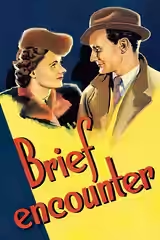
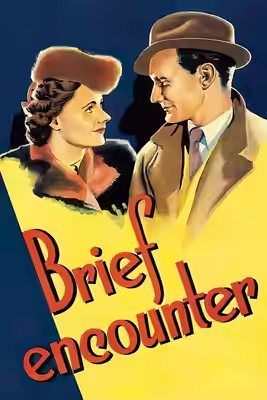
How does Carol compare to Brief Encounter?
Carol and Brief Encounter are both romances made painful by what the lovers cannot say, but Lean's film is the one we would urge a stranger to see. Brief Encounter makes falling in love feel ordinary and frightening; Carol is cooler and more formal, and its poise sometimes keeps us at a distance. Choose Carol for the two performances, Brief Encounter for the rawer ache.
Is Carol based on a true story or a book?
Carol is based on a novel by Patricia Highsmith, not a true story, adapted for the screen by Phyllis Nagy. Our review does not measure how closely the film follows the book, but the script keeps explanations to a minimum and the film stands entirely on its own. You do not need to have read Highsmith to follow the two women's glances.
What should I watch after Carol?
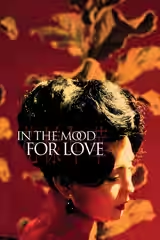
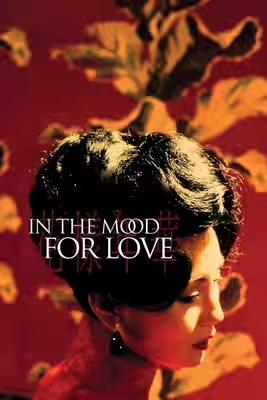
After Carol, try Brief Encounter (1945, Fi1m 90): For another romance made painful by everything its lovers cannot say. Then In the Mood for Love (2000, Fi1m 91): For the clothes, the restraint, and the difficulty of standing too close; and Portrait of a Lady on Fire (2019, Fi1m 89): Another patient romance that makes the act of looking feel consequential.

Cast

Awards

Academy Awards, 2016

Nominated
Best Actress
Nominated
Best Cinematography
Nominated
Best Costume Design
Nominated
Best Original Score
Nominated
Best Supporting Actress
Nominated
Best Writing, Adapted Screenplay

Dorian Award for Film of the Year, 2015

Won
Dorian Award for Film of the Year

Dorian Award for LGBTQ Film of the Year, 2015

Won
Dorian Award for LGBTQ Film of the Year

If you liked this, try…

  1. Brief Encounter (1945, Fi1m 90)For another romance made painful by everything its lovers cannot say.

  2. Desert Hearts (1985) · not reviewed yetA more open-hearted lesbian romance, with room for awkwardness as well as longing.

  3. In the Mood for Love (2000, Fi1m 91)For the clothes, the restraint, and the difficulty of standing too close.

  4. Portrait of a Lady on Fire (2019, Fi1m 89)Another patient romance that makes the act of looking feel consequential.

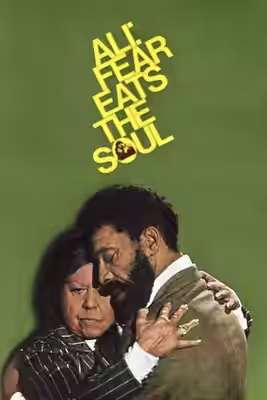
  5. Ali: Fear Eats the Soul (1974, Fi1m 88)For a harsher account of the neighbours who appoint themselves guardians of decency.

Free account

Know what to watch tonight

Two lists that know where things are streaming, collections you can share, your own score beside ours, and Discover that remembers what you have seen.

  • Want to see, sorted by what is streaming now
  • Seen, with your score out of ten
  • No adverts, ever