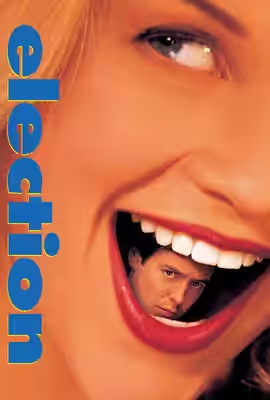
Alexander Payne’s Election is a sour, funny school comedy with an unusually clear view of adult self-deception. Reese Witherspoon and Matthew Broderick make its cruelty worth watching, even when the direction presses a joke harder than it needs to.
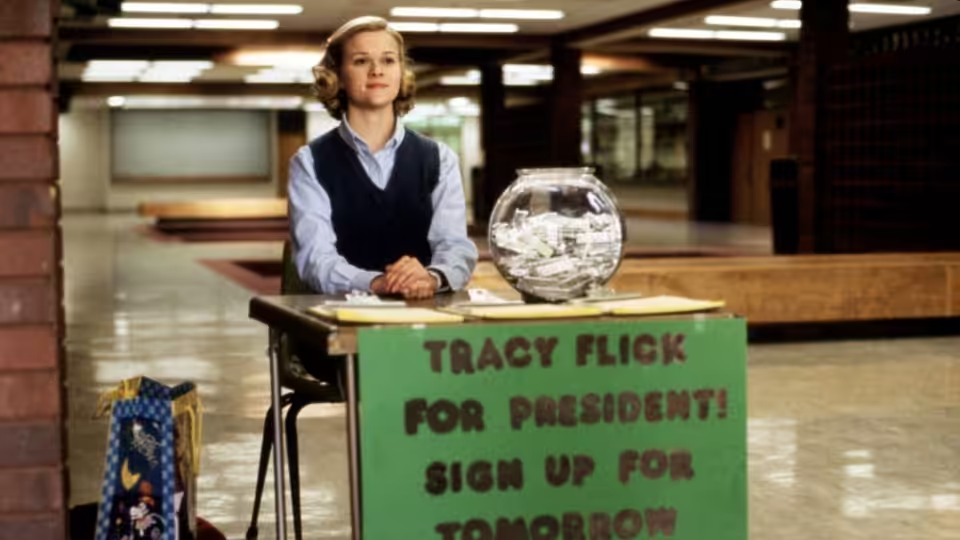
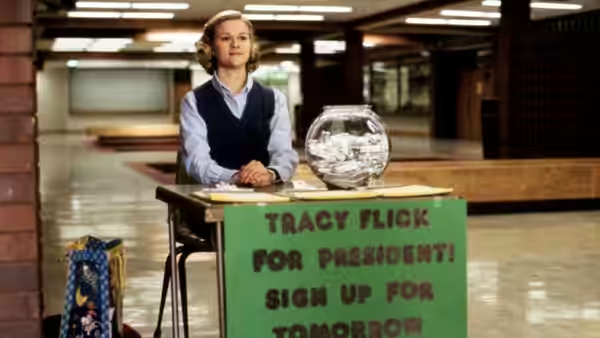
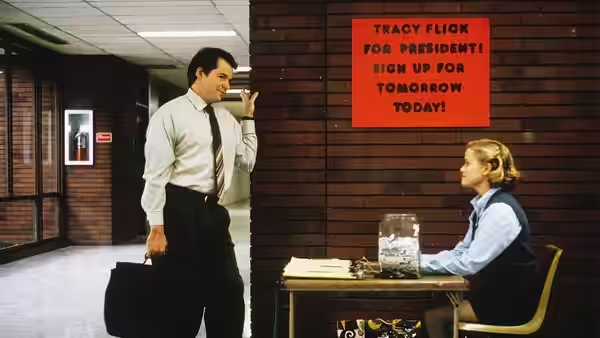
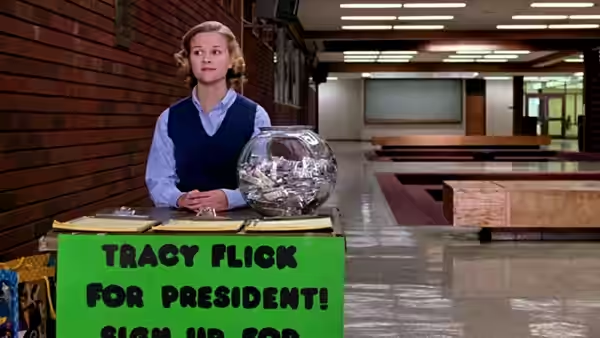
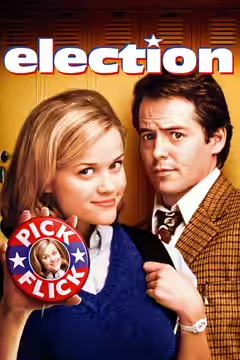
Alexander Payne’s Election makes a high-school contest nasty enough to justify the attention usually reserved for grown-up politics. It is a sharply funny comedy, especially good at showing how a reasonable explanation can conceal an unreasonable dislike. Jim McAllister, played by Matthew Broderick, gives us an adult’s view of the proceedings without earning an adult’s authority. His attitude towards Reese Witherspoon’s ambitious Tracy Flick is the trouble. Payne lets us understand it before asking us to examine it.
Broderick is excellent at making resentment sound like a professional concern. Jim’s account of himself is persuasive partly because he seems so much less strenuous than Tracy; he does not require us to admire his effort every moment. We were embarrassed by how readily we sided with him. The performance makes disliking a pupil feel reasonable before we have properly considered what she has done to deserve it. Broderick keeps that expectation of sympathy audible beneath Jim’s explanations.
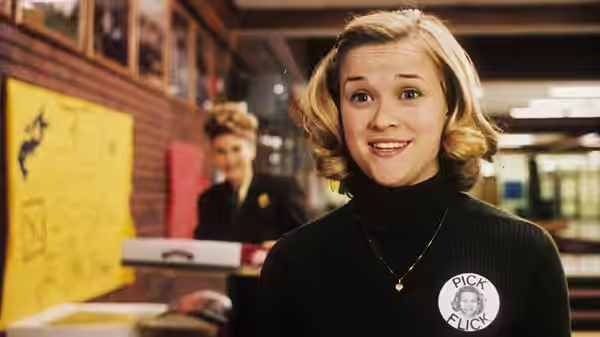
Witherspoon gives Tracy enough force to make that dislike comprehensible, without accepting that it is fair. Her determination can be exhausting to watch, and the performance does not soften it into an invitation to feel protective. Payne notices how easily a girl’s ambition gets treated as bad manners. We can see why she irritates Jim and still think he ought to know better. The comedy depends on both actors holding their positions, and Witherspoon does not surrender hers for an easy moment of likeability.
Payne and Jim Taylor’s screenplay, adapted from Tom Perrotta’s novel, is careful about who gets to explain themselves. The competing voice-overs prevent Jim’s version from becoming the only one available. They also let the characters give themselves away while making a defence. Even the people behaving badly can tell a plausible story about why they are right, and the script allows us to hear it. The dialogue is funny because the excuses sound usable, including by people who would consider themselves above this sort of behaviour.
James Glennon’s cinematography serves the faces well, keeping the contrast between Tracy’s eagerness and Jim’s distaste easy to read. Jane Ann Stewart’s production design makes the school feel ordinary enough for the intensity of the contest to seem faintly absurd. The setting matters because this struggle must share space with the routine business of teaching. Rolfe Kent’s music helps enlarge these small grievances into events the characters consider momentous. We do not have to agree with their assessment to enjoy the fuss.
Kevin Tent’s editing handles the shifts between accounts briskly, and the freeze-frames give the performances an extra comic emphasis. That emphasis is also our small reservation. At times Payne seems too eager to make somebody look ridiculous, with the musical cues and visual punctuation underlining what an actor has already made clear. The humour becomes coarser when it tells us whom to laugh at, particularly in a film otherwise so alert to unfair judgement.
The 103-minute running time feels right for a dispute this concentrated. As a school comedy, Election gains enormously from letting the teacher be as questionable as the pupil. The political parallels are clear enough without treating every character as a representative of some larger constituency. Its attention to individual excuses keeps the satire funny even when the behaviour becomes painful to watch. Watch it with someone who will argue about which of these people is being treated fairly.