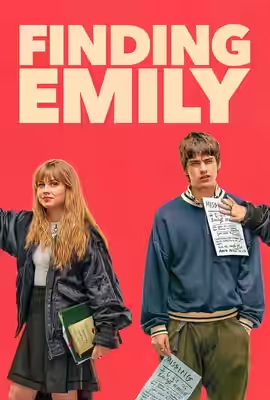
Alicia MacDonald’s first feature is a warm, funny Manchester romcom with two likeable leads and a good ear for how students talk. It raises a proper question about its own hero, then decides the grand gesture is fine after all.
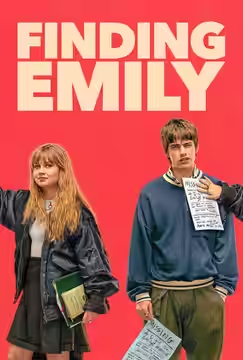
Alicia MacDonald’s first feature takes the oldest romcom engine there is, a boy who has met the right girl and cannot find her again, and drops it into a Manchester university in the age of the group chat. Rachel Hirons’s script knows exactly what it is doing with the old parts: the friends who tell him to stop, the rival Emilys, the public declaration. It is produced by Tim Bevan and Eric Fellner, whose names have been on most of the British romcoms of the last thirty years, and it wears that inheritance openly. For an hour it is a pleasure. The last act is where it settles for the shape it was always going to have, and where it lets itself off a hook it had carefully baited.
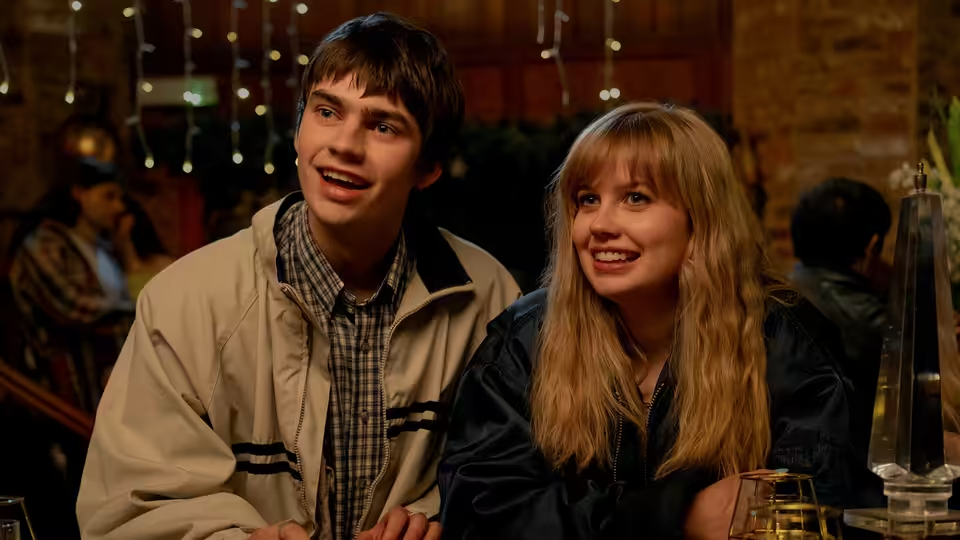
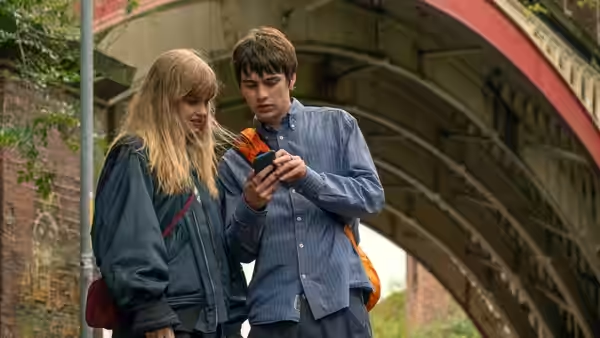
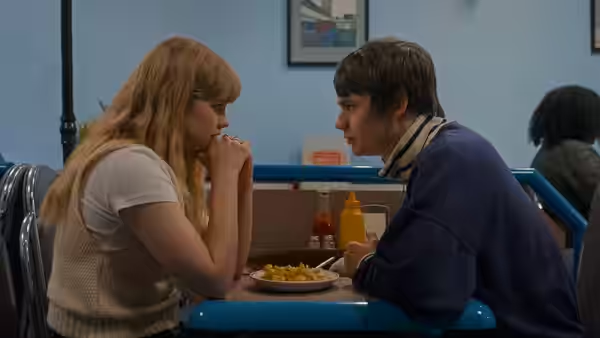
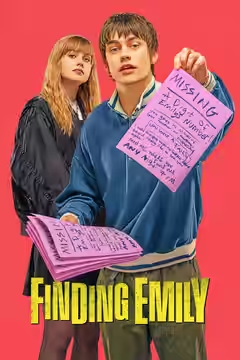
Spike Fearn is the reason the first hour works. Owen is a boy who says the earnest thing out loud and then hears how it sounds, and Fearn plays that half-second of regret so well that we forgave him more than we should have. Angourie Rice, as Emily Raine, is given less to do for long stretches and does it without any visible effort to be liked, which is exactly why she is. When the two of them share a frame the film relaxes and the jokes come faster. The clip the studio has put out under the title Getting To Know You is a fair sample: two people talking too quickly because they are nervous and pretending they are not.
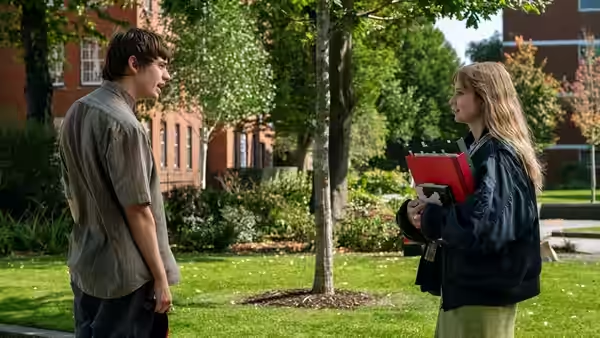
MacDonald and her cinematographer Rachel Clark make the city look like somewhere a person might choose to be young. Bobbie Cousins dresses the student flats and college rooms with the right clutter, and Sara Hassan puts everyone in clothes that look owned rather than costumed. Phil Hignett cuts fast and puts phones and posts into the frame without stopping the film to explain them, so a joke about a meme lands on the meme and not on a caption. Morgan Kibby’s music sits under a soundtrack of songs that is rarely off. We enjoyed it; we also noticed that the film reaches for a song every time a scene needs to feel like something, and by the end that starts to feel like a habit rather than a choice.
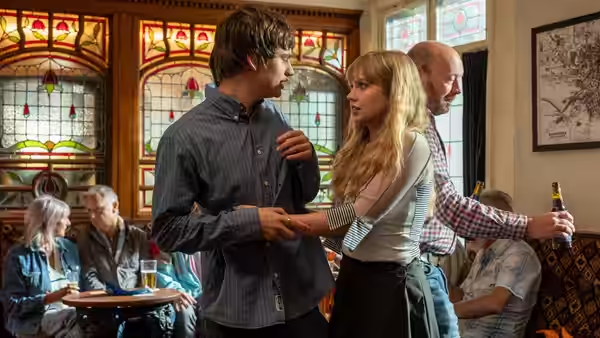
The interesting thing about Finding Emily is that it knows its hero’s behaviour is odd. A young man conducting a public search for a woman he met once is, in the present decade, a thing people have opinions about, and the film gives those opinions to Minnie Driver’s Dean Watkinson and Prasanna Puwanarajah’s Professor Westlake and to the online pile-on that follows Owen around. This is the film’s best idea and its best stretch of comedy. Driver is drily wonderful as a woman who has read every complaint procedure and would like, just once, not to have to use one. We laughed a good deal here, and laughed at ourselves too, because the film had made the case against Owen quite well and we were still on his side.
Then it stops making the case. Having set up the argument, Hirons and MacDonald resolve it by having the film simply agree with Owen, and the objections turn out to have been a hurdle rather than a question. We felt talked out of something. A romcom is allowed to believe in the grand gesture; this one wanted credit for doubting it first, and it did not earn that credit. The reviews in America have been notably cooler than the ones at home, and this is the reason, and on this point the cooler ones have a case.
The last act is also, plainly, the last act of every film of this kind. Everyone who needs to be in the same place gets there, the misunderstanding is cleared in a paragraph, and the soundtrack does the rest. Cora Kirk and Jack Riddiford are good company as the friends, and the parade of Emilys, Sadie Soverall and Kat Ronney among them, gives the middle its rhythm. Nobody is wasted, and nobody gets a scene they can take home.
The obvious comparison is Rye Lane (2023), which most critics have already made and which flatters this film slightly. That was looser and stranger and trusted its city more. Finding Emily is tidier and safer and, in its first hour, just as funny. It runs 111 minutes and carries a 12A, and if a British romcom is what the evening calls for, this one will do the job and leave you arguing about Owen on the way home.