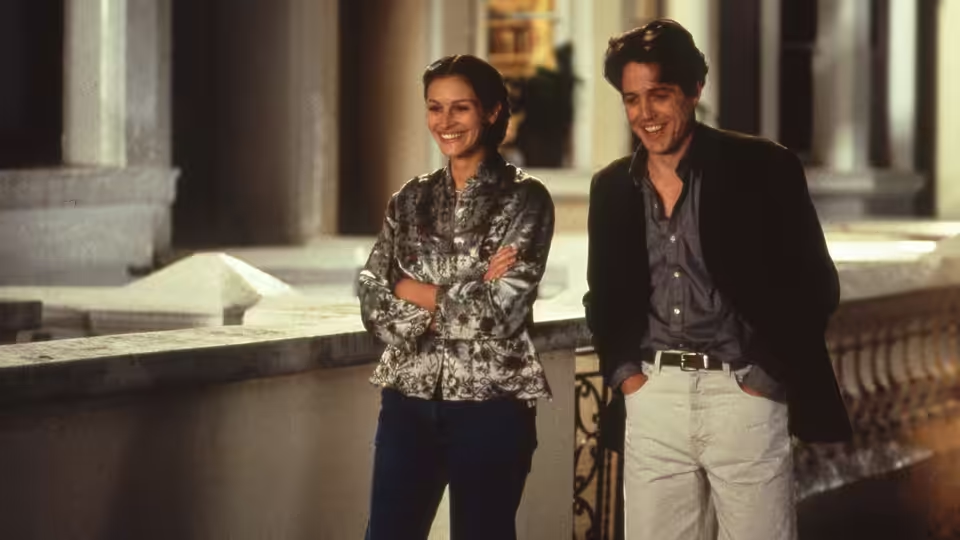
Julia Roberts and Hugh Grant make this unlikely romance funny and easy to care about. Richard Curtis supplies the lines; Roger Michell keeps the affection credible, though the second half takes too long over its obstacles.
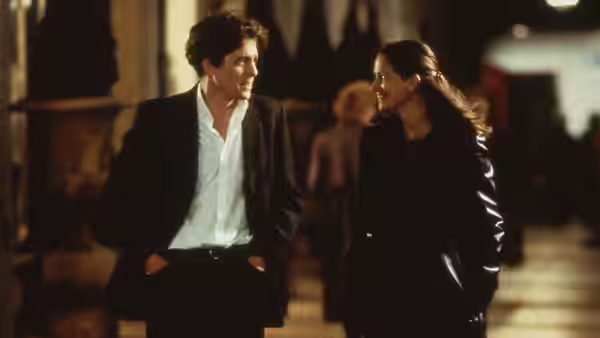
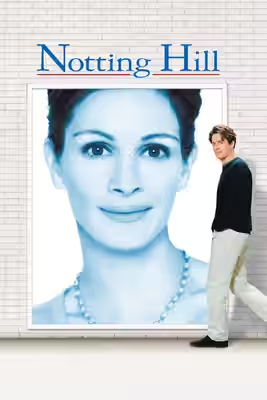
Roger Michell’s Notting Hill is a good romantic comedy with two leads who make its unlikely courtship worth following through some unnecessary delays. Richard Curtis’s script puts a famous film star beside an ordinary man and finds plenty of comedy in their unequal confidence. The attraction is easy to understand, and Michell lets us enjoy it without treating every tender moment as an occasion for embarrassment. The trouble is finding enough complications to justify 124 minutes.
Hugh Grant plays William Thacker as someone who can make a simple exchange sound like a difficult request at a council counter. His hesitations are carefully timed, and the jokes often land because he seems so keen not to impose one. We laughed at his apologising: Grant lets William hear how ridiculous he sounds without giving him the confidence to stop. Curtis does return to this manner too often, and there are stretches when another awkward qualification is the last thing a sentence needs. Grant usually gets away with it.
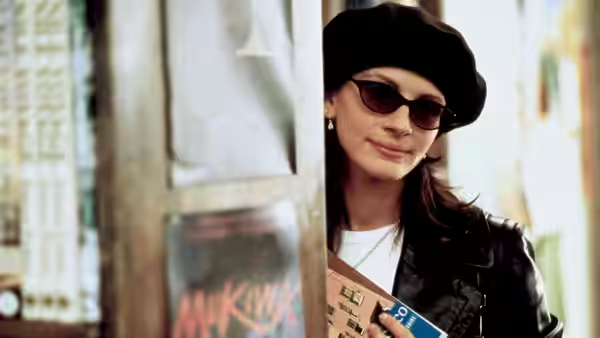
Julia Roberts gives Anna Scott enough warmth to keep her from becoming merely the glamorous reward for all that nervousness. She makes the star’s guardedness understandable, but she also lets us see why William would want her company once the initial astonishment had passed. Their chemistry does much of the work that the plotting ought to do, especially when the script gives her less room than him. It is a limitation of Curtis’s writing that Roberts repeatedly has to make that imbalance feel natural.
Michael Coulter’s photography makes the neighbourhood look inviting, and that is exactly what this particular fantasy needs. Stuart Craig’s production design contributes to the same comfortable impression: these are surroundings in which a romance can seem like the most pressing problem anybody has. We need not demand a housing survey from a courtship comedy, but the narrow, well-to-do view of London does grow complacent. The film scarcely seems curious about anyone outside its comfortable circle.
Nick Moore’s editing gives the comic exchanges useful room to breathe. A little space around Grant’s delivery helps the embarrassment register, although the slower second half tests our patience. The obstacles start to feel arranged to postpone a resolution, and the film’s easy company cannot quite disguise the waiting. Some of Curtis’s jokes survive passages that would have been better shortened.
Trevor Jones’s score supports the gentler scenes, but the soundtrack as a whole is too eager to settle our feelings for us. The music sometimes presses for an emotion that Roberts and Grant have already made clear. Michell is more assured when he trusts their exchanges, allowing affection and a sharp line to occupy the same scene. Those moments keep the romance enjoyable even when the pace slackens.
This belongs to the reassuring end of romantic comedy, where an unlikely attraction deserves to be taken seriously and embarrassment need not be fatal. There is nothing wrong with offering that pleasure, provided the people involved can hold our attention. We would happily spend another evening with these two, even knowing where the pace begins to falter. Allow for a little dawdling between the good jokes.